
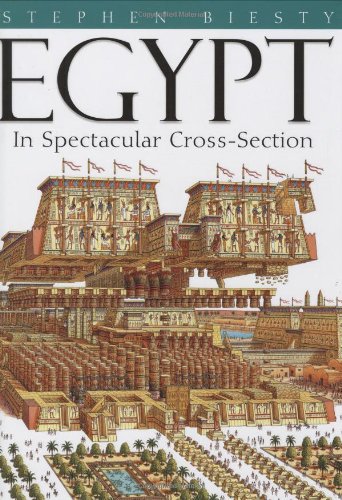
 Allows readers to get an idea of ancient Egyptian civilization by examining a series of detailed cross-section and cutaway illustrations.
Nonfiction
Nonfiction genre
Nii Kwei’s Day
Nii Kwei lives in Accra, the capital of Ghana. He gets up at 6 o’clock every morning. He helps his sisters and brother tidy up the compound, then he eats a breakfast of coco (corn porridge), bread, fried eggs and a chocolate drink. At 7:30 he goes to school in a taxi. Later, on his way home, he goes to Abraham’s material store with his mother. He ends the day playing football with his cousins, back at the compound. This book is part of the series A Child’s Day, photographic information books concentrating on the daily lives and experiences of children in countries around the world, published in association with Oxfam.
African Beginnings
From the ancient kingdom of Kush, whose black pharaohs ruled Egypt for nearly a century, to the sixteenth-century empire of the Kongo, whose emperor was so powerful he was able to halt the trade in slaves for a number of years, the African continent rang with a series of glorious civilizations that have had a lasting impact on the world’s history, and on American culture. James Haskins and Floyd Cooper have won numerous awards for their books for young people, including several Coretta Scott King Honor awards.
Kalahari Bushmen (Threatened Cultures)
Explores the culture of the Bushmen of the Kalahari Desert, examining their traditions, language, music, games and toys, family life, and hunting skills, and discusses various threats to their culture
Exploration Into Africa
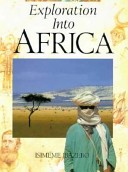
Exploration Into Africa is part of a series describing the history of chosen regions before and after their exploration by Europeans. This book is about exploring the whole story of Africa from the earliest times, through the periods of its great empires, to the time of its exploration by European travelers right up to the present day. Read about the Ghanaian Empire that was so wealthy the dogs in the king’s palace wore collars of solid gold. Read about massive walls of Great Zimbabwe, the fabulous city that was suddenly abandoned for no apparent reason. And read about the Europeans who came and explored Africa in their quest to solve the mysteries of that continent.
Kurds (Threatened Cultures)
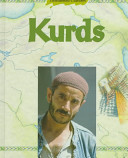
Tucked into a mountainous region straddling the borders of Iraq, Iran, and Turkey, Kurdistan is at the center of one of the most volatile regions in the world–and home to more than 22 million Kurds. This book tells their story, their traditional beliefs and values, and the difficluties of keeping an identity that is under constant threat from other cultures.
The Photographer: Into War-Torn Afghanistan With Doctors Without Borders
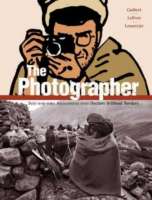
In 1986, Afghanistan was torn apart by a war with the Soviet Union. This graphic novel/photo-journal is a record of one reporter’s arduous and dangerous journey through Afghanistan, accompanying the Doctors Without Borders. Didier Lefevre’s photography, paired with the art of Emmanuel Guibert, tells the powerful story of a mission undertaken by men and women dedicated to mending the wounds of war. Didier Lefevre was a French photojournalist who traveled the world extensively, often reporting from the most remote and harrowing situations imaginable. At the end of July 1986, Didier Lefevre left Paris for Afghanistan. He barely returned to tell the tale. It was his first major assignment as a photojournalist, documenting a Doctors Without Borders mission. Camera in hand, the traveled with a band of doctors and nurses into the heart of Northern Afghanistan, where the war between the Soviet Union and the Afghan Mujahideen was raging. The mission affected Lefevre as profoundly as the war affected contemporary history. His photographs, paired with the art of Emmanuel Guibert, tell the story of an arduous journey undertaken by men and women intent on mending what others destroyed.
Three Wishes: Palestinian and Israeli Children Speak
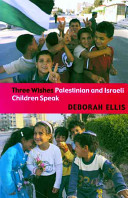
Deborah Ellis’s enormously popular Breadwinner trilogy recounted the experiences of children living in Afghanistan; now Ellis turns her attention to the young people of the Israeli-Palestinian conflict. After visiting the region to conduct interviews, she presents their stories here in their own words. Twelve-year-old Nora, eleven-year-old Mohammad, and many others speak directly about their lives – which prove to be both ordinary and extraordinary: They argue with their siblings. They hate spinach. They have wishes for the future. Yet they have also seen their homes destroyed and families killed, and live amidst constant upheaval and violence.This simple, telling book allows young readers everywhere to see that the children caught in this conflict are just like them – but living far more difficult and dangerous lives. Without taking sides, it presents an unblinking portrait of children victimized by the endless struggle around them.
Conflict In The Middle East (Conflicts)
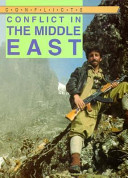
Describes the history of the Middle East, the root of the tensions involved among the countries there, and the current situation and its impact on the rest of the world.
Mecca (Holy Cities)
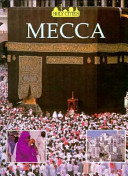
Charts the development of Mecca as the most holy city for the world’s community of Muslims, and explains clearly the history of Islam itself; shows how Mecca symbolizes the richness of Islam through its traditions, its religious festivals, and powerful art and architecture.