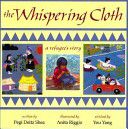
A young Hmong girl in a Thai refugee camp in the mid-1970s finds the story within herself to create her own pa’ndau.

A young Hmong girl in a Thai refugee camp in the mid-1970s finds the story within herself to create her own pa’ndau.
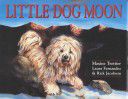
“You must not use the mountain road.” “We know no other way,” the girl told him. “Perhaps not, but moon does,” answered Tenzin. He knelt down to stroke the long hair from the little dog’s eyes. “Take them. Show them the way.” A young monk is moved by the bravery of two children journeying alone to the freedom of Nepal. He offers what help he can–a hot bowl of soup, a warm bed for the night–but he realizes their best chance lies with Moon. She is the little dog who knows the unguarded paths out of the mountains, the very dog who will leave an ache in his heart when she goes. This story was inspired by the sacrifice and courage of those who struggle to be free. It is not uncommon in Tibet for parents to send their children into the treks through the mountains in the hope they will find refuge in Nepal. During the winter when the passes are not heavily guarded, the bitter cold is considered a smaller threat than remaining at home. Many such children have made it, many have turned back, many more have simply disappeared.
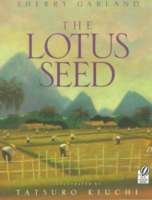
When she is forced to leave Vietnam, a young girl brings a lotus seed with her to America in remembrance of her homeland. “Exquisite artwork fuses with a compelling narrative–a concise endnote places the story effectively within a historical context–to produce a moving and polished offering.”–Publishers Weekly
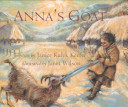
A moving statement about the refugee experience, told from a child’s unique point of view.
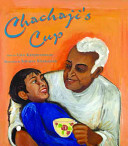
A boy learns about his family history and the Partition of India from his great uncle, through stories told over a beloved old teacup.
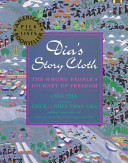
The story cloth made for her by her aunt and uncle chronicles the life of the author and her family in their native Laos and their eventual emigration to the United States.
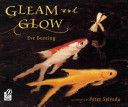
Inspired by real events, master storyteller Eve Bunting recounts the harrowing yet hopeful story of a family, a war–and a dazzling discovery.
This book has been included in WOW’s Kids Taking Action Booklist. For our current list, visit our Boolist page under Resources in the green navigation bar.
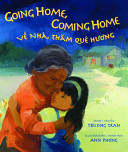
A young girl visits her grandmother in Vietnam where her parents were born and learns that she can call two places home.
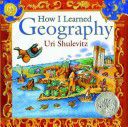
A 2009 Caldecott Honor Book. Having fled from war in their troubled homeland, a boy and his family are living in poverty in a strange country. Food is scarce, so when the boy’s father brings home a map instead of bread for supper, at first the boy is furious. But when the map is hung on the wall, it floods their cheerless room with color. As the boy studies its every detail, he is transported to exotic places without ever leaving the room, and he eventually comes to realize that the map feeds him in a way that bread never could. Based on the artist’s childhood memories of World War II.
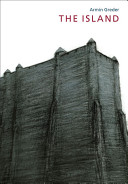
Poignant and chilling, this allegory is an astonishing, powerful, and timely story about refugees, xenophobia, racism, multiculturalism, social politics, and human rights. When the people of an island find a man sitting on their shore, they immediately reject him because he is different. Fearful to the point of delusional paranoia, the islanders lock him in a goat pen, refuse him work, and feed him scraps they would normally feed a pig. As their fears progress into hatred, they force him into the sea.
See the review at WOW Review, Volume 4, Issue 2