
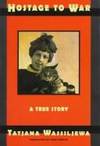
 A young person’s wartime account in the tradition of The Diary of Anne Frank follows the experiences of thirteen-year-old Russian Tatjana, who is taken to Germany as a captive laborer after Nazi Germany declares war on her country.”
Russia
Materials from Russia
The Darkest Evening
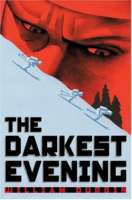
Jake’s life is turned upside down when his father gets caught up in the Socialist fervor washing over their Finnish mining community in Minnesota. His father decides to move their family to a new, Finnish state inside the Soviet Union, a change that fills Jake with dread. Where his father dreams of creating a worker’s paradise, Jake and his family find disappointment and hardship. The story culminates with a thrilling escape–on skis–from Russia to Finland.
The Fetch
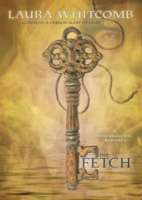
Calder is a Fetch, a death escort, the first of his kind to step from HeavenAfter 350 years as a Fetch, or death escort, Calder breaks his vows and enters the body of Rasputin, whose spirit causes rebellion in the Land of Lost Souls while Calder struggles to convey Ana and Alexis, orphaned in the Russian Revolution, to Heaven.
Operation Siberian Crane: The Story Behind the International Efforts to Save an Amazing Bird
This book describes the cooperative effort by scientists in the Soviet Union and the United States to save the Siberian crane, with the support and aid of conservationists from other nations.
Salt: A Russian Folktale
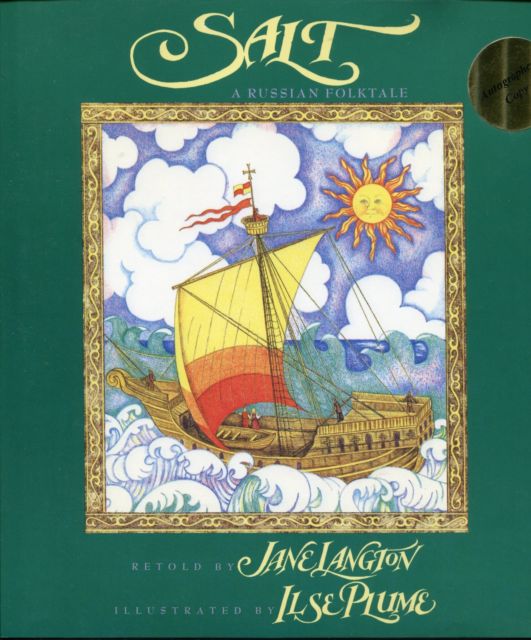 Ivan, the merchant’s third son, having patience and an eye for opportunity, barters the cargo of his ship for a princess and a fortune.
Georgia (Cultures Of The World)
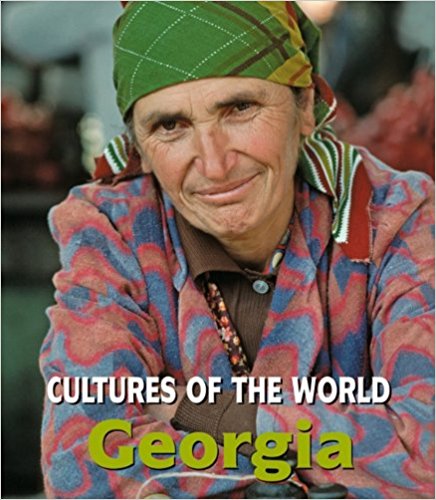 Describes the geography, history, government, economy, people, lifestyle, religion, language, arts, leisure, festivals, and food of a Caucasian republic with a turbulent past.
Nikolai, The Only Bear
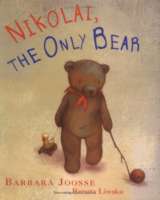
There are one hundred orphans at the Russian orphanage, but Nikolai is the only bear. He growls when he speaks and claws the air when he plays. “Play nice, Nikolai,” the keepers say. No one wants to take Nikolai home. Until one day, when a fur-faced man and a smooth-faced woman come to visit from America. They growl with him and play with him, and sing songs that make him feel soft-bearish. And when it’s time for them to go home, Nikolai knows that he has found the right family at last.
I Remember

This series of biographical vignettes is narrated by Hannah, a lower-middle-class Jewish girl living in a small Russian town. Despite prejudice and political unrest in Russia and the crisis of World War I, Hannah remains optimistic and eager for the future–giving up new clothes for piano lessons, strengthening her relationship with her sister, and learning to face a world in turmoil. Based on the author’s own life, this is a fascinating personal account of a young girl’s transition into womanhood in the early twentieth century.
I Want To Live: The Diary Of A Young Girl In Stalin’s Russia
Recently unearthed in the archives of Stalin’s secret police, the NKVD, Nina Lugovskaya’s diary offers rare insight into the life of a teenage girl in Stalin’s Russia–when fear of arrest was a fact of daily life. Like Anne Frank, 13-year-old Nina is conscious of the extraordinary dangers around her and her family, yet she is preoccupied by ordinary teenage concerns: boys, parties, her appearance, who she wants to be when she grows up. As Nina records her most personal emotions and observations, her reflections shape a diary that is as much a portrait of her intense inner world as it is the Soviet outer one. Preserved here, these markings–the evidence used to convict Nina as a “counterrevolutionary”–offer today’s reader a fascinating perspective on the era in which she lived.
Out Of Line: Growing Up Soviet
Although the Iron Curtain is gone, the memory of the high drama, tragedy, and comedy that was life in the Soviet Union remains. It meant endless lineups in the cold — lineups enlivened by poetry and paranoia. It meant family life lived in two small rooms, but a family life that was rich in love and laughter. It meant trying to escape all-seeing eyes, especially those of the old ladies in their babushkas who guarded every courtyard.
Tina Grimberg brings color and perception to a life we think of as gray, impersonal, and foreboding. She was born in Kiev and grew up feisty, bright, and funny in a tiny flat with her parents and her older sister. Her descriptions of life in that grand and beleaguered city are by turn hysterical and heartbreaking. When Tina turned fifteen, the government, desperate for foreign wheat, traded “undesireables” for food, and that meant that many Jewish families like Tina’s could leave. Until they could leave on the hair-raising journey that would eventually bring them to Indiana, she was publicly shamed and cut off, but she never lost her affectionate and clear-eyed view of her homeland. This brilliant collection of memories is an unforgettable look behind what was the Iron Curtain; at a way of life that was reality for millions of people in the twentieth century.