Resistance

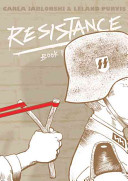
Fighting on a secret front of World War II Paul and Marieas bucolic French country town is almost untouched by the ravages of WWII, but the siblings still live in the shadow of war. Their father is a Prisoner of War, kept hostage by the Germans. When their friend Henrias parents disappear and Henri goes into hiding because of his Jewish ancestry, Paul and Marie realize they must take a stand. But how can they convince the French Resistance that even children can help in their fight against injustice? Resistance is the first voulme of a triology written by acclaimed teen author Carla Jablonski and illustrated by Leland Purvis.

See the review at WOW Review, Volume 3, Issue 2

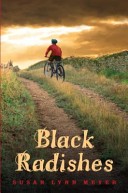
Black Radishes

It is March of 1940. The French believe that their army can protect them from Nazi Germany. But is Paris a safe place for Jews? Gustavers”s parents donrs”t think so. Forced to leave behind his best friend, the mischievous Marcel, and his cousin Jean-Paul, Gustave moves with his mother and father to Saint-Georges, a small village in the countryside. During April and May, Nazi Germany invades one country after another. In June, the French army is defeated, and Paris is occupied. Saint-Georges is still part of the free zone, but the situation there is becoming increasingly precarious. Then Gustave meets Nicole, a Catholic girl who works for the French Resistance. Along with her father, Nicole tries to find a way to smuggle Jean-Paul, Marcel, and their families into Free France so that they can all escape to America. It is Gustave, however, who comes up with a plan that just might work. But going into Occupied France is a risky thing to do when you are Jewish. Inspired by her fatherrs”s experiences as a Jewish child living in France during World War II, Susan Lynn Meyer tells the story of a familyrs”s day-to-day struggles in a country that may not be able to keep its promise of “Liberty, Equality, and Fraternity.”

See the review at WOW Review, Volume 4, Issue 1

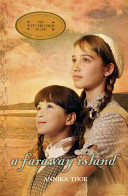
A Faraway Island

Torn from their homeland, two Jewish sisters find refuge in Sweden. It’s the summer of 1939. Two Jewish sisters from Vienna12-year-old Stephie Steiner and 8-year-old Nellieare sent to Sweden to escape the Nazis. They expect to stay there six months, until their parents can flee to Amsterdam; then all four will go to America. But as the world war intensifies, the girls remain, each with her own host family, on a rugged island off the western coast of Sweden. Nellie quickly settles in to her new surroundings. She’s happy with her foster family and soon favors the Swedish language over her native German. Not so for Stephie, who finds it hard to adapt; she feels stranded at the end of the world, with a foster mother who’s as cold and unforgiving as the island itself. Her main worry, though, is her parentsand whether she will ever see them again. From the Hardcover edition.

See the review at WOW Review, Volume 3, Issue 2

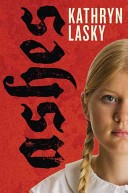
Ashes

Thirteen-year-old Gabriella Schramm’s favorite pastime is reading. With Adolf Hitler slowly but unstoppably rising to power, Gaby turns to her books for comfort while the world around her changes dramatically: The streets become filled with soldiers, her sister’s boyfriend raises his arm in a heil Hitler salute, and the Schramm’s family friend Albert Einstein flees the country. When Gaby’s beloved books come under attack, she fears she may have to leave behind the fiction and the life she has always cherished.

The Dog in the Wood

As World War II draws to an end, Russian soldiers occupy Schwartz, Germany, bringing both friendship and hardship to the family of ten-year-old Fritz, whose grandfather was a Nazi sympathizer, eventually forcing them to leave their farm, then arresting Fritz’s mother and her hired hand.

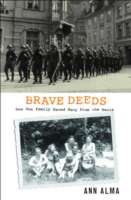
Brave Deeds: How One Family Saved Many People from the Nazis

When Holland was under Nazi rule, the Dutch lived extremely harsh lives. Thousands were in hiding, especially Jews who had managed to escape transport to the death camps. Frans Braal and his wife Mies took in anyone in need of help — Jews, children whose parents could no longer look after them, resistance fighters, and people who were starving — providing them with a temporary home. Twice their place was searched by the Nazis, and on both occasions they managed to hide everyone in time. Told through the eyes of a child, this is the story of the Braals, two people who willingly put themselves in great danger in order to save the lives of those less fortunate. Throughout, sidebars provide further information about Dutch resistance workers and traitors, Dutch Jews, bombing missions, false identity cards, the war, and more.

Hitler’s Daughter (Bccb Blue Ribbon Fiction Books (Awards))

Her name was Heidi, and she was Hitler’s daughter.

It began on a rainy morning in Australia, as part of a game played by Mark and his friends. It was a storytelling game, and the four friends took turns weaving tales about fairies and mermaids and horses. But Anna’s story was different this time: It was not a fairy tale or an adventure story. The story was about a young girl who lived during World War II. Her name was Heidi, and she was Hitler’s daughter.

As Anna’s story unfolds, Mark is haunted by the image of Hitler’s daughter. He wonders what he would have done in her place if he had known his father was an evil man leading the world into a war that was destroying millions of lives. And if Mark had known, would he have had the power and determination to stop him?

This intriguing novel poses powerful questions about a frightening period in history and will force readers to examine moral issues in a fresh, compelling light.