
 A young boy, searching vainly for his mother in post-war Vienna, is befriended by a man on crutches and together they find hope for the future.
World War II
Faithful Elephants
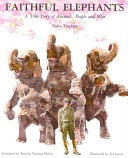
A zookeeper recounts the story of John, Tonky, and Wanly, three performing elephants at the Ueno Zoo in Tokyo, whose turn it is to die, and of their keepers, who weep and pray that World War II will end so their beloved elephants might be saved.
Home of the Brave
Following a kayaking accident, a man experiences the feelings of Japanese-American children interned during World War II and children on Indian reservations.
Take a closer look at Home of the Brave as examined in WOW Review.
Chicken Foot Farm
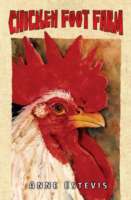
On the eve of World War II, young Alejandro comes of age on his family’s South Texas farm, known as Chicken Foot Farm because of how his mother marks her chicks. “Mama held the chick against her breast and splayed its left foot between her thumb and index finger. With her free hand she… quickly cut off the end of the chick’s shortest toe.” Rich with the customs and traditions of rural, Mexican-American life, Chicken Foot Farm depicts a multi-generational family in flux as change crawls relentlessly toward their land and lifestyle. As the seasons–and loved ones–come and go and misfortunes befall the family, Alejandro learns the lessons of life: the importance of family, honesty, hard work, and compassion. When the kitchen burns down one night, Alejandro feels they have lost something integral to their family unity. But his father promises they will build another kitchen, the new one better than the old. As Abuela Luciana ages, she begins to behave erratically, burning tortillas, forgetting to add water to the beans she is cooking, and even disappearing from the farm. She is certain someone has cursed her–put mal de ojo on her. How can the family cure her when she is the curandera, the one who has always taken care of them? Most importantly, Alejandro works hard to win his father’s approval, even though Papa generally ignores him in favor of the eldest son, Ernesto, who Papa says will inherit the farm. When Ernesto joins the Army, the family must face the possibility that he may not return as the entire country is thrown into the uncertainty of war. Following the attack on Pearl Harbor, young Alejandro notices something new in his family’s kitchen: a framed United States flag now hangs on the wall. “It’s something I can do for the war,” his Abuela Luciana tells him. Not understanding, she explains to him, “I can remind people that we are Americans.” In these poignant images of a time and place long gone, Anne Estevis sketches a tight-knit, Mexican-American community on the cusp of a new way of life as tractors replace mules and modern science competes with superstitious beliefs.
Star of Luis
When Luís’s father joins the army shortly after the start of World War II, Luís’s entire life changes. His mother decides to return to the dusty New Mexican village where she and her husband grew up. In Los Angeles, Luís had struggled to find a place in his ethnically diverse neighborhood and had been intimidated into ending a close friendship with a Jewish boy. In Las Manos, everyone is Hispanic and Catholic like Luís, but the way of life seems backward and slow. Luís and his mother stay in a cramped bungalow with his dying grandfather and sullen grandmother, and Luís must share a bed with his uncle, a priest. Then, just as Luís begins to feel more comfortable in Las Manos, he learns an settling fact-his family is not Catholic after all. They are Jewish, a secret that has been kept for generations. Angry and confused, Luís realizes he must confront his feelings about family, religion, and friends, and ultimately make his own decision about who he is. Glossary of Spanish words.
Tamar: A Novel Of Espionage, Passion, And Betrayal
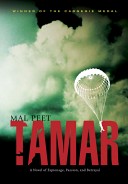
Now available – the Carnegie Medal winner comes to the U.S.
When her grandfather dies, Tamar inherits a box containing a series of clues and coded messages. Out of the past, another Tamar emerges, a man involved in the terrifying world of resistance fighters in Nazi-occupied Holland half a century before. His story is one of passionate love, jealousy, and tragedy set against the daily fear and casual horror of the Second World War — and unraveling it is about to transform Tamar’s life forever.
From acclaimed British sensation Mal Peet comes a masterful story of adventure, love, secrets, and betrayal in time of war, both past and present.
Featured in Volume II, Issue 1 of WOW Review.
The Dog in the Wood

As World War II draws to an end, Russian soldiers occupy Schwartz, Germany, bringing both friendship and hardship to the family of ten-year-old Fritz, whose grandfather was a Nazi sympathizer, eventually forcing them to leave their farm, then arresting Fritz’s mother and her hired hand.
Mei Ling in China City

Based on a true story of events during World War II in China City, a 12-year-old Chinese American girl named Mei Ling Lee was separated from her best friend Yayeko Akiyama when she and her family were interned in the Manzanar War Relocation Center. By writing letters to each other, both young girls recounted their lives and hardships in China City and Manzanar. This unprecedented children’s book depicts the cross-cultural experiences of Americans of Chinese and Japanese ancestry during the war years.
Brave Deeds: How One Family Saved Many People from the Nazis
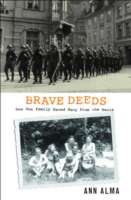
When Holland was under Nazi rule, the Dutch lived extremely harsh lives. Thousands were in hiding, especially Jews who had managed to escape transport to the death camps. Frans Braal and his wife Mies took in anyone in need of help — Jews, children whose parents could no longer look after them, resistance fighters, and people who were starving — providing them with a temporary home. Twice their place was searched by the Nazis, and on both occasions they managed to hide everyone in time. Told through the eyes of a child, this is the story of the Braals, two people who willingly put themselves in great danger in order to save the lives of those less fortunate. Throughout, sidebars provide further information about Dutch resistance workers and traitors, Dutch Jews, bombing missions, false identity cards, the war, and more.
Blitzcat
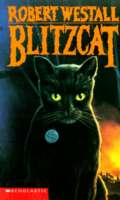
In wartorn England during Hitler’s Blitzkrieg, a courageous black cat named Lord Gort sets off to find her way home and find her lost master. Reissue.