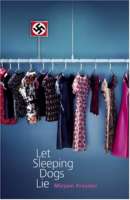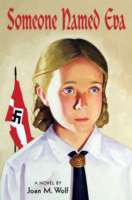
Johanna’s grandfather founded the largest clothing store in town and built up his wealth with his own hands–at least that’s the family legend. But when Johanna travels to Israel for a class project, she finds out that the family of Meta Levin originally owned the store. She learns that her grandfather legally acquired the company during the Nazi regime according to the anti-Semitic laws of the Third Reich. Johanna is worried: her family’s wealth is obviously founded on injustice. Should she keep silent, or should she wake the sleeping dogs?
World War II
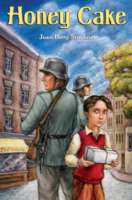
Honey Cake
For David Nathan, Copenhagen is the most beautiful city in the world, even with Nazis in the streets. But life has changed since the soldiers arrived. His parents are always worried. And his older sister goes to school early and comes home late. Sometimes she doesn’t come home at all! David’s father is a baker, and since the war began, butter and cream are very hard to find. So David is amazed when his father makes a “special order” of cream-filled chocolate eclairs. But when no one comes to pick up the eclairs, David is asked to run a very special errand. It’s an errand that will change his life forever.
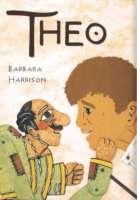
Theo
When the Nazis announce that all orphans in Athens are to be rounded up and sent to Germany, Theo and his older brother Soc travel to a small village where they can hide and join the resistance movement. But Soc is executed for sabotage, leaving Theo to be taken in by the resistance fighters Patir Alex and his wife. Now Theo’s only companion from before the war is his shadow puppet, Karagiozis, a beloved and heroic character in Greek puppet theater. The young puppeteer puts on shows with Karagiozis, depicting scenes of Nazi defeat and re-enacting tales about the history of Greece, as he struggles to understand the meaning of heroism and to make sense of what is happening in the world around him. Against the bleak backdrop of the fiercely beautiful Greek landscape, this moving, dramatic story is about kindness, bravery, and the perseverance of humanity even in the most devastating of times.
The Boys from St. Petri
Lars joins his brother’s secret society, whose pranks to ridicule the Nazis occupying Denmark in 1940 escalate to full-scale sabotage after a young laborer shows them the real meaning of war.
Jacob’s Rescue
Once Jacob Gutgeld lived with his family in a beautiful house in Warsaw, Poland. He went to school and played hide-and-seek in the woods with his friends. But everything changed the day the Nazi soldiers invaded in 1939. Suddenly it wasn’t safe to be Jewish anymore.One afternoon, eight-year-old Jacob slipped through a hole in the ghetto wall to meet Alex Roslan, a kind Christian man who agreed to be his new “uncle.” The Roslan family, at the risk of their own lives, kept Jacob’s identity as a Jew hidden.Every day of hiding meant a new danger and a threat of discovery. Jacob worried about his real family and longed to go to school and play outside like the Roslan children. Yet the fear, the hardships, and the hunger brought Jacob closer and closer to all the Roslans–until at last the time of hate and war came to an end and a new chapter began in all their lives.
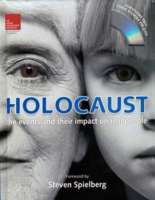
Holocaust
Explaining the complex political and social backdrop that allowed the Holocaust to occur, as well as its progression and aftermath, this comprehensive volume contains first-hand testimony from survivors and enables readers to appreciate the impact of the Holocaust on real people and the lives they and their families have rebuilt today.
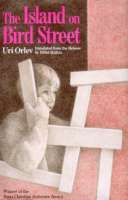
The Island on Bird Street
During World War II a Jewish boy is left on his own for months in a ruined house in the Warsaw Ghetto, where he must learn all the tricks of survival under constantly life-threatening conditions.
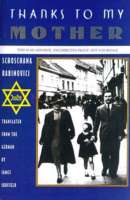
Thanks to My Mother
Susie Weksler was only eight in 1941 when Hitler’s forces invaded her Lithuanian city of Vilnius, a great center for Jewish learning and culture. Soon her family would face hunger and fear in the Jewish ghetto – but worse was to come. When the ghetto was liquidated, some Jews were selected for forced labor camps; the rest were killed. Susie would live – because of the courage and ingenuity of her mother. It was her mother who carried Susie, hidden in a backpack, to the group destined for the labor camps; who disguised her as an adult in makeup and turban to fool the camp guards; who fed her body and soul through gruesome conditions in three concentration camps and a winter “death march”; who showed her the power of the human spirit to endure.
At The Firefly Gate
Henry has always felt like an outsider and things are about to get worse when his family moves to the countryside and the prospect of a new school looms. He retreats more and more into his shell, until he meets Dottie, a frail old lady, who has tremendous spirit. He feels as though he knows her, as though they have been friends for many years. And as she tells him about her wartime romance with a Royal Air Force navigator also named Henry, our Henry is drawn into that world. In a series of mysterious, sometimes frightening events he re-enacts Henry’s life . . . and learns that despite being dreadfully afraid, Henry acted heroically at the cost of his own life. Only our Henry knows the true story and it shows him a way through his own self-doubts and misgivings.
The Entertainer and the Dybbuk
One night, the Great Freddie, a young ventriloquist, is possessed by a dybbuk, a Jewish spirit. The dybbuk is a scrappy demon who glows as if spray-painted by moonlight. The dybbuk is revealed to be the ghost of a twelve-year-old boy named Avrom Amos, a victim of the Nazis during World War II. In a plucky scheme to seek revenge, he commandeers The Great Freddie’s stage act and entraps the entertainer in the postwar ashes of Germany. Behind the footlights, the dybbuk lights up the terrible fate of a million and a half Jewish children, including Avrom himself.