
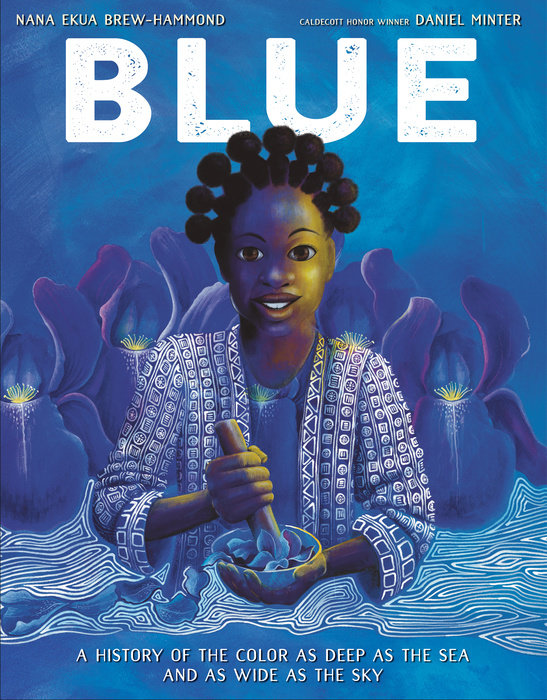
 Blue by Nana Ekua Brew-Hammond with illustrations by Daniel Minter is an informative and unusual nonfiction book. The beautiful illustrations extend the text that describes varied aspects of the color blue; the complicated history, impact on art, science and much more.
That history started way back in time. “As early as 4500 BC, diggers found blue rocks called lapis lazuli in mines deep below Afghanistan’s Sare-e-Sang valley.” Early sources of the color came from crushed rocks and “in the belly of a certain shell fish.” Later, dyers produced blue from the indigo plants. “In parts of Africa, some merchants used strips of indigo cloth to buy people, and sell them into slavery. … In this evil side of the trade for blue, landowners around the world abused or enslaved countless people just so they could grow more indigo.” In 1905, scientist, Adolf von Baeyer, won the Nobel Prize for “creating a chemical blue.” He made that achievement after forty years of trying. Continue reading
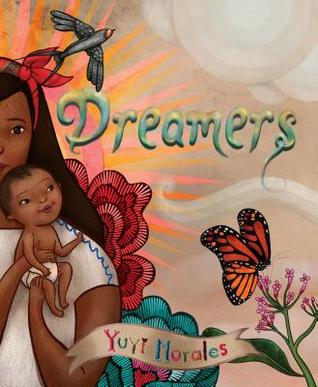 “Rompe nuestra burbuja” were the words that Mariposa (self-selected pseudonym), an eight-grade Chilean student, used when giving her opinion about the benefits of reading stories that explore how people from different cultures live. She revealed, “Porque uno aprende nuevas cosas y rompe nuestra burbuja, nos muestra diferentes realidades de la vida diaria [because we learn new things, and it pops our bubbles. It shows us different realities from daily life].”
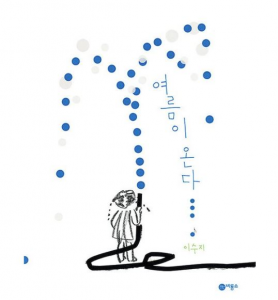 In recent years, increasing numbers of translated and non-translated Korean children’s literature are available to Japanese readers. Yes, Japanese readers read and consume Hangul (written Korean) directly beyond literature experiences (e.g., language learning). We’ve found several major Japanese publishing companies, JBBY (Japanese Board on Books for Young People), bookstores, and public and school libraries feature books by Korean authors and illustrators through social media and physical spaces. Three beloved Korean authors who also illustrate their work influenced Korean picturebooks’ reputations in Japan positively beyond what Japanese audiences are familiar with over the years (i.e., postcolonial texts). In this post, we share three Korean authors, Heena Baek, Suzy Lee and Heeyoung Ko who are among those gaining great popularity in Japan.
 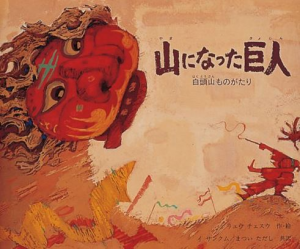 This month, Junko and I explore Korean picturebooks translated and published in Japan to analyze colonization patterns in Korea. In 1910, Korea was annexed by the Empire of Japan after years of war, intimidation and political machinations;
 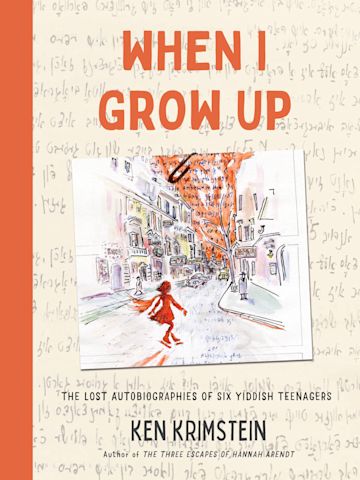 When I Grow Up: The Lost Autobiographies of Six Yiddish Teenagers by Ken Krimstein is a collection of “lost autobiographies” that breaks with many norms readers might expect from autobiographical works. And I predict YA literature readers will be fascinated by the power of these young people’s words and experiences and the “author’s” visual interpretation of their memoirs.
 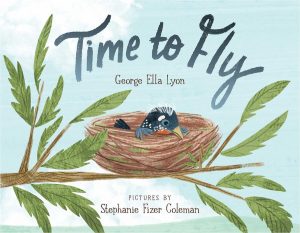 Whenever I see a new book by George Ella Lyon, I immediately take notice. Her most beloved form of writing is poetry where she provides us with eloquent lyrical verse in each of her books she delivers. I can hear her voice as I read through her books, much like the voice you hear that can be heard on YouTube videos or on her