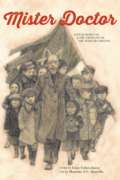
November 1940. A circus parade walks through the streets of Warsaw, waving a flag and singing. They are 160 Jewish children, forced by the Nazis to leave their beloved orphanage. It’s a sad occasion, but led by Doctor Korczak, their inspirational director, the children are defiantly joyful. Their new home is in the ghetto, a prison for Jews. Day by day, more people arrive. Some are forced to live on the street and freeze to death. Others die of disease and starvation. Though they lack food, warmth, and freedom, the children’s spirits are sustained by the steadfast respect and kindness of “Mister” Doctor. But these children will never grow up: in August 1942, they board the train that will carry them away to the death camps. Offered his freedom, Doctor Korczak refuses to abandon the children and proudly joins them on their last journey.
Intermediate (ages 9-14)
Material appropriate for intermediate age groups
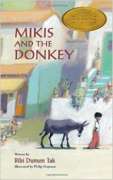
Mikis and the Donkey
One day, Mikis’s grandfather has a surprise for him: a new donkey waiting! Mikis falls in love with the creature, but his grandparents tell him that the donkey is a working animal, not a pet. However, they still let Mikis choose her name — Tsaki — and allow the two of them to spend their Sundays together. Mikis and Tsaki soon become fast friends, and together the two have some grand adventures. Eventually, both Mikis and his grandfather learn a bit more about what exactly it means to care for another creature.
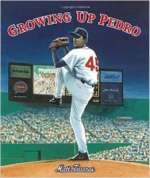
Growing Up Pedro
Before Pedro Martínez pitched the Red Sox to a World Series championship, before he was named to the All-Star team eight times, before he won the Cy Young three times, he was a kid from a place called Manoguayabo in the Dominican Republic. Pedro loved baseball more than anything, and his older brother Ramon was the best pitcher he’d ever seen. He’d dream of the day he and his brother could play together in the major leagues, and here, Matt Tavares tells the story of how that dream came true.
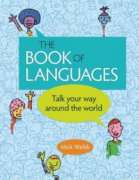
The Book of Languages
We use language all day, every day – probably without thinking much about it. But if you stop and consider it, language is not only extremely important, it’s fascinating, too! Use of language is one of the key things distinguishing humans from other animals, and nearly 7,000 languages are spoken around the world. Without it, we’d be hard pressed to communicate, express ourselves, or understand others.
Historical Animals
Throughout history, animals have shaped the world as we know it. But rarely have they received the recognition they deserve. Until now. It’s not only people who make history; sometimes animals do, too. Whether it’s because of their amazing strength, courage under fire, or just being in the right place at the right time, every one of the animals you will learn about here is famous.
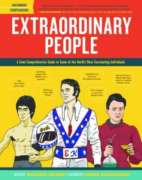
Extraordinary People
Inside this book, you’ll find stories of 50 extraordinary people such as: Evel Knievel, who jumped his motorcycle over 14 Greyhound buses; The Iceman, the most well-preserved human, found in the ice after 5,300 years; Sam Patch, who jumped Niagara Falls for $75; Helen Thayer, who walked to the North Pole alone; Roy Sullivan, who was struck by lightning 7 times. These intriguing facts and hundreds more await curious readers, amateur historians, and anyone who aspires to the altogether extraordinary.
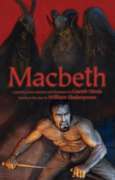
Macbeth
Set against the moody backdrop of eleventh-century Scotland, Gareth Hinds’s captivating, richly illustrated interpretation takes readers into the claustrophobic mind of a man driven mad by ambition. An evil seed takes root in the mind of Macbeth, a general in the king’s army, when three witches tell him he will one day be king. At the urging of his wife, he resolves to take the throne by the most direct path: a dagger in the heart of King Duncan.
Tiger Boy
A tiger cub has escaped from a reserve in the Sunderbans in West Bengal, India, and Neel, a poor boy from the islands, is determined to find her in order to save her from being captured and sold on the black market by Mr. Gupta and his men.
The Great War
A toy soldier. A butter dish. A compass. Mundane objects, perhaps, but to the remarkable authors in this collection, artifacts such as these have inspired stories that go to the heart of the human experience of World War I.
Featured in WOW Review Volume X, Issue 2.
Across the Tumen: A North Korean Kkotjebi Boy’s Quest
As North Korea undergoes a devastating famine, Yeong-dae loses both his parents and is forced to beg on the streets. Soon, this young boy sets off on a desperate journey to China to find his sister—his last living family member. Captured by the authorities, he is sent back to the North, where he is thrown in jail and tortured.
See the review at WOW Review, Volume VII, Issue 3