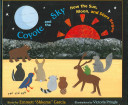
According to Santa Ana Pueblo legend, the animals’ spirit Leader created the sun, moon, and stars by using woven yucca mats and hot coals. He selected certain animals to climb from their homes in the Third World up to the Fourth World. The Squirrel, the Rabbit, and the Badger were all allowed to go. The Coyote, however, was forbidden to accompany them because he was always causing trouble and stealing food from the others. Regardless of what he was told, Coyote refused to stay in the Third World. He found a hiding place and waited for a chance to follow the animals to the Fourth World. When the other animals discovered Coyote, they summoned the Leader to the Fourth World to deal with him. Coyote’s punishment is a lesson in what happens to animals, or people, when they refuse to obey instructions. Writing for the younger reader, Emmett ‘Shkeme’ Garcia, a member of the Santa Ana tribe, shares his Pueblo’s story of the beginnings of the stars and constellations. Victoria Pringle’s illustrations provide visual elements that enhance the action of the story. All ages.
Intermediate (ages 9-14)
Material appropriate for intermediate age groups
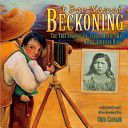
A Boy Named Beckoning: The True Story of Dr. Carlos Montezuma, Native American Hero
This story reveals the life of a Yavapai-Apache boy named Wassaja, who was kidnapped from his tribe and sold as a slave. Adopted and renamed Carlos Montezuma, the young boy traveled throughout the Old West, bearing witness to the poor treatment of American Indians. Carlos eventually became a doctor and leader for his people.
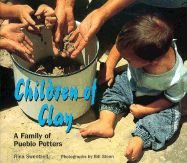
Children Of Clay: A Family Of Pueblo Potters (We Are Still Here)
Members of a Tewa Indian family living in Santa Clara Pueblo in New Mexico follow the ages-old traditions of their people as they create various objects of clay.
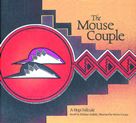
The Mouse Couple
A mouse couple, in search of the mightiest husband for their daughter, approach the sun, the clouds, the wind, and a butte, before the unexpected victor finally appears.
A Rainbow At Night: The World In Words And Pictures
A Rainbow at Night is a lively collection of art by Navajo children. Through these imaginative paintings and drawings, readers will learn about some of the special traditions of Navajo life while discovering the universality shared by children of all backgrounds. The images are accompanied by photographic portraits of the artists and personal descriptions of their work.
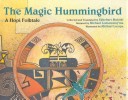
The Magic Hummingbird: A Hopi Folktale
Malotki & Lacapa, who previously collaborated on THE MOUSE COUPLE, bring this magical HOPI FOLKTALE to life, telling how two children left behind in the drought stricken village of Oraibi, through their creativity & playfulness, influence Muy’ingwa, the god of fertility, to return the land to fruitfulness. EKKEHART MALOTKI, professor of languages at Northern Arizona University, has spent many years working on the preservation of the Hopi language & culture. MICHAEL LACAPA has previously illustrated four children’s books, three of which he also authored. Of APACHE, HOPI & TEWA descent, he has gained inspiration from traditional storytellers & the traditional designs & patterns found in SOUTHWEST basketry & pottery. His illustrations for THE MAGIC HUMMINGBIRD convey the range of experience typical of life in the Hopi mesas, from the dullness of the parched earth to the brilliance of the multicolored corn & the magical hummingbird who delivers the children’s prayers for renewal. THE MAGIC HUMMINGBIRD $15.95 (cloth) plus $3,00 s/h. Order from Kiva Publishing, 102 E. Water St., Santa Fe, NM 87501 (505/820-7413).
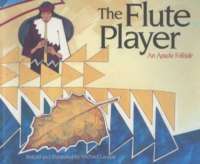
The Flute Player
An introduction to Native American folklore – illustrated by the author
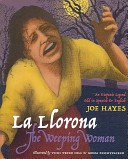
La Llorona / The Weeping Woman
La Llorona (yoh-RROH-nah), now available for the first time in a full-color paperback, is the ghost story to end all ghost stories and truly the most popular cuento of Hispanic America. This story of the weeping woman appears at first to be only a frightening tale filled with mysterious events which cause children to sit wide-eyed. Yet it’s the simple, universal wisdom at the core of the story that finally works its magic into their hearts. Joe Hayes is best known for his bilingual tellings of stories from the American Southwest. La Llorona is one of his favorite stories.
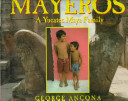
Mayeros: A Yucatec Maya Family
Text and photographs present the life and customs of the descendants of the Maya now living in the Yucatan Peninsula area of Mexico.
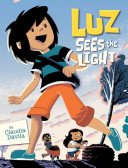
Luz Sees The Light
Change is in the air. Power outages are increasing, and gas prices are soaring. At first, 12-year-old Luz balks, hardly thrilled by the prospect of actually having to walk to the mall. But Luz doesn’t mope for long. After all, her name — pronounced “loose” — means “light.” Soon, this intelligent and spirited chica begins to understand that she must change with the times. As food prices rise, Luz decides to help create a more self-sustainable community by transforming a run-down city lot into a garden where she and her neighbors can grow their own fruits and vegetables. But when she solicits help from her friends — boy-crazy Anika and computer-whiz Robby — they think she’s a little loco. Luz pedals her idea on the street, but the community is equally dismissive. Can Luz pull off her plan and help change her world alone? This graphic novel is a kid-friendly take on sustainable living in a fossil fuel dependent world. Preteens will love the fearless, fiery and resourceful heroine and will find inspiration in her efforts to steer her society toward self-sustainable living. Hip and energetic illustrations bring Luz and her world to life in a jazzy, appealing fashion, and a bonus chapter teaches kids how to make garden compost.