
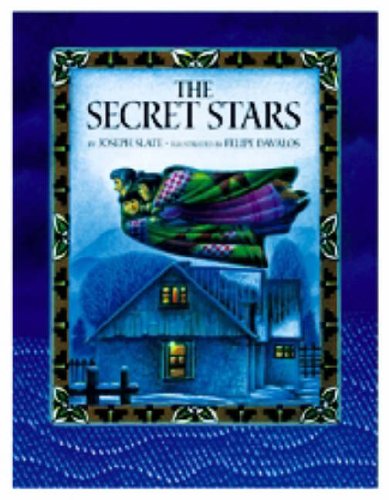
 In New Mexico on a rainy, icy Night of the Three Kings, Sila and Pepe worry that the kings will not be able to use the stars to navigate, so their grandmother takes them on a magical journey to see the secret stars all around them.
Age
Catalog sorted by age group
Tiny Tortilla
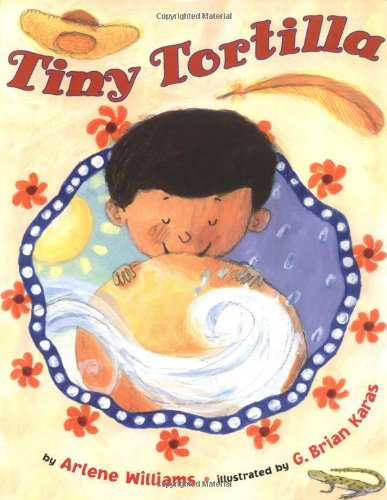 Juan Carlos is dreaming of a hot, tasty tortilla. But the old tortilla maker in the plaza has sold them all—except for a tiny piece of masa (corn dough) that she gives him with instructions.This tiny piece is magical—it becomes a hat to shade him from the hot sun, a boat to carry him through a flood, and an enormous feather that floats him home. And then it becomes a delicious tortilla for his well-earned supper. Featuring inventive art with Southwestern folk accents, this is a rich and satisfying book about finding magic in ordinary places.
Projects About the Spanish West (Hands-On History)
 Social studies projects reflecting Spanish culture on the American West.
Miguel Hidalgo Y Costilla: Father of Mexican Independence
 Relates the life story of the Catholic priest who became an activist in working to free Mexico from Spanish rule.
Sundays on Fourth Street / Los Domingos En La Calle Cuatro
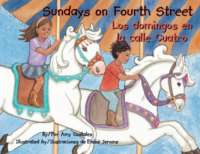
”My cousin Pepe combs my hair back just like his, and Aunt Pilar laughs. Then she slides her red lipstick across my lips, but Mama wipes it off because I’m too young. Mama puts on her new jeans, and Aunt Pilar polishes her high heels. Uncle Armando finishes washing his old car.” And then, a young girl and her family pile into the shiny car, grown-ups in the front, and kids in the back, and head to Fourth Street.Sundays spent on Fourth Street are magical, family outings that three young cousins eagerly anticipate. Strolling down Fourth Street with their parents, the children encounter a bustling wonderland filled with music, food, and fun. The cousins savor sharp bursts of flavor from mangos on a stick covered with lemon, chili and salt; delight in the sight of folk dancers spinning in the plaza; revel in rides and raffles at the church carnival; and yearn for clothes and toys they see in shop windows. While the children may not get the things that so often catch their attention, they can always look forward to more fun together next Sunday on Fourth Street. Based on real-life visits to Fourth Street in Santa Ana, California, author Amy Costales has written a story that pays homage to a special street and, more importantly, time spent with loved ones. Paired with Elaine Jerome’s colorful illustrations that depict lively street scenes, readers of all ages will enjoy Sundays on Fourth Street.
The Tequila Worm
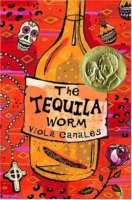
Sofia comes from a family of storytellers. Here are her tales of growing up in the barrio in McAllen, Texas, full of the magic and mystery of family traditions: making Easter cascarones, celebrating el Dia de los Muertos, preparing for quinceañera, rejoicing in the Christmas nacimiento, and curing homesickness by eating the tequila worm. When Sofia is singled out to receive a scholarship to boarding school, she longs to explore life beyond the barrio, even though it means leaving her family to navigate a strange world of rich, privileged kids. It’s a different mundo, but one where Sofia’s traditions take on new meaning and illuminate her path.
El Lector
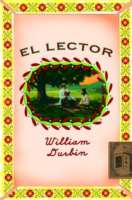
Thirteen-year-old Bella wants to be a lector just like her grandfather. All day long he sits on a special platform in the cigar factory in Ybor City, Florida, reading books, newspapers, and current events to workers as they roll the cigars. Lectors have always been highly respected members of their Cuban American community.But now times are changing. When the factory workers clash with the owners, violence erupts and the lectors start losing their jobs. And then there’s the radio. Could this small device replace the lector? It’s up to Bella to determine her future and help her people preserve their history.
Someone Like Summer
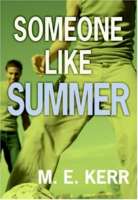
Annabel first sees him playing soccer near her house. His name is Esteban—she sees it on the back of his team shirt. He notices her, smiles, then looks back over his shoulder at her again.
It is the beginning of summer in the resort town of Seaview. It is also the start of a romance between a young Colombian who came to town to work and the daughter of a local contractor whose crews are entirely Latino—new immigrants who are changing the face of Seaview.
This is the summer of war in Iraq, and of Hurricane Katrina. But in Seaview there are other concerns. In Annabel’s house her new boyfriend is at the top of the list. And Esteban’s sister has harsh words for his choice of a girlfriend.
M. E. Kerr weaves a compelling story of star-crossed love and a small-town problem of nationwide significance.
Eating Enchiladas (Simply Sarah)
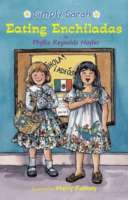
Sleepovers are especially fun at a Mexican family’s house.
Latino Voices (Writers Of America)
 Latino poets, novelists and journalists contribute to an exciting anthology of works that give voice to the dreams, desires, fears, and painful struggles of the Latino community as they write about family, oppression, and success while living as Americans.