
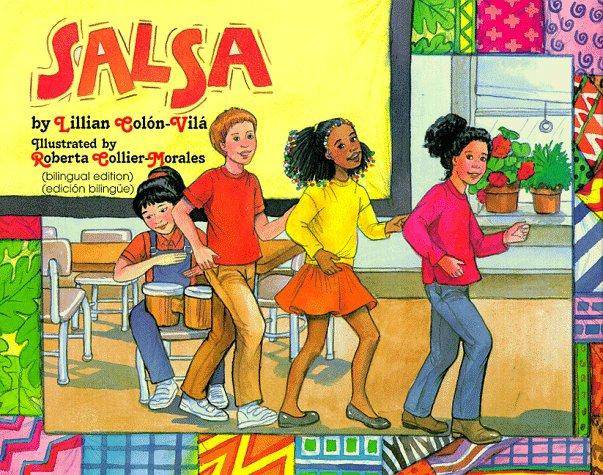
 Rita, a young girl living in New York’s El Barrio, describes the Afro-Caribbean dance music, salsa, and imagines being a salsa director.
Primary (ages 6-9)
Material appropriate for primary age groups
Swing
A lantern, a mixing bowl, everything they ever borrowed from the neighbors, even their dog Leopoldo — Josey’s absentminded parents lose EVERYTHING. Sometimes they even lose track of time when they promise to do something fun with Josey. But then, with a big, rusty CLANK, a missing lantern falls out of the backyard tree, and suddenly Josey sees a way to solve her family’s problems. It’s going to take a lot of help, a little magic and a turbo-powered swing, but Josey might just have a shot at bringing the neighborhood — and her family — back together again.
Angel City
 Old man Joseph never imagined a family could start this way. When he finds a baby abandoned on a lonely L.A. street, he vows to raise it as his own. He’s an old farmer and knows nothing of parenting, even less about raising a Mexican baby.Yet Joseph keeps his promise and with time he realizes that even in the darkest barrio, there is a world to explore, songs and stories to be shared. Even in the darkest barrio, there is love.
Illustrated by Caldecott-Honor Medal winner Carol Byard and beautifully told by Tony Johnston, Angel City is a moving tribute to the strength of family no matter its form.
Canto Familiar
 Celebrate childhood and the Mexican American experience with this lively collection of poems accompanied by beautiful woodcut illustrations. This touching and humorous volume is a vibrant companion to Neighborhood Odes.
Chato And The Party Animals
 Chato, the coolest cat in el barrio, loves to party–but not his best buddy, Novio Boy. Birthday parties always make him blue. “I’m from the pound,” he tells Chato. “I don’t know when I was born. I never knew my mami. I never even had a birthday party, or nothing.”So Chato plans the coolest surprise party for Novio Boy, inviting all of el barrio, and cooking up a storm. But he forgets the most important thing–inviting Novio Boy! Luckily, just as everyone starts remembering all the things they used to love about their long-lost friend, the birthday boy arrives with his own surprise–himself!In a starred review, Publishers Weekly called Chato’s Kitchen “Wickedly funny…Guevara’s cats are delicious send-ups of barrio characters, and Soto’s words glisten with wit. Salud to this magical pairing of talents.”
Estela En El Mercado De Pulgas (Spanish Edition)
 Now available in Spanish, this is the story of a Mexican American girl who learns to value the act of giving when she attends her first Swap Meet.
Jonron!
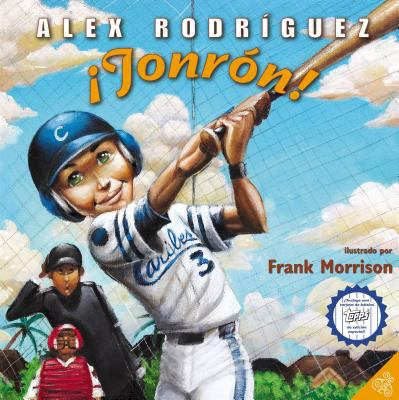 A story about a kid who wants to be the best baseball player ever but just keeps messing up so he wakes up earlier and tries harder just to become the best and win the championship game. This book is written by Alex Rodriquez, a Yankee baseball player.
Play Ball!
 Based on the childhood of New York Yankees catcher Jorge Posada, this is the story of a boy from Puerto Rico who worked hard to be his best and didn’t stop until he was a champion.
Roberto Clemente: Baseball Legend
Introduces the life of Pittsburgh Pirates rightfielder Roberto Clemente, the first Latino baseball player to gain wide recognition for his contributions on and off the playing field.
Abuelita Full Of Life/Abuelita Llena De Vida
 Jose is not sure what to expect when his grandmother from Mexico moves in…except that he will certainly have to change his ways. What he discovers is that he doesn’t mind one bit. Abuelita is full of surprises! She is full of life!