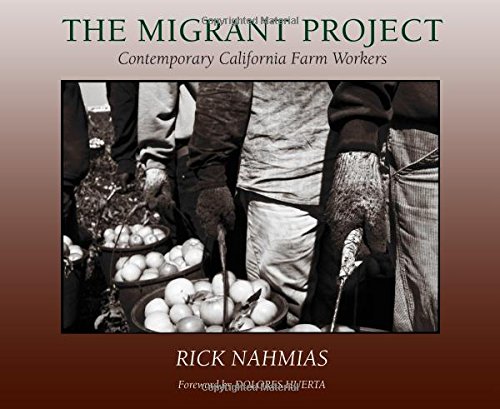
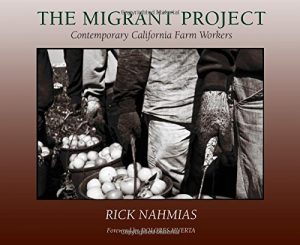
 The images in this book highlight the lives of the men and women who struggle to exist while literally feeding this country. Countless words and studies over decades bemoan the plight of those who toil in the fields, but Rick Nahmias’s pictures bring farm workers to us in an unforgettable way, taking us beyond stoop labor stills and into their intimate moments and inner lives. Having traveled over four thousand miles to document California’s migrant workforce, Nahmias’s soulful images and incisive text go beyond one state’s issues, illuminating the bigger story about the human cost of feeding America. The Migrant Project includes the images and text of the traveling exhibition of the same name, along with numerous outtakes and an in-depth preface by Nahmias. Accompanied by a Foreword from United Farm Worker co-creator Dolores Huerta, essays by top farm worker advocates, and oral histories from farm workers themselves, this volume should find itself at home in the hands of everyone from the student and teacher, to the activist, the photography enthusiast, and the consumer.”Every day in the hot fields of California, hundreds of thousands of farmworkers toil for long hours at low pay to provide fruit and vegetables to feed our nation. Most Americans never see the faces of these hard-working men and women, and know little or nothing about the harsh conditions they endure. The Migrant Project has done an extraordinary job documenting these workers’ lives. Rick Nahmias’s powerful photographs and the beautiful essays of dedicated advocates tell an inspiring story of the farmworkers’ historic struggle for the respect, the dignity, and the justice they so obviously deserve.”–U.S. Senator Edward M. Kennedy, Massachusetts “Nahmias’s images starkly capture both the humanity of the farm workers who literally feed our country, and the inhumanity of a system which has kept them and their predecessors prisoners to poverty for decades. This book is a testament to the flesh-and-blood cost of feeding America.”–Arianna Huffington, author, editor-in-chief of The Huffington Post, and nationally syndicated columnistExhibition schedule for The Migrant Project photographs:Mexican Cultural Institute, Washington D.C., February 21-April 14, 2008Museum of Tolerance, Los Angeles, California, March 4-April 25, 2008For more information on immigrant and migrant worker issues, please access the following organizations:Farmworker JusticeCalifornia Rural Legal AssistanceNational Association of State Directors of Migrant EducationNational Council for La RazaInternational Relations Center Americas ProgramCongressional Hispanic Caucus InstituteGlobal Commission on International MigrationInstitute for Agriculture and Trade PolicyNational Farmworker MinistryNational Rural Funders CollaborativeNational Farm Worker AllianceSouthern Poverty Law CenterUMOS Clergy and Laity United for Economic JusticeAmerican Friends Service CommitteeAFL-CIOCoalition for Comprehensive Immigration ReformCatholic Campaign for Immigration Reform