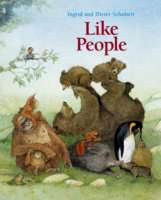
Baby animals have moms and dads who help them to grow up and to take care of themselves–just like people!

Catalog sorted by genre
Baby animals have moms and dads who help them to grow up and to take care of themselves–just like people!

Otto Malpense and his friends thought their first year at the Higher Institute of Villainous Education was the most adventurous and exciting that they would ever encounter. They were dead wrong. When Otto and Wing are allowed off campus to attend Wing’s father’s funeral in Japan, they have no idea it’s a trap, all part of a lethal plan organized by Cypher, the most ruthless supervillain any of them have ever known. He intends to use them to retrieve the Overlord Protocol, a device that has the capacity to help him take over the world. But when things go terribly wrong, Otto will stop at nothing to hunt him down and make him pay. With the help of Laura, Shelby, Raven, and his former nemesis, Dr. Nero, Otto must find a way to defeat an enemy that has overcome some of the planet’s most infamous villains without even breaking a sweat. Because if he doesn’t, the world as they know it will be changed forever.
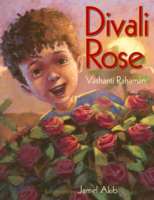
Ricki is looking forward to Divali, the Hindu Festival of Lights. He’s also waiting for two special rosebuds to bloom. The buds are on the bush that his grandfather had planted in the front yard. His grandfather promises that the roses will be the color of Divali. One morning, on his way to school, Ricki bends one of the rosebuds to get a closer look and accidentally snaps it off. When his grandfather believes the new neighbors have stolen his rosebud, Ricki must summon the courage to confess what he has done.
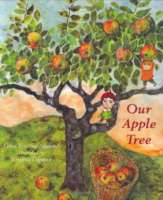
Here’s a whimsical and very useful look at the life cycle of the apple tree. With two helpful tree sprites as guides, readers travel from spring, when the apple tree blossoms, through summer, when the fruit grows, to fall and the harvest. Along the way, you’ll learn about the life of the tree and the animals that visit – from insects that pollinate the flowers to deer that eat the fallen fruit.
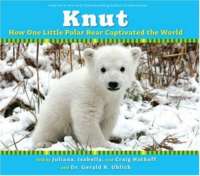
When Knut was born, the first polar bear cub at the Berlin Zoo in more than thirty years, he was no bigger than a snowball and unable to care for himself. His mother, a rescued East German circus bear, didn’t know how to take care of Knut and rejected him. Knut would have died if it weren’t for Thomas Dorflein, a zookeeper who nurtured Knut, feeding him, sleeping with him, and giving him the love and attention Knut needed to thrive. But Thomas wasn’t the only one who adopted Knut. The adorable little polar bear captured the world’s attention, and now Knut is loved around the globe.
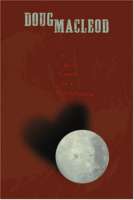
As his odd parents fight the regional environmental health officer about their dung-covered house and his melodramatic younger brother demands attention, fourteen-year-old Australian Seth Parrot simply seeks the muscular woman of his dreams.
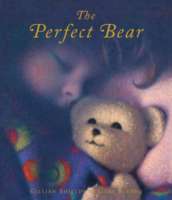
There once was a bear who was very fine. He was so polished and clean and proud. And that made him the Do Not Touch bear. As time passed, he become worn and gray and much less fine. But he was also loved by a little girl. And that made him the Perfect Bear.
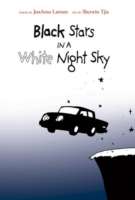
Black Stars in a White Night Sky, Lawson’s second book of poetry for children, includes fractonyms, concretes, as well as short lyrics and poems that don’t rhyme. Lawson stretches the boundaries of what is normally thought of as children’s poetry, but not at the expense of the books entertainment value or clarity. The poems are written within hearing of both children and adults; philosophy and tomfoolery are equally at home in this exemplary new tome.
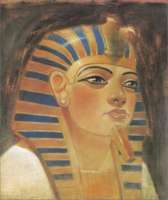
This is an informative picturebook biography of Egypt’s only successful female pharaoh. Hatshepsut gained Egypt’s throne when all her male siblings — including the half brother whom she married — died. Originally named regent to her nephew, Tuthmosis III, Hatshepsut gradually assumed more and more power, and eventually had herself crowned pharaoh. Since no word existed for a female ruler, Hatshepsut used the male title. She also wore men’s clothing and a beard, and referred to herself as “he” as well as “she.”
Hatshepsut’s reign was a peaceful and prosperous one. She sent an expedition to explore Punt, an exotic land of riches, and built beautiful monuments, including a magnificent temple on which she had artists carve and paint scenes from her life and reign. Following her death, Tuthmosis III tried to erase evidence of Hatshepsut’s reign to make it seem as though he had succeeded his father directly.
Catherine M. Andronik explains how, despite this vandalism, archaeologists have been able to piece together the story of this unconventional pharaoh’s life.
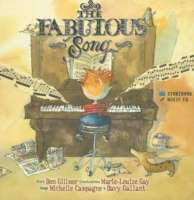
Young Frederic Pipkin tries very hard to follow in his musical family’s footsteps, but every new instrument he plays sounds worse than the one before. Includes songs.