
A girl and her community celebrate the arrival of the water man when he comes on his weekly visit to distribute water to a Cuban village.
Realistic Fiction
Realistic Fiction genre
My Day With The Panye
In the hills above Por au Prince, a young girl named Fallon wants more than anything to carry a large woven basket to the market, just like her Manman. As she watches her mother wrap her hair in a mouchwa, Fallon tries to twist her own braids into a scarf and balance the empty panye atop her head, but realizes it’s much harder than she thought. BOOM! Is she ready after all?
A Sky-Blue Bench
It’s Afghan schoolgirl Aria’s first day back at school since her accident. She’s excited, but she’s also worried about sitting on the hard floor all day with her new prosthetic helper-leg.
The Same Sun Was In The Sky
A boy and his grandfather go hiking in the Arizona desert, where they observe the many rock carvings and imagine the lives of the Hohokam people who lived there in ancient times.
Nibi’s Water Song
Nibi, a Native American girl, cannot get clean water from her tap or the river, so she goes on a journey to connect with fellow water protectors and get clean water for all.
Thunder’s Hair
Thunder is tired of dealing with bullies at school who pick on him because of his long hair. They don’t understand why a boy would grow his hair long. When he is sure he has made up his mind to cut it, his grandmother reminds him of the power of having long hair.
Rainbows In December
Kimi’s grandma helps her navigate one of life’s hardest experiences, the death of a loved one. When Kimi is faced with confusing emotions and questions, she receives her answers in different ways. These ways help her learn all about the natural process of life and death as well as help her feel a connection to her loved one.
Indivisible
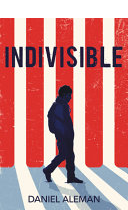
This timely, moving debut novel follows a teen’s efforts to keep his family together as his parents face deportation. Mateo Garcia and his younger sister, Sophie, have been taught to fear one word for as long as they can remember: deportation. Over the past few years, however, the fear that their undocumented immigrant parents could be sent back to Mexico has started to fade. Ma and Pa have been in the United States for so long, they have American-born children, and they’re hard workers and good neighbors. When Mateo returns from school one day to find that his parents have been taken by ICE, he realizes that his family’s worst nightmare has become a reality. With his parents’ fate and his own future hanging in the balance, Mateo must figure out who he is and what he is capable of, even as he’s forced to question what it means to be an American. Daniel Aleman’s Indivisible is a remarkable story–both powerful in its explorations of immigration in America and deeply intimate in its portrait of a teen boy driven by his fierce, protective love for his parents and his sister.
Ander And Santi Were Here: A Novel
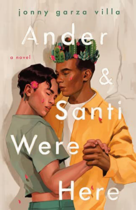
Nonbinary teen Ander is ready to leave their family’s taquería and focus on their art, but when Santi, an undocumented immigrant from Mexico, begins to work at the restaurant, the two teens spark a romance made complicated by immigration police.
Lion Lights: My Invention That Made Peace With Lions
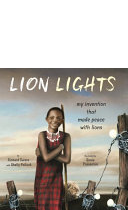
Richard Turere’s own story: Richard grew up in Kenya as a Maasai boy, herding his family’s cattle, which represented their wealth and livelihood. Richard’s challenge was to protect their cattle from the lions who prowled the night just outside the barrier of acacia branches that surrounded the farm’s boma, or stockade. Though not well-educated, 12-year-old Richard loved tinkering with electronics. Using salvaged components, spending $10, he surrounded the boma with blinking lights, and the system works; it keeps lions away. His invention, Lion Lights, is now used in Africa, Asia, and South America to protect farm animals from predators.
Featured in WOW Review Volume XVII, Issue 2.