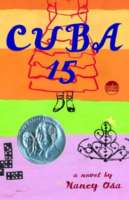
Cuba 15 (Readers Circle)

Violet Paz has just turned 15, a pivotal birthday in the eyes of her Cuban grandmother. Fifteen is the age when a girl enters womanhood, traditionally celebrating the occasion with a quinceañero. But while Violet is half Cuban, she’s also half Polish, and more importantly, she feels 100% American. Except for her zany family’s passion for playing dominoes, smoking cigars, and dancing to Latin music, Violet knows little about Cuban culture, nada about quinces, and only tidbits about the history of Cuba. So when Violet begrudgingly accepts Abuela’s plans for a quinceañero–and as she begins to ask questions about her Cuban roots–cultures and feelings collide. The mere mention of Cuba and Fidel Castro elicits her grandparents’sadness and her father’s anger. Only Violet’s aunt Luz remains open-minded. With so many divergent views, it’s not easy to know what to believe. All Violet knows is that she’s got to form her own opinions, even if this jolts her family into unwanted confrontations. After all, a quince girl is supposed to embrace responsibility–and to Violet that includes understanding the Cuban heritage that binds her to a homeland she’s never seen. This is Nancy Osa’s first novel.

From the Hardcover edition.
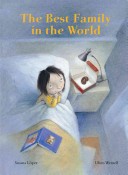
The Best Family in the World

Carlotta anxiously awaits the arrival of her new family. What will they be like? She imagines all kinds of wonderful families…astronauts, pastry chefs, even pirates. How nice to find out that they are the best family in the world.

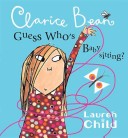
Clarice Bean, Guess Who’s Babysitting

Lauren Child’s spunky character returns and—as if things could get any livelier in Clarice Bean’s household—Uncle Ted is babysitting! Who can Mom and Dad get to babysit the feisty Clarice, her pesky brother Minal Cricket, and the school’s guinea pig, Albert, who’s visiting for spring break? (Not to mention teenage brother Kurt, who abhors daylight; big sis Marcie, who chats on the phone all day; and Granddad, who tends to wander off.) Only Uncle Ted, firefighter and movie addict, can be persuaded. Will he survive the week?

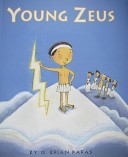
Young Zeus

This is the story of how young Zeus, with a little help from six monsters, five Greek gods, an enchanted she-goat, and his mother, became god of gods, master of lightning and thunder, and ruler over all. in doing so, he learned a lot about family. Who knew that having relatives could be so complicated, even for a god? Brian Karas says about his inspiration for this book, “I’ve been interested in working with myths, but I felt as though I needed a personal connection. I am of Italian and Greek descent so I started to think of my Greek heritage. But the world of Greek mythology was unknown to me and in a way felt inaccessible, until I learned more. The Greek believed their gods and goddesses to be, among other things, very human-like in their emotions and behavior. They had complicated family relations. They were flawed on many levels – they could be petty, impulsive and unreasonable. I started to recognize them. Then I travelled to Greece, I knew this place! This personal connection gave me what I felt I needed to work with a Greek myth. But which? “I am also interested in the beginnings of things. When I started researching I kept looking for the ultimate source, the very first account, and largely drew from Hesiod’s Thegony. Being interested in origins, I was also drawn to the Greek’s version of the very beginning of things and it was here that I settled on the story of Zeus. There is much written about his reign as ruler of heaven and earth but very little about his youth and rise to power. The story of how his mother hid him on the island of Crete is a familiar one but there was a big gap in everything I read of what happened in between his life as an infant and his glory days. Young Zeus is my account of how things might have gone for young Zeus and what led him to become the omnipotent almighty god that he was believed to be.”

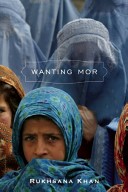
Wanting Mor

Jameela and her family live in a poor, war-torn village in Afghanistan. Even with her cleft lip and lack of educational opportunities, Jameela feels relatively secure, sustained by her Muslim faith and the love of her mother, Mor. But when Mor dies, Jameela’s father impulsively decides to start a new life in Kabul. Jameela is appalled as he succumbs to alcohol and drugs, then suddenly remarries, a situation that soon has her a virtual slave to a demanding stepmother. After she’s discovered trying to learn to read, Jameela is abandoned in a busy market, eventually landing in an orphanage run by the same army that killed so many members of her family. Throughout it all, the memory of her mother sustains her, giving Jameela the strength to face her father and stepmother when fate brings them together again. Inspired by a true story, and set in a world far removed from that of Western readers, this powerful novel reveals that the desire for identity and self-understanding is universal.

Take a closer look at Wanting Mor as examined in WOW Review.

And Now Miguel

Miguel, the middle child of the Chavez family, lives near Taos, New Mexico, and longs to go with the men of his family to the Sangre de Christo Mountains.

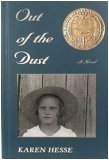
Out of the Dust

In a series of poems, fifteen-year-old Billie Jo relates the hardships of living on her family’s wheat farm in Oklahoma during the dust bowl years of the Depression.

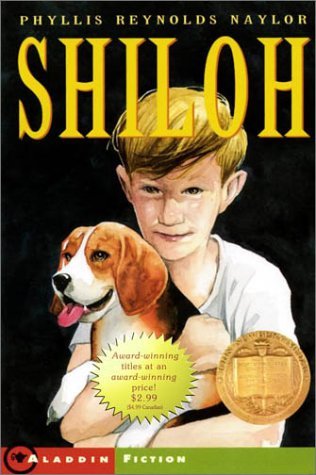
Shiloh

When he finds a lost beagle in the hills behind his West Virginia home, Marty tries to hide it from his family and the dog’s real owner, a mean-spirited man known to shoot deer out of season and to mistreat his dogs.
ses

Black Potatoes: The Story Of The Great Irish Famine, 1845-1850

In 1845, a disaster struck Ireland. Overnight, a mysterious blight attacked the potato crops, turning the potatoes black and destroying the only real food of nearly six million people. Over the next five years, the blight attacked again and again. These years are known today as the Great Irish Famine, a time when one million people died from starvation and disease and two million more fled their homeland. Black Potatoes is the compelling story of men, women, and children who defied landlords and searched empty fields for scraps of harvested vegetables and edible weeds to eat, who walked several miles each day to hard-labor jobs for meager wages and to reach soup kitchens, and who committed crimes just to be sent to jail, where they were assured of a meal. It”s the story of children and adults who suffered from starvation, disease, and the loss of family and friends, as well as those who died. Illustrated with black and white engravings, it”s also the story of the heroes among the Irish people and how they held on to hope.