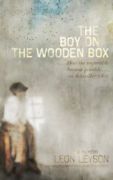
The Boy On The Wooden Box

Leon Leyson (born Leib Lezjon) was only ten years old when the Nazis invaded Poland and his family was forced to relocate to the Krakow ghetto. With incredible luck, perseverance and grit, Leyson was able to survive the sadism of the Nazis, including that of the demonic Amon Goeth, commandant of Plaszow, the concentration camp outside Krakow. Ultimately, it was the generosity and cunning of one man, a man named Oskar Schindler, who saved Leon Leyson’s life, and the lives of his mother, his father, and two of his four siblings, by adding their names to his list of workers in his factory – a list that became world renowned: Schindler’s List. This, the only memoir published by a former Schindler’s List child, perfectly captures the innocence of a small boy who goes through the unthinkable. Most notable is the lack of rancour, the lack of venom, and the abundance of dignity in Mr Leyson’s telling. The Boy on the Wooden Box is a legacy of hope, a memoir unlike anything you’ve ever read.
The Smart One: A Grandfather’s Tale

The future is often foretold in stories of the past. As families flee the Debaltseve in Eastern Ukraine in 2015, Ken Goodman’s The Smart One: A Grandfather’s Tale takes us back to families fleeing persecution in Eastern Europe at the turn of the Twentieth Century. It is a compelling story of Jewish migration to America, which begins in Smorgon, now in Belarus, a former Soviet Republic, but at the time Smorgon was in Vilnius, a district of Lithuania, and a part of the Russian Empire.

The Little Boy Star: An Allegory Of The Holocaust

A young Jewish boy is given a star to wear. At first he is proud of the decoration, but soon finds the star overshadowing him no one sees the boy, only the star. Lonely, frightened, and helpless, he watches as other star-wearers are led away into the night. This affecting allegory, rich with symbolism, educates children about the events of the Holocaust in a way that young minds can easily grasp.

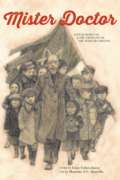
Mister Doctor

November 1940. A circus parade walks through the streets of Warsaw, waving a flag and singing. They are 160 Jewish children, forced by the Nazis to leave their beloved orphanage. It’s a sad occasion, but led by Doctor Korczak, their inspirational director, the children are defiantly joyful. Their new home is in the ghetto, a prison for Jews. Day by day, more people arrive. Some are forced to live on the street and freeze to death. Others die of disease and starvation. Though they lack food, warmth, and freedom, the children’s spirits are sustained by the steadfast respect and kindness of “Mister” Doctor. But these children will never grow up: in August 1942, they board the train that will carry them away to the death camps. Offered his freedom, Doctor Korczak refuses to abandon the children and proudly joins them on their last journey.

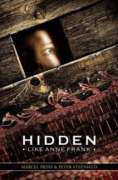
Hidden Like Anne Frank

Fourteen unforgettable true stories of children hidden away during World War II. Jaap Sitters was only eight years old when his mother cut the yellow stars off his clothes and sent him, alone, on a fifteen-mile walk to hide with relatives. It was a terrifying night, one he would never forget. Before the end of the war, Jaap would hide in secret rooms and behind walls. He would suffer from hunger, sickness, and the looming threat of Nazi raids. But he would live. This is just one of the incredible stories told in HIDDEN LIKE ANNE FRANK, a collection of eye-opening first-person accounts that share what it was like to go into hiding during World War II. Some children were only three or four years old when they were hidden; some were teenagers. Some hid with neighbors or family, while many were with complete strangers. But all know the pain of losing their homes, their families, even their own names. They describe the secret network of brave people who kept them safe. And they share the coincidences and close escapes that made all the difference.

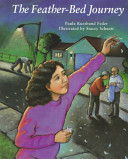
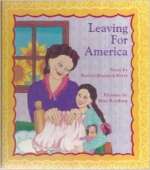
The Feather-Bed Journey

As she tries to repair a torn feather pillow, Grandma tells about her childhood in Poland, about the Nazi persecution of Jews during World War II, and about the origin of this special pillow.

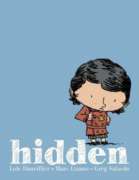
Hidden

In this gentle, poetic young graphic novel, Dounia, a grandmother, tells her granddaughter the story even her son has never heard: how, as a young Jewish girl in Paris, she was hidden away from the Nazis by a series of neighbors and friends who risked their lives to keep her alive when her parents had been taken to concentration camps.

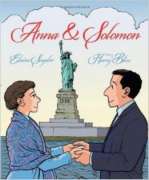
Anna & Solomon

In 1897 a young man named Solomon fell in love with and married a beautiful young woman named Anna. They lived in Russia, which was dangerous at that time for a Jewish family, so Solomon moved to the United States, where he worked and saved until he had enough money to send Anna a ticket for the voyage across the ocean. But when Solomon went to meet Anna’s ship, Anna’s younger brother was waiting for him. Solomon took in her brother and worried and saved until he could send the money for Anna’s passage again—but this time, Anna’s older brother was waiting. When Solomon sent the money a third time and Anna’s mother arrived, Solomon wondered if he would ever see his dear wife again. Anna & Solomon is based on the true story of the author’s grandparents’ immigration.

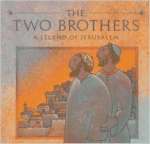
The Two Brothers: A Legend of Jerusalem

Two brothers who love each other dearly inherit their father’s land and live on opposite sides of a hill. When King Solomon witnesses the brothers’ simple acts of kindness, a miracle occurs, leading to the creation of the holy temple and ancient city of Jerusalem.