A nine-year-old Jewish girl, helped by Irena Sendler and the Zegota organization, is smuggled out of the Warsaw ghetto, given a new identity, and sent to live in the countryside for the duration of the World War II.
World War II
Paper Hearts
Making a birthday card in Auschwitz was all of those things. But that is what Zlatka did, in 1944, for her best friend, Fania. She stole and bartered for paper and scissors, secretly creating an origami heart. Then she passed it to every girl at the work tables to sign with their hopes and wishes for happiness, for love, and most of all—for freedom.
Fania knew what that heart meant, for herself and all the other girls. And she kept it hidden, through the bitter days in the camp and through the death marches. She kept it always.
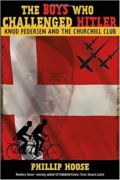
The Boys Who Challenged Hitler
At the outset of World War II, Denmark did not resist German occupation. Deeply ashamed of his nation’s leaders, fifteen-year-old Knud Pedersen resolved with his brother and a handful of schoolmates to take action against the Nazis if the adults would not. Naming their secret club after the fiery British leader, the young patriots in the Churchill Club committed countless acts of sabotage, infuriating the Germans, who eventually had the boys tracked down and arrested.
Unlikely Warrior: A Jewish Soldier in Hitler’s Army
As a young adult in wartime Vienna, Georg Rauch helped his mother hide dozens of Jews from the Gestapo behind false walls in their top-floor apartment and arrange for their safe transport out of the country. His family was among the few who worked underground to resist Nazi rule. Then came the day he was drafted into Hitler’s army and shipped out to fight on the Eastern front as part of the German infantry—in spite of his having confessed his own Jewish ancestry.
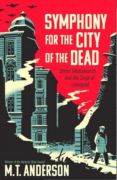
Symphony for the City of the Dead
In September 1941, Adolf Hitler’s Wehrmacht surrounded Leningrad in what was to become one of the longest and most destructive sieges in Western history—almost three years of bombardment and starvation that culminated in the harsh winter of 1943–1944. More than a million citizens perished. Survivors recall corpses littering the frozen streets, their relatives having neither the means nor the strength to bury them. Residents burned books, furniture, and floorboards to keep warm; they ate family pets and—eventually—one another to stay alive. Trapped between the Nazi invading force and the Soviet government itself was composer Dmitri Shostakovich, who would write a symphony that roused, rallied, eulogized, and commemorated his fellow citizens—the Leningrad Symphony, which came to occupy a surprising place of prominence in the eventual Allied victory.
See the review at WOW Review, Volume 8, Issue 4
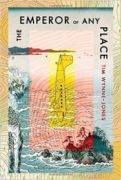
The Emperor Of Any Place
When Evan’s father dies suddenly, Evan finds a hand-bound yellow book on his desk—a book his dad had been reading when he passed away. The book is the diary of a Japanese soldier stranded on a small Pacific island in WWII.
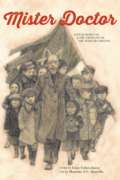
Mister Doctor
November 1940. A circus parade walks through the streets of Warsaw, waving a flag and singing. They are 160 Jewish children, forced by the Nazis to leave their beloved orphanage. It’s a sad occasion, but led by Doctor Korczak, their inspirational director, the children are defiantly joyful. Their new home is in the ghetto, a prison for Jews. Day by day, more people arrive. Some are forced to live on the street and freeze to death. Others die of disease and starvation. Though they lack food, warmth, and freedom, the children’s spirits are sustained by the steadfast respect and kindness of “Mister” Doctor. But these children will never grow up: in August 1942, they board the train that will carry them away to the death camps. Offered his freedom, Doctor Korczak refuses to abandon the children and proudly joins them on their last journey.
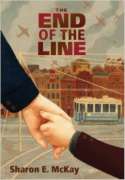
End Of the Line
Five-year-old Beatrix looks on in horror as the soldier forces her mother off the tram. It is 1942 in Amsterdam, and everyone knows what happens to Jews who are taken away by the Nazis. The soldier turns his attention to Beatrix, when suddenly, the ticket-taker, Lars Gorter, blurts out that she is his niece. With his brother Hans, the tram conductor, they manage to rescue the child from the same fate as her mother.The two elderly brothers realize that they are now in charge of the little girl. They are at a loss, after all, neither one has ever married, let alone has children. They know that harboring a Jew could cost them their lives, but in desperation, they turn to a neighbor, Mrs. Vos, for help. But even these kindly rescuers cannot shield Beatrix totally from the horrors of war.
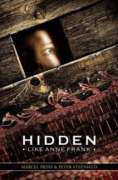
Hidden Like Anne Frank
Fourteen unforgettable true stories of children hidden away during World War II. Jaap Sitters was only eight years old when his mother cut the yellow stars off his clothes and sent him, alone, on a fifteen-mile walk to hide with relatives. It was a terrifying night, one he would never forget. Before the end of the war, Jaap would hide in secret rooms and behind walls. He would suffer from hunger, sickness, and the looming threat of Nazi raids. But he would live. This is just one of the incredible stories told in HIDDEN LIKE ANNE FRANK, a collection of eye-opening first-person accounts that share what it was like to go into hiding during World War II. Some children were only three or four years old when they were hidden; some were teenagers. Some hid with neighbors or family, while many were with complete strangers. But all know the pain of losing their homes, their families, even their own names. They describe the secret network of brave people who kept them safe. And they share the coincidences and close escapes that made all the difference.
In Search Of The Little Prince
For the last seventy years, The Little Prince has captured the imaginations of readers around the world. This lyrical picture book biography tells the story of its author, Antoine de Saint-Exupery.