
 Presents young readers with a journey back in time accompanied by the author Charles Dickens as he provides a tour of nineteenth century London, discussing the everyday life of the people and visiting the famous landmarks of the city.
Intermediate (ages 9-14)
Material appropriate for intermediate age groups
Clay Man: The Golem Of Prague
 It is 1595, and the rabbi’s son Jacob is frustrated with having to live in the walled ghetto known as Jewish Town. Why can’t he venture outside of the gates and explore the beautiful city? His father warns him that Passover is a dangerous time to be a Jew and that the people from outside accuse the Jews of dreadful deeds. But one night, Jacob follows his father and two companions as they unlock the ghetto gates and proceed to the river, where they mold a human shape from the mud of the riverbank. When the rabbi speaks strange words, the shape is infused with life and the Golem of Prague is born.In this breathtaking retelling of a timeless tale, Irene N. Watts’s beautiful words are complemented by the haunting black-and-white images of artist Kathryn E. Shoemaker.
The Pharaoh’s Secret (Amelia’s Notebook Series)
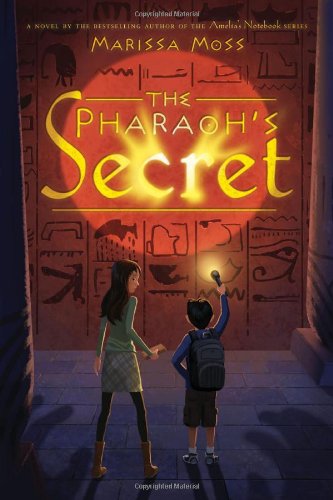 Filled with intrigue and surprises, The Pharaoh’s Secret includes Marissa Moss’s original illustrations throughout. The novel skillfully weaves history with a personal story full of heartache and family tensions that will entice and enthrall readers. When Talibah and her younger brother, Adom, accompany their father, an academic, to his homeland of modern Egypt on his research assignment, they become involved in a mystery surrounding an ancient, lost pharaoh—a rare queen ruler. Someone has tried to wipe her from the record, to make it appear as if she never existed! She needs Talibah to help her and her high priest, Senenmut, reclaim their rightful place in history. Exotic locales, mysterious strangers, and a sinister archaeologist round out an adventure that is full of riddles, old tales, and, most surprisingly of all, a link to Talibah’s and Adom’s mother, who died mysteriously.
The Middle East
The Middle East captures the richness and diversity of Middle Eastern culture, and places the region in its global context in a way that no other reference has done for this age group.
Tutankhamun
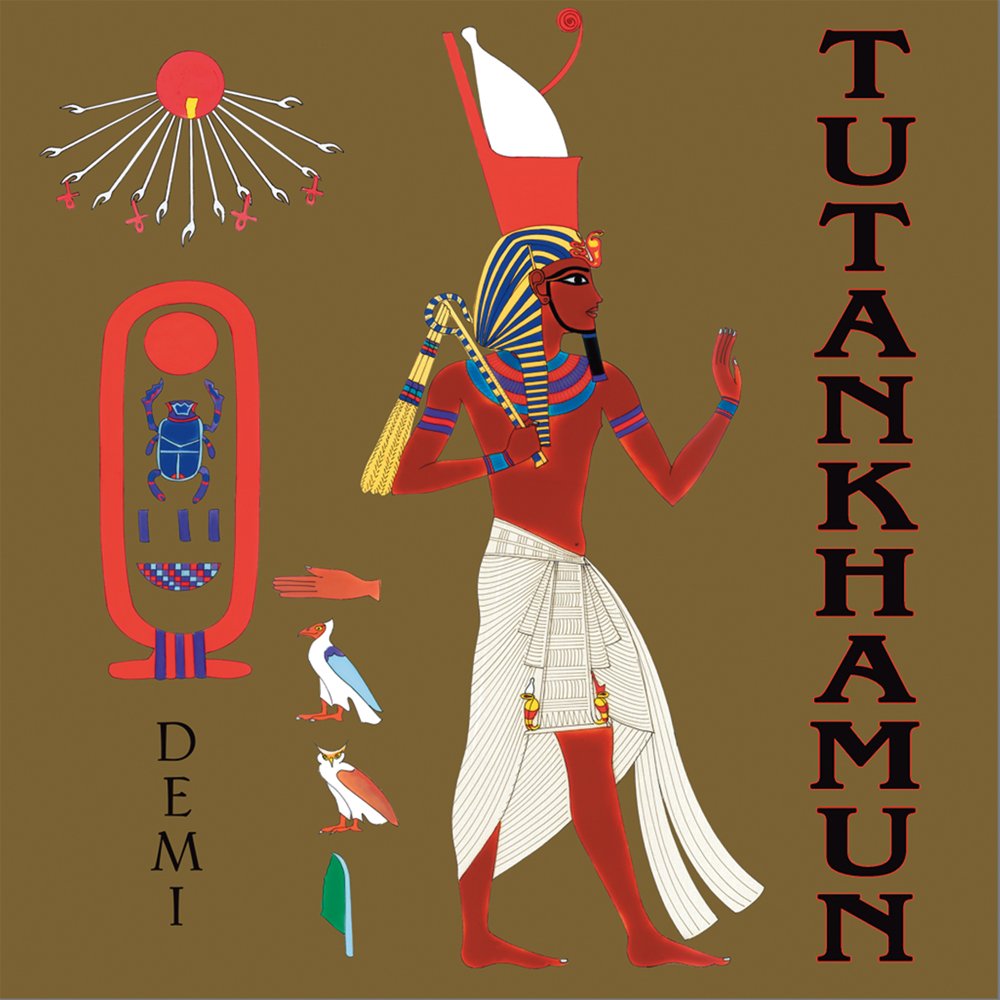 After thirty-two centuries of lying hidden in the Egyptian Valley of the Kings, King Tutankhamun’s sacred, royal tomb was discovered by a British archaeologist, and Tut’s story became known throughout the world. Demi sets King Tutankhamun’s life in the context of the religious beliefs of his ancestors. Born to a pharoah who had the revolutionary idea that all of Egypt must worship only one god, Tut ascended the throne and restored religious freedom to the Upper and Lower kingdoms. He allowed his subjects to worship either the one god, Aten, of his father or the many shapes and forms of the sun god, Amun, whom they had worshiped since ancient times. Using research that includes the artifacts in King Tutankhamun’s tomb, Demi shares the rich details of the king’s life, from ostrich and lion hunts, to the challenges of ruling his Kingdom. Demi’s storytelling skills and magnificent artwork, inspired by Egyptian line in paintings, architecture, sculpture, and jewelry, reveal the life of a remarkable king who has been watching us “across a span of more than 3,000 years.”
Pharaohs and Foot Soldiers: One Hundred Ancient Egyptian Jobs You Might Have Desired or Dreaded
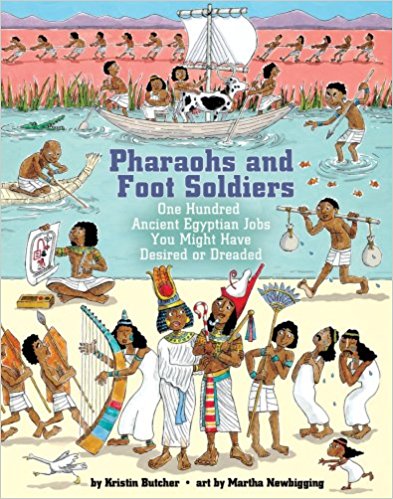 Describes one hundred professions that existed in ancient Egypt, including artisans, laborers, entertainers, and royalty, and explains their duties and importance in society.
Greek Town: Metropolis
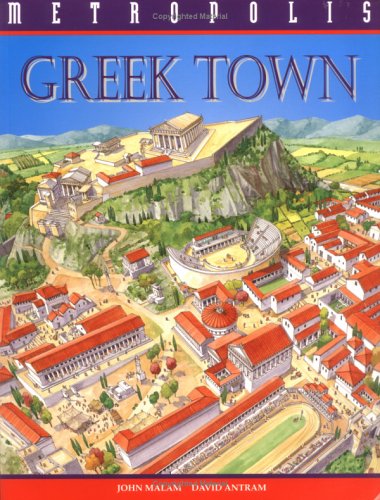 Presents life in a town in ancient Greece, covering the temple, town square, a family home, an open-air theatre, games, the cemetery, the port, and more.
An Eye for Color: The Story of Josef Albers
As a child, Josef Albers loved to watch his handyman father paint houses. When Josef grew up and became an artist, he reduced each image to its simplest shapes, breaking it down into blocks of color. He made an incredible discovery: he could alter the entire mood of a painting just by changing the way he combined the colors. Josef spent his entire life studying color, and what he found revolutionized the way people look at art.
Crusades: Kids At The Crossroads
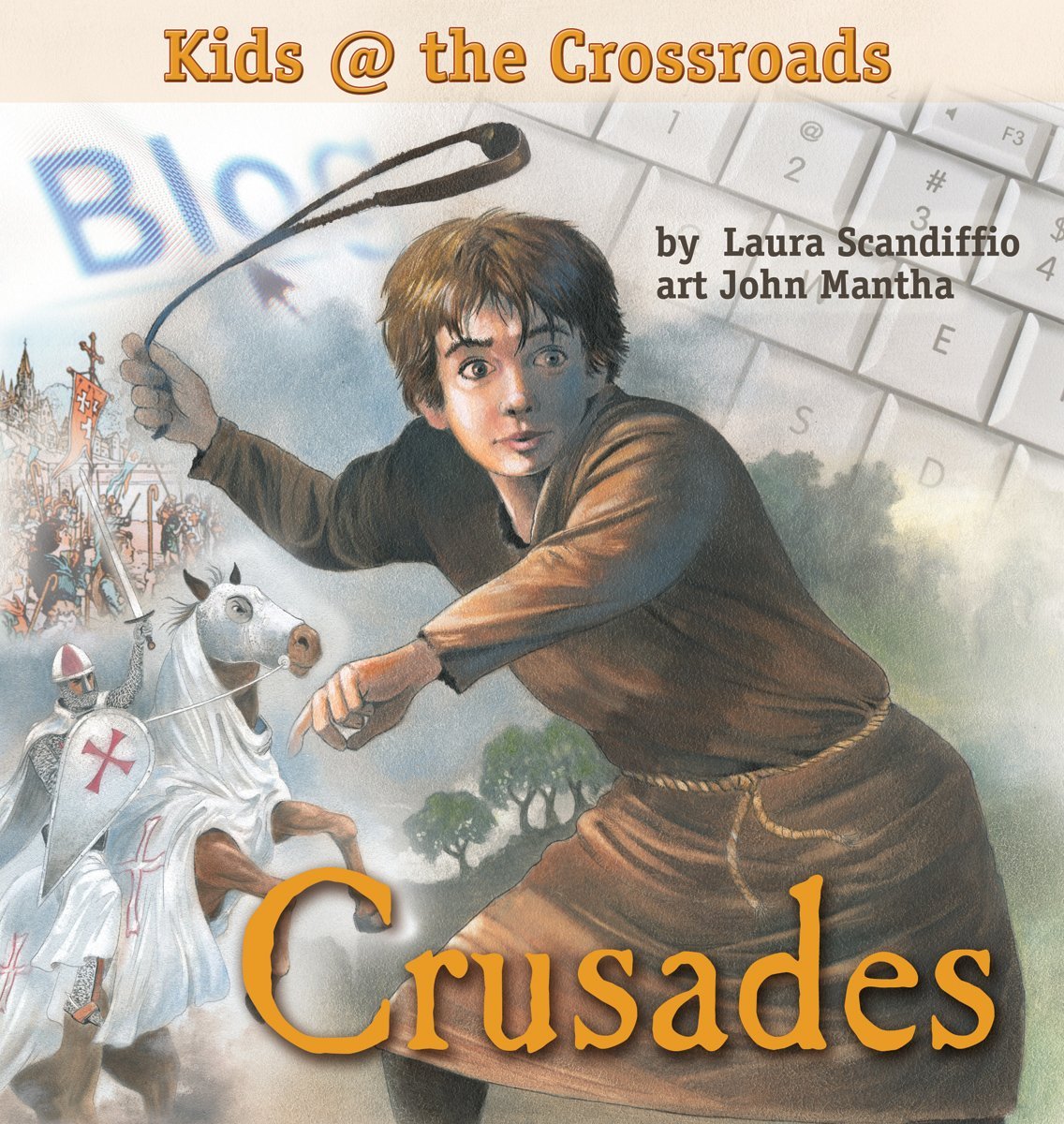 What if kids kept blogs during pivotal moments in world history? The Internet offers modern kids amazing ways to express themselves and learn about the world. Imagine if the same technology had been available to children during dramatic episodes in history. Welcome to the Kids at the Crossroads series. Each book is written as an Internet journal, including illustrated snapshots of the action and “links” to sidebar windows providing facts about and images of the era. This innovative blend of history and high-tech storytelling is sure to capture the attention of web junkies and history buffs alike. Crusades: Kids at the Crossroads logs you on to the blog of 12-year-old Hans, who is destined to march in the 13th-century Children’s Crusade. Restless with his duties in his father’s wheelwright shop, Hans longs to follow his older brother, Otto, who joined a crusade to the Holy Land two years earlier and hasn’t been heard from since. When a mysterious stranger appears in the night and describes new troubles stirring, Hans sees his chance to go after his brother. Soon Hans has joined thousands of young people, led by the charismatic Nicholas, on a march across Europe. But the journey is more perilous than anyone realized. As the dangers rise, morale plummets, and the crusade breaks apart. Hans perseveres to the Holy Land and to a bittersweet reunion with his wounded brother. With its innovative blog style, nail-biting storyline and info-packed sidebars about the actual Children’s Crusade, Crusades: Kids at the Crossroads is historical fiction at its high-tech best.
The War To End All Wars: The Story Of World War I
A brilliant, concise history of The War to End All Wars.In the decade leading up to 1914, Europe had never known such prosperity. But the times were not good enough for the continent’s most powerful nations: Germany wanted a navy that matched England’s; Russia wanted an army as large and as disciplined as Germany’s; the Austro-Hungarian Empire wanted more respect; and England felt compelled to teach the others about civilized relations. Meet the soldiers who fought the deadly battles along the Western Front. Follow the trail of flying ace Billy Bishop as he tangles in the air with the Red Baron. Learn the strategy of Britain’s Grand Fleet of warships as it heads into the biggest sea battle in history.