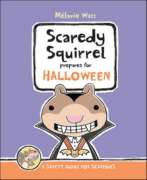
A quirky safety guide combines practical tips with step-by-step instructions featuring an anxious Scaredy Squirrel, who prepares himself for the worst during the spookiest night of the year.

Catalog sorted by age group
A quirky safety guide combines practical tips with step-by-step instructions featuring an anxious Scaredy Squirrel, who prepares himself for the worst during the spookiest night of the year.
 Saying goodbye to Mom at the kindergarten door can be tough. Samuel hates it and wishes he could have a tiny, pocket-sized mommy to carry around with him all day. His mom slips a pretend mommy into his pocket, and when she comes to life, Samuel is delighted . . . at first. But he soon discovers that having a mom along in kindergarten isn’t as much fun as he thought it would be. Sure, she helps him remember the words to songs and keeps him company. But she also rearranges the bookshelf, corrects his artwork, and tries to clean out the guinea pig cage–all with disastrous (and comic) results. An energetic romp with a sweet core, The Pocket Mommy follows one little boy as he navigates the age-old conflict between the comfort of the familiar and the joy of letting go.
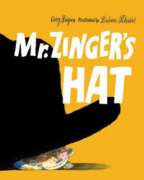
When Mr. Zinger’s hat flies in and interrupts Leo’s playing, the two of them construct a story as to how exactly the hat took off.

After using materials from the hill where he and his forest friends live to turn his house into a castle, Mr. King realizes that he has lost his beautiful view and has destroyed his friends’ living spaces.
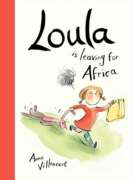
Loula has had ENOUGH of her TERRIBLE triplet brothers. She’s leaving home and going to Africa! Though her quirky parents are too distracted to pay much attention to her plans, Loula has a good friend in the family chauffeur, Gilbert, who gently inquires, “Mademoiselle, may I ask, why Africa?” “Because!” Loula explains. “Africa is far away, very far away, the farthest away I can get from my MEAN, HORRIBLE, STINKY brothers. Plus they are scared of snakes. And if they come, piranhas will eat them.” “Well then,” says Gilbert, “I think Africa is the best destination.” So together, with the help of their imaginations, Loula and Gilbert travel over the sand, through the air and across the water to reach their own special island of Africa. Which, Loula happily discovers at the end of the day, is not so far away from home.
The intelligence of dolphins is legendary. Research has shown they can learn simple languages, recognize themselves in mirrors, and understand gestures such as pointing, and are expert vocal mimics.
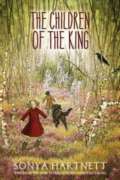
Cecily and Jeremy have been sent to live with their uncle Peregrine in the English countryside, safe from the war, along with a young refugee named May. But when Cecily and May find two mysterious boys hiding in the ruins of a nearby castle, an extraordinary adventure begins.
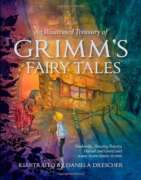
Two hundred years ago, the Brothers Grimm published their famous collection of folk tales, including these thirty much-loved stories of helpful elves; giants who can see into the next land; foolish but goodhearted lads; princesses with golden hair; faithful servants and wicked queens.
This sumptuously illustrated collection of essential Grimm classics includes stories every childhood needs: ‘The Princess and the Frog’, ‘Little Red Riding Hood’, ‘Sleeping Beauty’, ‘Cinderella’, ‘Rumpelstiltskin’ and dozens more.
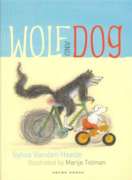
Shares the adventures of canine cousins, Dog and Wolf, who live very different lives but continue to get each other into mischief.
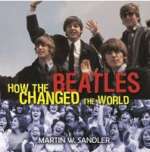
The Beatles’ first appearance on the Ed Sullivan show, has been called “a night that changed the course of American culture.” More than seventy million television viewers – the largest-ever audience for an entertainment show – watched the Beatles’ performance that February 9, 1964. It was only the beginning.
Had the Beatles been simply the most successful musical group of all time, their place in history would be secure. But they were much, much more. The Beatles changed popular culture forever. They changed the way people listened to music and experienced its role in their lives. And they were even more. For as their work matured, they became nothing less than the embodiment of the social and cultural revolutions of the 1960s.