
Describes the family life, games, hunting and fishing techniques, homes, clothing, beliefs, and means of travel of the Indians of the Northwest.
Age
Catalog sorted by age group
A Distant Enemy
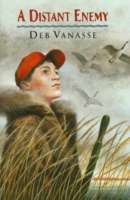
Joseph, a fourteen-year-old boy struggling with the reality that his white father left him and his Yup’ik mother when he was born, lashes out at others in many ways, but when he is saved by one of his supposed “”enemies,”” he begins to view things differently.
The Old Man with the Otter Medicine
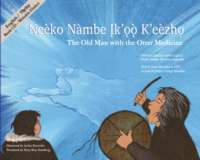
It is winter and the people are starving. There are no fish. They must seek the help of a medicine man to save them. The Man with the Otter Medicine tells of medicine power, the struggle for survival and an important part of the history and culture of the Dene people as it has been passed down through stories and legends for generations.
Smiler’s Bones
Provides the story of an Eskimo boy who, after being brought from his home in Greenland to New York City by explorer Robert Peary, was forced to deal with the death of his father, and the loss of everything familiar to him.
Shi-Shi-Etko
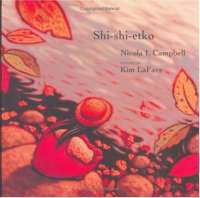
Shi-shi-etko, a Native American girl, spends the last four days before she goes to residential school learning valuable lessons from her mother, father, and grandmother, and creating precious memories of home.
The Light On The Tent Wall: A Bridging (Native American Ser)
Mary Tall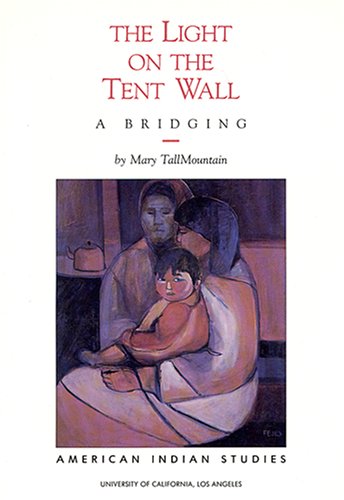 Mountain is a Native writer whose “lantern voices seek to lead us out of the given darkness,” and “her work, like seasoned oak, is full of heat and fire, simplicity and compassion,” writes poet and scholar Alfred Robinson. The poems in this collection confront death and engage the sacred. Joy Harjo calls each poem “a track, and the series of tracks makes a bridge back to the ‘light on the tent wall,’ which is the sacred place of the songs, the stories that created us.”
Inunguak: The Little Greenlander
 A fascinating story, combining authentic Inuit legend and culture, of a misfit boy who becomes a hero in his village in Greenland.
Touching Spirit Bear
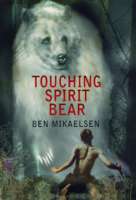
Within Cole Matthews lie anger, rage and hate. Cole has been stealing and fighting for years. This time he caught Alex Driscal in the, parking lot and smashed his head against the sidewalk. Now, Alex may have permanent brain damage’and Cole is in the Biggest trouble of his life.
Cole is offered Circle Justice: a system based on Native American traditions that attempts to provide healing for the criminal offender, the victim and the, community. With prison as his only alternative, Cole plays along. He says he wants to repent, but in his heart Cole blames his alcoholic mom his, abusive dad, wimpy Alex — everyone but himself — for his situation.
Cole receives a one-year banishment to a remote Alaskan island. There, he is mauled by Mysterious white bear of Native American legend. Hideously injured, Cole waits for his death His thoughts shift from from Anger to humility. To survive, he must stop blaming others and take responsibility for his life. Rescuers arrive to save Cole’s but it is the attack of the Spirit Bear that may save his soul.
Ben Mikaelsen paints a vivid picture of a juvenile offender, examining the roots without absolving solving him of responsibility for his actions, and questioning a society in which angry people make victims of their peers and communities. Touching Spirit Bear is a poignant testimonial to the power of a pain that can destroy, or lead to healing
Winter Camp
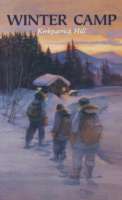
Two orphaned siblings struggle to survive a harsh Alaskan winter looking after a badly wounded miner, while their guardian, an old Athabascan Indian who has taught them the ways of their ancestors, searches for help.
Where Did You Get Your Moccasins?
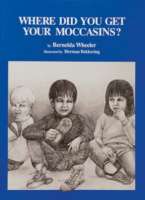
Children in an urban school are curious about a classmate’s moccasins.