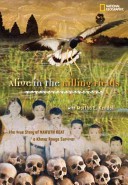
Alive In The Killing Fields: Surviving the Khmer Rouge Genocide

Alive in the Killing Fields is the real-life memoir of Nawuth Keat, a man who survived the horrors of war-torn Cambodia. He has now broken a longtime silence in the hope that telling the truth about what happened to his people and his country will spare future generations from similar tragedy. In this memoir, a young Nawuth defies the odds and survives the invasion of his homeland by the Khmer Rouge. Under the brutal reign of the dictator Pol Pot, he loses his parents, young sister and other members of his family. After his hometown of Salatrave was overrun, Nawuth and his remaining relatives are eventually captured and enslaved by Khmer Rouge fighters. They endure physical abuse, hunger and inhumane living conditions. But through it all, their sense of family holds them together, giving them the strength to persevere through a time when any assertion of identity is punishable by death. Nawuth’s story of survival and escape from the Killing Fields of Cambodia is also a message of hope; an inspiration to children whose worlds have been darkened by hardship and separation from loved ones. This story provides a timeless lesson in the value of human dignity and freedom for readers of all ages.

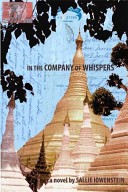
In The Company Of Whispers

Straddling the genres of fiction, memoir, photography and travel,”In the Company of Whispers” looks at the future through the eyes of the past. In the late 1950’s, a young girl moves with her family to Rangoon, Burma. Ninety years later finds her living in the overpopulated Greater East Coast Metropolis, planted firmly in the past inside her small house until her her granddaughter, Zeyya, arrives on her front porch. In 2047, Zeyya has been living like millions of other people in a towering high rise, until her parents are taken by a Quarantine Squad. She retreats to her eccentric ninety-eight-year-old grandmother’s home, the last freestanding house in the Metropolis. But whatever respite she envisions finding there is immediately imperiled by the appearance of the intricately tattooed and possibly delusional Jonah. When Granna invites him into her home, Zeyya is sure that her world will finish unraveling, but despite Zeyya’s resistance, she, Granna, and Jonah become inextricably bound together. Ironically, what binds them is not what is, but what has been. The past intertwines itself into the present as Granna bequeaths her memories of a childhood spent in Burma to Jonah and Zeyya. And in the end, it is both Jonah’s and Granna’s pasts that determine Zeyya’s future.

A Really Good Brown Girl

Marilyn Dumont’s Metis heritage offers her challenges that few of us welcome. Here she turns them to opportunities in a voice that is fierce, direct, and true, she explores and transcends the multiple boundaries imposed by society on the self. She mocks, with exasperation and sly humour, the banal exploitation of Indianness, more-Indian-than-thou oneupmanship, and white condescension and ignorance. She celebrates the person, clearly observing, who defines her own life. These are Indian poems, Canadian poems, human poems.

The Salish People and the Lewis and Clark Expedition

On September 4, 1805, in the upper Bitterroot Valley of what is now western Montana, more than four hundred Salish people were encamped, pasturing horses, preparing for the fall bison hunt, and harvesting chokecherries as they had done for countless generations. As the Lewis and Clark expedition ventured into the territory of a sovereign Native nation, the Salish met the strangers with hospitality and vital provisions, while receiving comparatively little in return. For the first time, a Native American community offers an in-depth examination of the events and historical significance of their encounter with the Lewis and Clark expedition. The result is a new understanding of the expedition and its place in the wider context of U.S. history. Through oral histories and other materials, Salish elders recount the details of the Salish encounter with Lewis and Clark-their difficulty communicating with the strangers through multiple interpreters and consequent misunderstanding of the expedition’s invasionary purpose, their discussions about whether to welcome or wipe out the newcomers, their puzzlement over the black skin of the slave York, and their decision to extend traditional tribal hospitality and gifts to the guests. What makes The Salish People and the Lewis and Clark Expedition a startling departure from previous accounts of the Lewis and Clark expedition is how it depicts the arrival of non-Indians-not as the beginning of history, but as another chapter in a long tribal history. Much of this book focuses on the ancient cultural landscape and history that had already shaped the region for millennia prior to the arrival of Lewis and Clark. The elders begin their vivid portrait of the Salish world by sharing creation stories and the traditional cycle of life. The book then takes readers on a cultural tour of the Native trails that the expedition followed. With tribal elders as our guides, we now learn of the Salish cultural landscape that was invisible to Lewis and Clark. The Salish People and the Lewis and Clark Expedition also brings new clarity to the profound upheaval of the Native world in the century prior to the expedition’s arrival, as tribes in the region were introduced to horses, European diseases, and firearms. The arrival of Lewis and Clark marked the beginning of a heightened level of conflict and loss, and the book details the history that followed the expedition: the opening of Salish territory to the fur trade, the arrival of Jesuit missionaries, the establishment of Indian reservations, the non-Indian development of western Montana, and more recently, the revival and strengthening of tribal sovereignty and culture. Conveyed by tribal recollections and richly illustrated, The Salish People and the Lewis and Clark Expedition not only sheds new light on the meaning of the expedition, but also illuminates the people who greeted Lewis and Clark, and despite much of what followed, thrive in their homeland today.

The Light On The Tent Wall: A Bridging (Native American Ser)

Mary TallMountain is a Native writer whose “lantern voices seek to lead us out of the given darkness,” and “her work, like seasoned oak, is full of heat and fire, simplicity and compassion,” writes poet and scholar Alfred Robinson. The poems in this collection confront death and engage the sacred. Joy Harjo calls each poem “a track, and the series of tracks makes a bridge back to the ‘light on the tent wall,’ which is the sacred place of the songs, the stories that created us.”

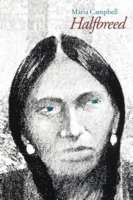
Halfbreed

“I write this for all of you, to tell you what it is like to be a Halfbreed woman in our country. I want to tell you about the joys and sorrows, the oppressing poverty, the frustration and the dreams. . . . I am not bitter. I have passed that stage. I only want to say: this is what it was like, this is what it is still like.” For Maria Campbell, a Métis (“Halfbreed”) in Canada, the brutal realities of poverty, pain, and degradation intruded early and followed her every step. Her story is a harsh one, but it is told without bitterness or self-pity. It is a story that begins in 1940 in northern Saskatchewan and moves across Canada’s West, where Maria roamed in the rootless existence of day-to-day jobs, drug addiction, and alcoholism. Her path strayed ever near hospital doors and prison walls.It was Cheechum, her Cree great-grandmother, whose indomitable spirit sustained Maria Campbell through her most desperate times. Cheechum’s stubborn dignity eventually led the author to take pride in her Métis heritage, and Cheechum’s image inspired her in her drive for her own life, dignity; and purpose.

A Distant Enemy

Joseph just wants to continue the traditions of the Yup’ik people. So when outside officials restrict fishing in his Alaskan village, he commits an anonymous act of vandalism in protest. But his new teacher finds out his secret. To make things worse, Joseph’s father, who left years ago, wants to see him again. Joseph isn’t sure who he can trust, but if he doesn’t trust someone, he’s headed for disaster. “Vanasse creates a vivid portrait of modern Eskimo lifestyles, conflicts and fears while rendering a sensitive account of one teenager’s coming of age.” — Publishers Weekly

Smiler’s Bones

Provides the story of an Eskimo boy who, after being brought from his home in Greenland to New York City by explorer Robert Peary, was forced to deal with the death of his father, and the loss of everything familiar to him.