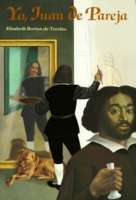
This Spanish translation of the historical novel I, Juan De Pareja is based on the life of Juan de Pareja, the black assistant to the 17th-century Spanish painter Velazquez. Newbery Medal Book.

This Spanish translation of the historical novel I, Juan De Pareja is based on the life of Juan de Pareja, the black assistant to the 17th-century Spanish painter Velazquez. Newbery Medal Book.
 A collection of poems describing the characteristics and activities of a variety of insects.
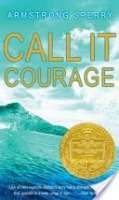
Mafatu has been afraid of the sea for as long as he can remember. Though his father is the Great Chief of Hikueru – an island whose seafaring people worship courage – Mafatu feels like an outsider. All his life he has been teased, taunted, and even blamed for storms on the sea.
Then at age fifteen, no longer willing to put up with the ridicule and jibes, Mafatu decides to take his fate into his own hands. With his dog, Uri, as his companion, Mafatu paddles out to sea, ready to face his fears. What he learns on his lonesome adventure will change him forever and make him a hero in the eyes of his people.
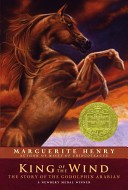
He was named “Sham” for the sun, this golden-red stallion born in the Sultan of Morocco’s stone stables. Upon his heel was a small white spot, the symbol of speed. But on his chest was the symbol of misfortune. Although he was swift as the desert winds, Sham’s pedigree would be scorned all his life by cruel masters and owners.
This is the classic story of Sham and his friend, the stable boy Agba. their adventures take them from the sands of the Sahara. to the royal courts of France, and finally to the green pastures and stately homes of England. For Sham was the renowned Godolphin Arabian, whose blood flows through the veins of almost very superior thoroughbred. Sham’s speed — like his story — has become legendary.
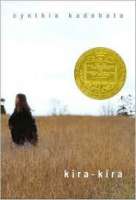
kira-kira (kee’ ra kee’ ra): glittering; shining
Glittering. That’s how Katie Takeshima’s sister, Lynn, makes everything seem. The sky is kira-kira because its color is deep but see-through at the same time. The sea is kira-kira for the same reason. And so are people’s eyes. When Katie and her family move from a Japanese community in Iowa to the Deep South of Georgia, it’s Lynn who explains to her why people stop them on the street to stare. And it’s Lynn who, with her special way of viewing the world, teaches Katie to look beyond tomorrow. But when Lynn becomes desperately ill, and the whole family begins to fall apart, it is up to Katie to find a way to remind them all that there is always something glittering — kira-kira — in the future.
Luminous in its persistence of love and hope, Kira-Kira is Cynthia Kadohata’s stunning debut in middle-grade fiction.

“Take up the pipe, Claudius,” a voice growled near Jessie’s bound head. “He’s worth nothing without his pipe!” Snatched from the docks of New Orleans, thirteen-year-old Jessie is thrown aboard a slave ship where he must play his fife so that captured slaves will “dance,” to keep their muscles strong and their bodies profitable for their owners’ use. Jessie is sickened as he witnesses the horrible practices of the slave trade. But even those horrors can’t compare to the one final event awaiting Jessie’s witness. Can the cruelty to his fellow human beings be stopped? And will it be too late when it finally does stop? In a stunning performance by Peter MacNicol, Paula Fox’s enduring classic comes magnificently alive, with the seating truth about a period of American history we would otherwise most likely wish to forget.

When Claudia decided to run away, she planned very carefully. She would be gone just long enough to teach her parents a lesson in Claudia appreciation. And she would live in comfort-at the Metropolitan Museum of Art. She invited her brother Jamie to go, too, mostly because he was a miser and would have money The two took up residence in the museum right on schedule. But once the fun of settling in was over, Claudia had two unexpected problems: She felt just the same, and she wanted to feel different; and she found a statue at the museum so beautiful she could not go home until she had discovered its maker, a question that baffled even the experts. The former owner of the statue was Mrs. Basil E. Frankweiler and without her help Claudia might never have found a way to go home.

A description of the boyhood, marriage, and young professional life of Abraham Lincoln includes his presidential years and also reflects on the latest scholarly thoughts about our Civil War president.
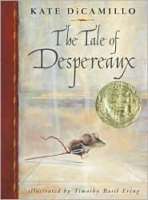
WINNER OF THE NEWBERY MEDAL!
Kate DiCamillo introduces a hero for all time!
Welcome to the story of Despereaux Tilling, a mouse who is in love with music, stories, and a princess named Pea. It is also the story of a rat called Roscuro, who lives in the darkness and covets a world filled with light. And it is the story of Miggery Sow, a slow-witted serving girl who harbors a simple, impossible wish. These three characters are about to embark on a journey that will lead them down into a horrible dungeon, up into a glittering castle, and, ultimately, into each other’s lives. And what happens then? As Kate DiCamillo would say: Reader, it is your destiny to find out.
From the master storyteller who brought us BECAUSE OF WINN-DIXIE comes another classic, a fairy tale full of quirky, unforgettable characters, featuring twenty-four stunning black-and-white illustrations by Timothy Basil Ering, in an elegant design that pays tribute to the best in classic children’s books and bookmaking traditions.
The beloved author of BECAUSE OF WINN-DIXIE enlightens us with a tale of adventure, despair, love, and soup.
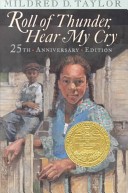
In Mississippi during the Great Depression of the 1930s, the Logans are one of the few Black families who own their own land. Nine-year-old Cassie Logan doesn’t understand why her parents attach so much importance to this, any more than she understands the Night Riders–white men who terrorize her people.