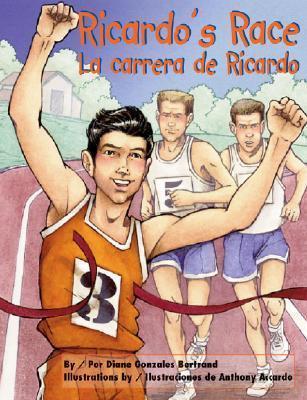
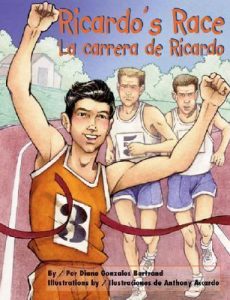
 Ricardo Romo never dreamed that running to catch the school bus would lead to a college education, and ultimately, to a long and respected career as a teacher, administrator, and university president. He grew up in San Antonio, Texas, the son of Mexican immigrants, and worked in his family’s small grocery store, where he learned to work hard and respect his family and neighbors. In school he learned that, as a Latino, he was expected to go to the technical high school rather than the one that prepared students for college, yet his teachers and coaches encouraged him to pursue his studies. They also fostered his natural athletic abilities as a runner. In high school, Ricardo set numerous records in track and cross country, including the country’s second fastest recorded mile at that time. While still a sophomore, he began to receive invitations from colleges and universities urging him to consider running for their schools. Ultimately, he went on to run for the University of Texas at Austin, where he graduated with an undergraduate degree in history. While injuries ended Ricardo’s hopes of competing in the 1968 Olympics, his educational dreams were achieved when he obtained a master’s degree from California State University, Northridge and a Ph.D. from the University of California at Los Angeles, both in history. Currently, he is the president of the University of Texas at San Antonio, and a time line detailing Dr. Romo’s accomplishments as an athlete and a scholar is included.

 Cesar Chavez is known as one of America’s greatest civil rights leaders. When he led a 340-mile peaceful protest march through California, he ignited a cause and improved the lives of thousands of migrant farmworkers. But Cesar wasn’t always a leader. As a boy, he was shy and teased at school. His family slaved in the fields for barely enough money to survive.