
The barnyard animals on Old MacDonald’s and Senor Pancho’s farms have a hard time communicating. MacDonald’s rooster says cock-a-doodle-doo! While Senor Pancho’s gallo says quiquirquí. The English-speaking chick says peep, peep, but el pollito says pio, pio. Then the cow says moo and la vaca says mu! Maybe they’re not so different after all! So all the animals come together for a barnyard fiesta, because dancing is a universal language.
Genre
Catalog sorted by genre
Marisol Mcdonald and the Clash Bash: Marisol McDonald y la fiesta sin igual (English and Spanish Edition)
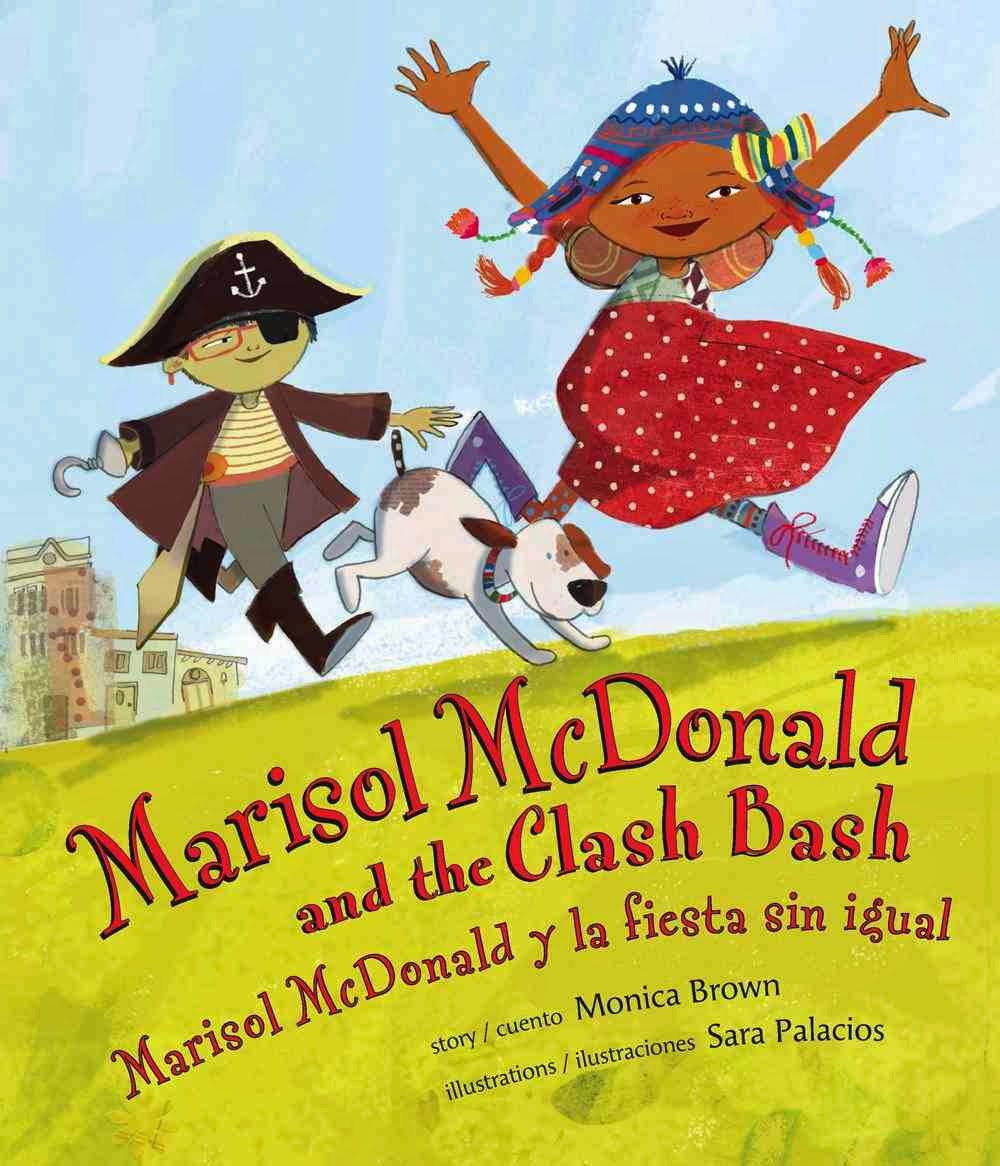 A multiracial, bilingual girl plans a birthday party and hopes her abuelita (grandma) will be able to come from Peru to join the celebration.
Separate Is Never Equal
“Years before the landmark U.S. Supreme Court ruling Brown v. Board of Education, Sylvia Mendez, an eight-year-old girl of Mexican and Puerto Rican heritage, played an instrumental role in Mendez v. Westminster, the landmark desegregation case of 1946 in California”–
Lupita’s First Dance / El Primer Baile De Lupita
 Lupita is excited about dancing la raspa, a Mexican folk dance, with her first-grade class at a celebration of Children’s Day. But she’s devastated when she learns right before the show that her partner Ernesto sprained his right ankle.
Lupita’s First Dance / El Primer Baile De Lupita has been discussed in My Take/Your Take for September 2020.
The Upside Down Boy / El Niño De Cabeza
The author recalls the year when his farm worker parents settled down in the city so that he could go to school for the first time.
Featured in WOW Review Volume X, Issue 1.
Let’s Salsa / Bailemos Salsa
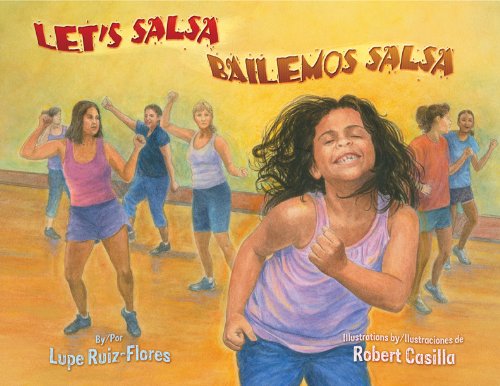 Estella can’t help but giggle when she sees her neighbors, Dona Rosa and Dona Maria, shaking their hips while dancing and sweating at an exercise class at the community recreation center. A few days later, when her mother complains about gaining weight, Estella encourages her to join the class.
Let’s Salsa / Bailemos Salsa has been discussed in My Take/Your Take for September 2020.
Why Did We Have To Move Here
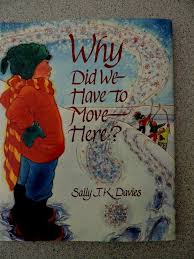 A young boy has trouble adjusting to his new home and his new school, until he decides that with a little effort, he can make new friends.
I Am Rene, The Boy/ Soy Rene, El Nino
When René learns that in the United States his name is also a girl’s name, he does some research and relates the name’s meaning and letters to his homeland of El Salvador and the things that make him special.
When This World Was New
When his father leads him on a magical trip of discovery through new fallen snow, a young boy who emigrated from his warm island home overcomes fears about living in New York.
Home at Last
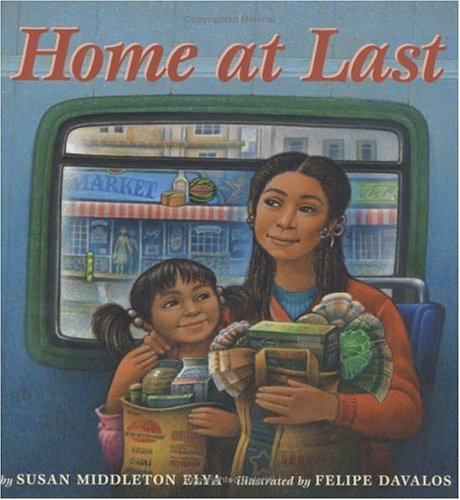 Ana Patino is adjusting well to her new life in the United States, but her mother is having problems because she doesn’t know English. When one of the babies falls ill, Mama tries to get help, but no one can understand her. Convinced that she needs to learn the new language, Mama agrees to take English lessons. As Mama gains new language skills, she also develops a sense of confidence and belonging.