Leo Yerxa, an artist of Ojibway ancestry, brings us an art book in which he celebrates wild horses and the natural world in which they lived in harmony.
Canada
Materials from Canada
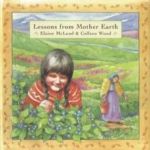
Lessons From Mother Earth
Tess has visited her grandmother many times without really being aware of the garden. But today they step outside the door and Tess learns that all of nature can be a garden. And if you take care of the plants that are growing, if you learn about them — understanding when they flower, when they give fruit, and when to leave them alone — you will always find something to nourish you. At the end of their day Tess is thankful to Mother Earth for having such a lovely garden, and she is thankful to have such a wise grandma.
Good For Nothing
The year is 1959, and fifteen-year-old Nipishish returns to his reserve in northern Quebec after being kicked out of residential school, where the principal tells him he can look forward, like all Native Americans, to a life of drunkenness, prison, and despair. But despite his new freedom, the reserve offers little to a young Métis man. Both his parents are dead, his father Shipu, a respected leader, dying mysteriously at a young age. When Nipishish is sent to a strange town to live with a white family and attend high school, he hopes for the new life the change promises. But despite some bright spots, the adjustments prove overwhelming. Forced to return to his people, he must try to rediscover the old ways, face the officials who find him a threat, and learn the truth about his father’s death.
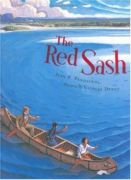
The Red Sash
This story centers on a young Metis (mixed blood) boy growing up outside Fort Williams, a major Canadian fur trading post linking northern and central Canada to the North West Trading Company in Montreal. The boy longs to become one of the voyagers, or fur traders, who wear red sashes as they travel the rivers of northern and central Canada. The Red Sash provides readers an authentic picture of life at a fur trading post in the early 1800s.
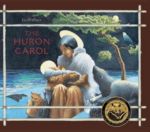
Huron Carol
In the early 1600s Father Jean de Brébeuf came to Canada from his native France as a Jesuit missionary. He settled among the Huron, or Ouendat, people in what is now Midland, Ontario. Despite his missionary zeal, Brébeuf was sensitive to the people with whom he lived. He learned their language and he wrote, in Huron, the original version of this famous Christmas carol. He and his fellow priests, called Black Robes, and many of their Huron parishioners were killed in an Iroquois raid in 1649. But Brébeuf’s carol continued to be sung by successive generations of Hurons. Then in 1926, Toronto writer Jesse Edgar Middleton, inspired by Brébeuf, wrote his own version of the carol in English. His are the familiar words we sing today, describing the Huron landscape, flora and fauna in telling the Christmas story.
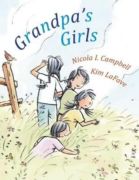
Grandpa’s Girls
A young girl delights in a visit to her grandpa’s farm. She and her cousins run through the fields, explore the root cellar where the smoked salmon and jars of fruit are stored, swing on a rope out the barn loft window, visit the appaloosa in the corral and tease the neighbor’s pig. The visit is also an opportunity for this child to ask Grandpa what her grandmother, Yahyah, was like, and explore the “secret room,” with its old wooden box of ribbons, medals and photos of Grandpa in uniform.
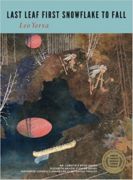
Last Leaf First Snowflake To Fall
Last Leaf First Snowflake to Fall takes us on a dreamlike voyage into nature at that secret moment when fall turns into winter. We find ourselves in a kind of paradise, which humans may be part of but which they have not despoiled. A Native father and son lead us through forests, down rivers, over lakes and ponds. Along the way we experience the primordial beauty of the physical world. This is nature as we all feel in our hearts it must once have been.
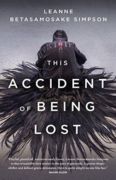
This Accident Of Being Lost
A collection of stories and songs by Nishnaabeg storyteller and writer Leanne Betasamosake Simpson. Blending elements of Nishnaabeg storytelling, science fiction, contemporary realism, and lyric voice, this collection encompasses broad and imaginative themes.
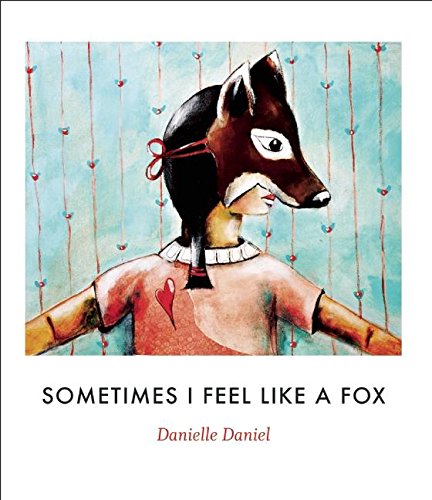
Sometimes I Feel Like A Fox
Behind Closed Doors :
Behind Closed Doors features written testimonials from thirty-two individuals who attended the Kamloops Indian Residential School. The school was one of many infamous residential schools that operated from 1893 to 1979. The storytellers remember and share with us their stolen time at the school; many stories are told through courageous tears.