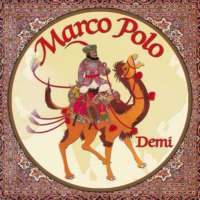
Marco Polo’s adventures as he travels from Venice to Beijing.

Materials from Asia
Marco Polo’s adventures as he travels from Venice to Beijing.
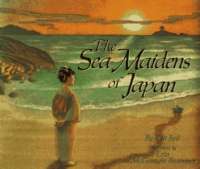
Young Kiyomo struggles to meet cultural expectations while overcoming her fears and discovering her strengths
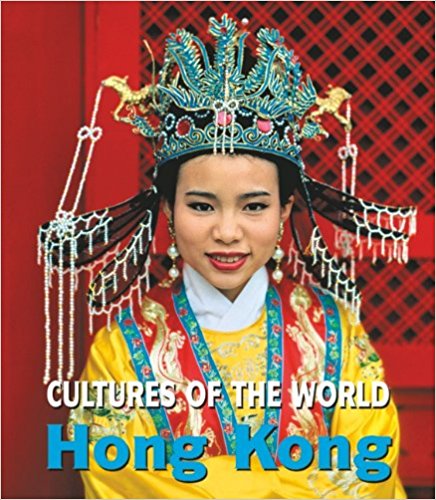 Surveys the geography, history, government, economy, and culture of this territory on China’s southeastern coast, made up of a section of the mainland and 235 islands of various sizes.
Learn about China’s long history and look at how that country is governed today.

In this wordless book, Suzy Lee tells the story of a little girl’s day at the beach.
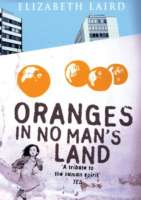
Oranges in No Man’s Land tells the riveting story of ten-year-old Ayesha’s terrifying journey across no man’s land to reach a doctor in hostile territory in search of medicine for her dying grandmother.Set in Lebanon during the civil war, this story is told by award-winning author Elizabeth Laird and is based on personal, real-life events. Elizabeth stayed on the green line in Beirut in 1977 in a war-damaged flat with her husband and six-month-old son. Memories of her son sleeping in a suitcase on the floor, taking his first steps on the bullet-riddled balcony, playing with the soldiers on the checkpoint, and her husband racing through no man’s land in the buildup to a battle have all inspired this gripping and moving story.Elizabeth Laird says, “When I wrote Oranges in No Man’s Land, I didn’t know that Lebanon would be plunged back so soon into a nightmare. Caught up in that nightmare are children like Ayesha and Samar, whose lives political leaders so easily throw away.”Elizabeth Laird has been nominated four times for the Carnegie Medal and has won both the Nestlé Smarties Book Prize and the Children’s Book Award (UK). Her numerous books, including A Little Piece of Ground (Haymarket Books, 2006), have been published around the world.
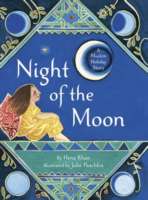
This vibrantly illustrated picture book invites children to experience the traditions of Ramadan and Eid through the eyes of a seven-year-old Pakistani-American girl named Yasmeen.
Featured in WOW Review Volume IX, Issue 1.
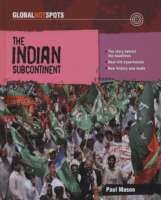
Global Hot Spots fills in the facts behind the headlines, building students’ understanding of the historical context of the events they see on TV. It provides accounts of real-life experiences and explores ‘how history was made’ in these conflict zones.
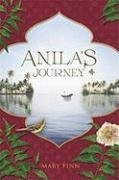
Set in colonial India, this richly layered coming-of-age tale follows a spirited young artist on a journey up the Ganges — and through the enigmas of her past.How can Anila Tandy, left to fend for herself after her mother’s death, dare to apply for a job that is clearly not meant for a woman? But somehow the “Bird Girl of Calcutta,” art supplies in hand, finds herself on an eye-opening journey up the Ganges, apprenticed to a gentleman scientist. As the lush landscape slips by, Anila dives into her past — a past where her beautiful Bengali mother still tells stories and her Irish father’s mysterious disappearance lingers. Gorgeously written and rich with atmosphere, Mary Finn’s debut novel tells the story of a determined young artist who must make her way in the dangerous world of late-eighteenth-century India.
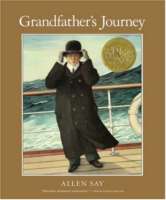
A Japanese American man recounts his grandfather’s journey to America which he later also undertakes, and the feelings of being torn by a love for two different countries.
See the review at WOW Review, Volume VII, Issue 4