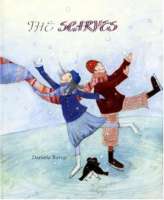
What can you do when the people you love don’t think they love each other anymore? When one little girl learns that her grandparents are separating, it’s hard for her to understand. Grandpa explains that Grandma steals his chocolate pudding, and her favorite color is blue. Grandma says that Grandpa watches too much TV, and his favorite color is red. But when the little girl realizes they really do still love each other, she devises a plan she hopes will bring them back together. Perhaps blending two lives together can be just like knitting two colors together to make a beautiful scarf.
Germany
Materials from Germany
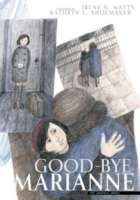
Good-Bye Marianne: A Story Of Growing Up In Nazi Germany
A heartbreaking story of loss and love.As autumn turns toward winter in 1938 Berlin, life for Marianne Kohn, a young Jewish girl, begins to crumble. First there was the burning of the neighbourhood shops. Then her father, a mild-mannered bookseller, must leave the family and go into hiding. No longer allowed to go to school or even sit in a café, Marianne’s only comfort is her beloved mother. Things are bad, but could they get even worse? Based on true events, this fictional account of hatred and racism speaks volumes about both history and human nature.
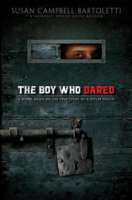
The Boy Who Dared
When 16-year-old Helmuth Hubner listens to the BBC news on an illegal short-wave radio, he quickly discovers Germany is lying to the people. But when he tries to expose the truth with leaflets, he’s tried for treason. Sentenced to death and waiting in a jail cell, Helmuth’s story emerges in a series of flashbacks that show his growth from a naive child caught up in the patriotism of the times, to a sensitive and mature young man who thinks for himself.
One Thousand Tracings: Healing the Wounds of World War II
Based on a true events, this inspiring picture book tells the story of an American family who establishes contact with a German family after World War II and sends them a package of much-needed supplies, including shoes.
Walk the Dark Streets
A girl’s escape from Nazi Germany.The city Eva Bentheim once adored is no longer familiar. A swastika is emblazoned on the flag atop the City Hall. Teachers, family, and friends are beginning to disappear. Her father seems gone in a different way; he has become ill, fragile, and despondent as the Nazis gain power. When things get worse, Eva’s mother desperately tries to obtain the proper papers for her family to leave the country. Then a horrible night of roundups occurs and Eva’s father is taken away. A nocturnal search begins for someone who can help release him from the city jail. Eva’s boyfriend, Arno, may have a way to save her father from deportation, but it soon becomes clear that their struggles have just begun. Exquisitely felt and written, Walk the Dark Streets resonates with the indomitability of the human spirit even as a loving family’s attempts to stay together grow more and more hopeless.
Baer’s previous novel, A Frost in the Night, relates earlier episodes in the lives of the family in Walk the Dark Streets.
Star of Fear, Star of Hope
Nine-year-old Helen is confused by the disappearance of her Jewish friend during the German occupation of Paris.
Silent in an Evil Time: The Brave War of Edith Cavell
Dutiful nurse, hospital matron, courageous resistance fighter, Edith Cavell was all of these. A British citizen, the forty-eight-year-old Cavell was matron of an institute for nurses in the suburbs of Brussels at the outbreak of World War I. Dedicated to the methods of Florence Nightingale, her intelligence and ferocious sense of duty had transformed the institute into a leading training center.When the Germans captured Belgium in the fall of 1914, an organization was formed to assist British and French soldiers trapped behind German lines. Edith was asked to help and she didn’t hesitate. From that moment forward, Edith sheltered escaping soldiers in her hospital, using trickery to keep the suspicious Germans from discovering them. She helped arrange a secret route to neutral Holland and back to England at great personal risk, enabling soldiers of all ranks to slip through German lines. Using the institute as part of an elaborate Allied escape route, Edith Cavell was responsible for one thousand soldiers eventually making their way home.But Cavell’s role was discovered and a German military court put her on trial in Brussels, where she was sentenced to be executed by firing squad. On October 12, 1915, she put on her nurse’s uniform and met her fate, immediately becoming a worldwide martyr and rallying point for the British in their war against Germany.
Sophie’s Dance
Whenever Sophie’s parents go out, Sophie gets to visit her grandmother. But tonight her parents are going to the big dance that only happens once a year, and Sophie desperately wants to go. Grandma explains that children are too young to stay out so late, and grandmothers are too old. Sophie convinces Grandma that dressing up in their finest and going to the dance is too important to skip. And when they get there, perhaps they’ll meet someone special who makes the trip worth the trouble.
Holocaust
Explaining the complex political and social backdrop that allowed the Holocaust to occur, as well as its progression and aftermath, this comprehensive volume contains first-hand testimony from survivors and enables readers to appreciate the impact of the Holocaust on real people and the lives they and their families have rebuilt today.
Lullabies, Lyrics and Gallows Songs
Christian Morgenstern wrote this collection of lyric verses and nonsense poetry, and Lisbeth Zwerger’s work is a perfect counterpoint to Morgenstern’s unusual imagery.