
Great Escapes presents accounts of narrow escapes to illuminate historical events from a distinct, personal perspective from a Holocaust survivor.
Holocaust
I Will Come Back For You
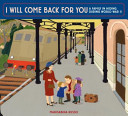
What was it like to grow up Jewish in Italy during World War II? Sit with a little girl as her grandmother tells the story of her childhood in Rome, of being separated from her father, and of going into hiding in the mountains. Based on the experiences of the author’s own family, this deeply moving book set during the Holocaust deals with a difficult subject in a way that is accessible and appropriate for young readers. I Will Come Back for You is an incredible story of bravery and kindness in the face of danger.
War Games
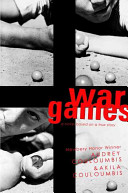
Newbery Honor winner Audrey Couloumbis (“Getting Near to Baby”) and her husband, Akila, deliver this gripping novel based on Akila’s boyhood experiences during World War II, after the Germans invaded Greece. What were once just boys’ games soon become matters of life and death for 12-year-old Petros and his older brother, Zola.
Requiem: Poems of the Terezin Ghetto
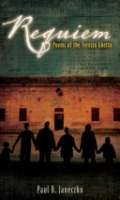
Paul B. Janeczko’s stirring new collection of poems goes inside the walls of the notorious camp to portray the indomitable spirit of those incarcerated there. Hitler hailed Terezin (Theresienstadt) as a haven for artistic Jews, when in reality the Czech concentration camp was little more than a way station to the gas chambers. In his second book inspired by devastating history, acclaimed poet Paul B. Janeczko gives voice to this heartrending creative community: its dignity, resilience, and commitment to art and music in the face of great brutality. The many memorable characters he conjures include a child who performs in the camp’s now famed production of Brundibar, a man who lectures on bedbugs, and a boy known as “Professor,” who keeps a notebook hidden in his shoe. Accented with dramatic illustrations by the inmates, found after WW II, Janeczko’s spare and powerful poems convey Terezin’s tragic legacy on an intimate, profoundly moving scale.
Irena Sendler and the Children of the Warsaw Ghetto
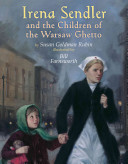
This is the only biography for children about the remarkable Holocaust heroine Irena Sendler, who smuggled over 400 children out of the Warsaw Ghetto.
Terezin
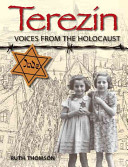
Through inmates’ own voices and artwork, Terezin explores the lives of Jewish people in one of the most infamous of the Nazi transit camps. Between 1941 and 1945, Nazi Germany turned the small town of Terezin, Czechoslovakia, into a ghetto, and then into a transit camp for thousands of Jewish people. It was a “show” camp, where inmates were forced to use their artistic talents to fool the world about the truth of gas chambers and horrific living conditions for imprisoned Jews. Here is their story, told through the firsthand accounts of those who were there. In this accessible, meticulously researched book, Ruth Thomson allows the inmates to speak for themselves through secret diary entries, artwork, and excerpts from memoirs and recordings narrated after the war. Terezin: Voices from the Holocaust is a moving portrait that shows the strength of the human will to endure, to create, and to survive.
Anya’s War
In 1937, the privileged and relatively carefee life of a fourteen-year-old Jewish girl, whose family emigrated from Odessa, Ukraine, to Shanghai, China, comes to an end when she finds an abandoned baby, her hero, Amelia Earhart, goes missing, and war breaks out with Japan. Based on the author’s family history.
Once
Once I escaped from an orphanage to find my Mum and Dad. Once I saved a girl called Zelda from a burning house. Once I made a Nazi with toothache laugh. My name is Felix. This is my story.
Emil And Karl
This is a unique work. It is one of the first books written for young readers describing the early days of the event that has since come to be known as the Holocaust. Originally written in Yiddish in 1938, it isone of the most accomplished works of children’s literature in this language. It is also the only book for young readers by Glatshteyn, a major American Yiddish poet, novelist, and essayist. Written in the form of a suspense novel, Emil and Karl draws readers into the dilemmas faced by two young boys-one Jewish, the other not-when they suddenly find themselves without families or homes in Vienna on the eve of World War II. Because the book was written before World War II, and before the full revelations of the Third Reich’s persecution of Jews and other civilians, it offers a fascinating look at life during this period and the moral challenges people faced under Nazism. It is also a taut, gripping, page-turner of the first order.
See the review at WOW Review, Volume 3, Issue 2
Milkweed
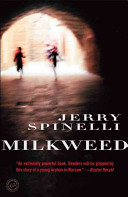
A stunning novel of the Holocaust from a Newbery MedalistHe’s a boy called Jew. Gypsy. Stopthief. Filthy son of Abraham.He’s a boy who lives in the streets of Warsaw. He’s a boy who steals food for himself, and the other orphans. He’s a boy who believes in bread, and mothers, and angels.He’s a boy who wants to be a Nazi, with tall, shiny jackboots of his own-until the day that suddenly makes him change his mind.And when the trains come to empty the Jews from the ghetto of the damned, he’s a boy who realizes it’s safest of all to be nobody.Newbery Medalist Jerry Spinelli takes us to one of the most devastating settings imaginable-Nazi-occupied Warsaw during World War II-and tells a tale of heartbreak, hope, and survival through the bright eyes of a young Holocaust orphan.
See the review at WOW Review, Volume 3, Issue 2