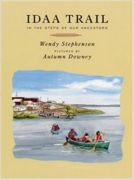
Idaa Trail: In the Steps of Our Ancestors

Etseh and Etsi traveled the Idaa Trail when they were children and as they paddle north with their grandchildren, they pass along their knowledge of special sites along the way — the history behind an abandoned village, the legend of the wolverine and its babies at the Sliding Hill, the story of a mysterious gravesite. They also explain how their people survived in the old days – building birch bark canoes, fishing with willow lines and muskrat-tooth hooks, and ambushing herds of caribou.

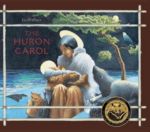
Huron Carol

In the early 1600s Father Jean de Brébeuf came to Canada from his native France as a Jesuit missionary. He settled among the Huron, or Ouendat, people in what is now Midland, Ontario. Despite his missionary zeal, Brébeuf was sensitive to the people with whom he lived. He learned their language and he wrote, in Huron, the original version of this famous Christmas carol. He and his fellow priests, called Black Robes, and many of their Huron parishioners were killed in an Iroquois raid in 1649. But Brébeuf’s carol continued to be sung by successive generations of Hurons. Then in 1926, Toronto writer Jesse Edgar Middleton, inspired by Brébeuf, wrote his own version of the carol in English. His are the familiar words we sing today, describing the Huron landscape, flora and fauna in telling the Christmas story.

Good For Nothing

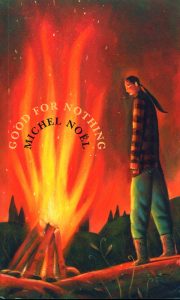
The year is 1959, and fifteen-year-old Nipishish returns to his reserve in northern Quebec after being kicked out of residential school, where the principal tells him he can look forward, like all Native Americans, to a life of drunkenness, prison, and despair. But despite his new freedom, the reserve offers little to a young Métis man. Both his parents are dead, his father Shipu, a respected leader, dying mysteriously at a young age. When Nipishish is sent to a strange town to live with a white family and attend high school, he hopes for the new life the change promises. But despite some bright spots, the adjustments prove overwhelming. Forced to return to his people, he must try to rediscover the old ways, face the officials who find him a threat, and learn the truth about his father’s death.


Navajo Women: Saanii

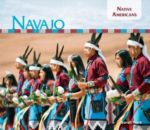
“I am a child of Changing Woman.” That is a line in a Navajo prayer spoken by medicine men on behalf of patients, and in the old days it was symbolic and spiritual. Today, it is real. Navajo women, once relegated to bearing children, caring for the home, and raising livestock in a matrilineal society, have transformed themselves into businesswomen, attorneys, truck drivers, pilots, nurses, artists, presidential candidates, and more. Who is the Navajo woman and what drives her in 2007? Join Navajo writer Betty Reid and photographer Kenji Kawano on a journey through the cycle of a Navajo woman’s life, from east (birth and youth) to south (teenager and young adult) to west (adult) to north (elder).

Proud To Be Inuvialuit: Quviahuktunga Inuvialuugama

James and his daughter, Rebecca, go on a trip to harvest beluga whale. Harvesting and preparing beluga meat together as a family is an integral part of what it means to be Inuvialuit. Join James and Rebecca and learn about how the beluga whale is interlinked with Inuvialuit culture and history.