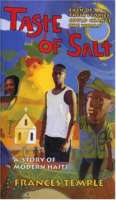
Taste of Salt: A Story of Modern Haiti

Every Life Makes a Story. Djo has a story: Once he was one of “Titid’s boys,” a vital member of Father Jean-Bertrand Aristide’s election team, fighting to overthrow military dictatorship in Haiti. Now he is barely alive, the victim of a political firebombing. Jeremie has a story: convent-educated Jeremie can climb out of the slums of Port-au-Prince, but she is torn between her mother’s hopes and her own wishes for herself and for Haiti. Father Jean-Bertrand Aristide has a story: a dream of a new Haiti, one in which every person would have a decent life, a house with a roof, clean water to drink, a good plate of rice and beans every day, anda field to work in. At Aristide’s request, Djo tells his story to Jeremie for Titid believes in the power of all of their stories to make change. As Jeremie listens to Djo, and to her own heart, she knows that they will begin a new story, one that is all their own, together.
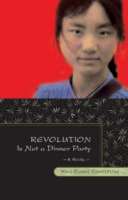
Revolution Is Not a Dinner Party

Nine-year-old Ling is comfortable; her parents are both dedicated surgeons in the best hospital in Wuhan. But when Comrade Li, one of Mao’s political officers, moves into a room in their apartment, Ling begins to witness the gradual disintegration of her world. In an atmosphere of increasing mistrust, Ling fears for the safety of her neighbors and, soon, for herself and family. Over the course of four years, Ling manages to grow and blossom, even as she suffers more horrors than many people face in a lifetime. Drawing from her childhood experience, Ying Chang Compestine brings hope and humor to this compelling story for all ages about a girl fighting to survive during the Cultural Revolution in China.

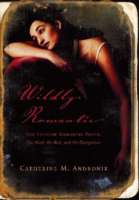
Wildly Romantic: The English Romantic Poets: The Mad, the Bad, and the Dangerous

Meet the rebellious young poets who brought about a literary revolution. Rock stars may think they invented sex, drugs, and rock and roll, but the Romantic poets truly created the mold. In the early 1800s, poetry could land a person in jail. Those who tried to change the world through their poems risked notoriety—or courted it. Among the most subversive were a group of young writers known as the Romantics: Lord Byron, Percy Bysshe Shelley, Samuel Taylor Cole-ridge, William Wordsworth, and John Keats. These rebels believed poetry should express strong feelings in ordinary language, and their words changed literature forever.

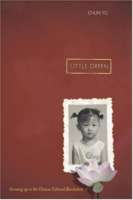
Little Green: Growing Up During The Chinese Cultural Revolution

This first-person memoir tells the story of Chun Yu, who was born in a small city in China, during the Chinese Cultural Revolution. The streets were filled with roaming Red Guards, the walls were covered with slogans, and reeducation meetings were held in all workplaces. Every family faced danger and humiliation, even the youngest children. Shortly after Chun’s birth, her beloved father was sent to a peasant village in the countryside to be reeducated in the ways of Chairman Mao. Chun and her brother stayed behind with their mother, who taught in a country middle school where Mao’s Little Red Book was a part of every child’s education. Chun Yu’s young life was witness to a country in turmoil, struggle, and revolution — the only life she knew.

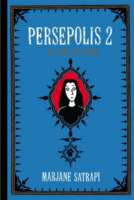
Persepolis 2: The Story of a Return

In 1984, Marjane flees fundamentalism and the war with Iraq to begin a new life in Vienna. Once there, she faces the trials of adolescence far from her friends and family, and while she soon carves out a place for herself among a group of fellow outsiders, she continues to struggle for a sense of belonging. Finding that she misses her home more than she can stand, Marjane returns to Iran after graduation. Her difficult homecoming forces her to confront the changes both she and her country have undergone in her absence and her shame at what she perceives as her failure in Austria. Marjane allows her past to weigh heavily on her until she finds some like-minded friends, falls in love, and begins studying art at a university. However, the repression and state-sanctioned chauvinism eventually lead her to question whether she can have a future in Iran.

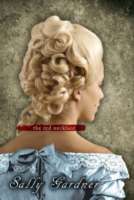
The Red Necklace

Clever and head-turningly attractive, fourteen-yearold Yann is an orphan who has been raised in Paris by Têtu, a dwarf with secrets he has yet to reveal to the gypsy boy. It’s the winter of 1789, and the duo have been working for a vain magician named Topolain. On the night when Topolain’s vanity brings his own death, Yann’s life truly begins. That’s the night he meets shy Sido, an heiress with an ice-cold father, a young girl who has only known loneliness until now. Though they have the shortest of conversations, an attachment is born that will influence both their paths. And what paths those will be! Revolution is afoot in France, and Sido is being used as a pawn. Only Yann will dare to rescue her, and he’ll be up against a fearful villain who goes by the name Count Kalliovski, but who has often been called the devil. It’ll take all of Yann’s newly discovered talent to unravel the mysteries of his past and Sido’s and to fight the devilish count.

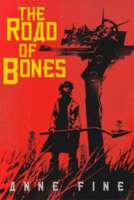
The Road of Bones

In school, Yuri is taught that the revolution liberated his country. He learns how the new leaders are always working for the greater good. But the truth is that life for his family and those around him is a brutal, poverty-stricken struggle. The government does nothing except punish those who protest. And one day, to his shock and horror, Yuri himself is branded an “enemy of the state” simply for dropping a few careless words.

In an author’s note, Anne Fine describes The Road of Bones as an adventure-escape story set in “a sort-of Russia, in a sort-of 1930s, under a Stalin-type leader.” This chilling political thriller follows the frantic footsteps of a teenager on the run, a criminal who hasn’t committed a crime, a young man on a path to discovering the truth about how far he will go in order to survive.

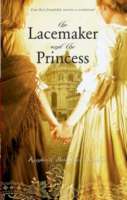
The Lacemaker and the Princess

Eleven-year-old Isabelle is a lace maker in the town of Versailles. One day as she delivers lace to the palace, she is almost trampled by a crowd of courtiers — only to be rescued by Marie Antoinette. Before Isabelle can believe it, she has a new job — companion to the queen’s daughter. Isabelle is given a fashionable name, fashionable dresses — a new identity. At home she plies her needle under her grandmother’s disapproving eye. At the palace she is playmate to a princess. Thrown into a world of luxury, Isabelle is living a fairy-tale life. But this facade begins to crumble when rumors of starvation in the countryside lead to whispers of revolution. How can Isabelle reconcile the ugly things she hears in the town with the kind family she knows in the palace? And which side is she truly on? Inspired by an actual friendship between the French princess and a commoner who became her companion, Kimberly Brubaker Bradley offers a vivid portrait of life inside the palace of Versailles — and a touching tale of two friends divided by class and the hunger for equality and freedom that fueled the French Revolution.