
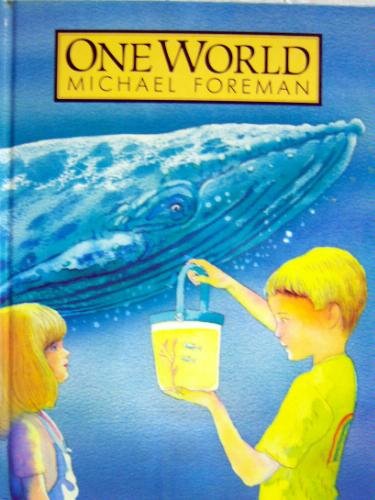
 Two children playing at the beach tamper with the natural balance of a tide pool and, after destroying its beauty, realize how similar its microcosm is to their own world.
Author: Book Importer

Girl, Going on 17: Pants on Fire

It’s never fun when a great summer comes to an end. Particularly when one argues with one’s adorable, but grossly insensitive, boyfriend the night before school starts. It’s such a terrible fight, Jess doesn’t know—are they broken up? Should she apologize? Too bad Jess is spending all her time in detention and can’t talk to Fred to figure it out. A sadistic new English teacher has decided Jess needs an attitude adjustment, and Jess can’t seem to stop making terrible mistakes. When she ends up pantless in her own backyard, Jess is left to ask herself: Where did she go wrong? And what can be done to make it up to Fred and salvage this horrible, horrible year?
The Wish House

From the best-selling author of WITCH CHILD and SORCERESS comes another engrossing, atmospheric novel — following a teenage boy as he uncovers the secrets of the mysterious and provocative Wish House. It’s the start of summer vacation, and fifteen-year-old Richard has discovered that a family has taken up residence in the usually deserted Wish House. Richard is intrigued by both the house and the bohemian family now living there. The father, Jethro Dalton, is an internationally renowned painter; his seemingly licentious wife is fascinated by herbs and cures. But it’s their beautiful and vibrant daughter, Clio, the muse for Jethro’s paintings, who draws Richard utterly into the Daltons’ world. Soon Richard finds himself so captivated by Clio that he steals off to the woods to spend days and nights with her, meanwhile struggling to understand and fit in with her eccentric clan. How could he know that some mysteries are best left alone — and that some betrayals can never be forgiven?
Sophie Hits Six

As Sophie approaches her sixth birthday, she receives a new pet from her great-aunt Al and makes a new friend who lives on a farm and who just happens to have a new litter of puppies. By the author of Sophie’s Snail.
Just In Case
Justin Case is convinced fate has in for him. And he’s right. After finding his younger brother teetering on the edge of his balcony, 15-year-old David Case realizes the fragility of life and senses impending doom. Without looking back, he changes his name to Justin and assumes a new identity, new clothing and new friends, and dares to fall in love with the seductive Agnes Day. With his imaginary dog Boy in tow, Justin struggles to fit into his new role and above all, to survive in a world where tragedy is around every corner. He’s got to be prepared, just in case.
Pretty Things

Brie is in love with Lancôme Juicy Tubes, Louis Vuitton accessories, and Charlie, her gay best friend. Charlie is in love with 1960s pop art, 1980s teen movies, and serial heart breaker Walker. Walker has only ever been in love with his VW Bug, until he meets Daisy. And Daisy is too busy hating everyone to know what love is. Friendships shift and relationship melodrama rules during a summer theater production of The Taming of the Shrew as Brie, Charlie, Walker and Daisy fall in and out of love and hate with each other. Their four voices alternate throughout the narrative, revealing the delicious inside scoop on each player’s secret thoughts and exposing the real person inside, which is always more than the exterior reveals.
The Ghost In The Tokaido Inn (The Samurai Mysteries)

Samurai fear nothing, not even death. They are loyal and brave. Fourteen-year-old Seikei has studied the way of the samurai, and would like nothing more than to be one. But a samurai is born, not made; Seikei was born the son of a tea merchant, so a merchant he must be. But when a priceless ruby intended for the shogun-the military governor of Japan-is stolen by a ghost, Seikei finds himself having to display all the courage of a samurai. Seikei is the only person to have seen the thief, and now the famous magistrate, Judge Ooka, needs the boy\’s help to solve this mystery. Can the son of a merchant prove himself worthy to the shogun himself?
Gothic Lolita: A Mystical Thriller

TWO GIRLS, THOUSANDS OF MILES APART…Chelsea lives in Los Angeles; Miya lives in Tokyo. Other than the fact they’re both half Japanese and obsessed with dressing like Gothic Lolitas, they would seem to have nothing in common. Or do they? THE BLOG THAT WENT AWAY. They got to know each other through their blogs. But three years ago something happened to Chelsea, an event so terrible that she stopped writing altogether. Miya’s been checking Chelsea’s blog ever since, to see if she’s come back, but she never has. Until today. A LIFE AND DEATH CONNECTION. Today is the day Chelsea finally goes back online and tells Miya everything. And today is the day that Miya’s life could change forever because of it. Like a Japanese manga come to life, Gothic Lolita is a mythic fairy tale about love, death, and rebirth…and the courage it takes to reach out to another soul.
Little Brother

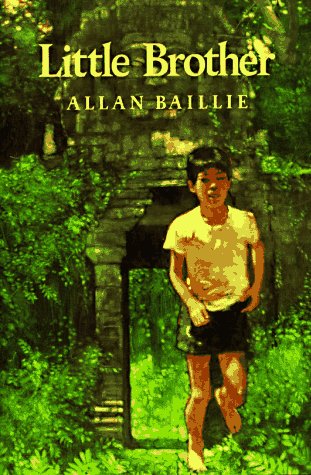 “Fleeing from the Khmer Rouge soldiers, Vithy becomes separated from his older brother, Mang, as they escape from Cambodia into Thailand. . . . As Vithy makes the dangerous journey, he comes to rely on his own wits and instincts. Historical novel, adventure, and character study, this book takes readers to another place and time”.–Booklist. American Bookseller Pick of the Lists; NCSS-CBC Notable Children’s Trade Book in the Field of Social Studies; Bank Street Child Study Children’s Book Assn. Children’s Book of the Year.
Asian Tales and Tellers

More than 30 stories from the rich Asian cultural panorama illuminate the wisdom and humor of Eastern cultures. In her search for stories, Cathy Spagnoli has slid through Indian rice fields, sipped sake with Japanese epic singers, met with monks in Thailand and Korea, and hiked the Himalayas with Tibetan dancers.