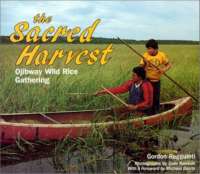
Glen Jackson, Jr., an eleven-year-old Ojibway Indian in northern Minnesota, goes with his father to harvest wild rice, the sacred food of his people.

Materials from United States of America
Glen Jackson, Jr., an eleven-year-old Ojibway Indian in northern Minnesota, goes with his father to harvest wild rice, the sacred food of his people.
A young bison growing up on the plains in the late 1800s faces peril at the hands of soldiers, who are destroying the great buffalo herds as a way to control native tribes. He is befriended by a native warrior and a white hunter who try to save him and his herd from annihilation.
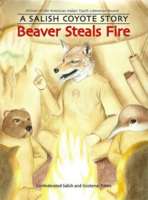
A long time ago, fire belonged only to the animals in the land above, not to those on the earth below. Curlew, keeper of the sky world, guarded fire and kept it from the earth. Coyote, however, devised a clever plan to steal fire, aided by Grizzly Bear, Wren, Snake, Frog, Eagle, and Beaver. These brave and resourceful animal beings raided the land above and risked all to steal fire from Curlew. Beaver Steals Fire is an ancient and powerful tale springing from the hearts and experiences of the Salish people of Montana. Steeped in the rich and culturally vital storytelling tradition of the tribe, this tale teaches both respect for fire and awareness of its significance, themes particularly relevant today. This unforgettable version of the story is told by Salish elder Johnny Arlee and beautifully illustrated by tribal artist Sam Sandoval.
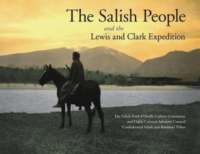
On September 4, 1805, in the upper Bitterroot Valley of what is now western Montana, more than four hundred Salish people were encamped, pasturing horses, preparing for the fall bison hunt, and harvesting chokecherries as they had done for countless generations. As the Lewis and Clark expedition ventured into the territory of a sovereign Native nation, the Salish met the strangers with hospitality and vital provisions, while receiving comparatively little in return. For the first time, a Native American community offers an in-depth examination of the events and historical significance of their encounter with the Lewis and Clark expedition. The result is a new understanding of the expedition and its place in the wider context of U.S. history. Through oral histories and other materials, Salish elders recount the details of the Salish encounter with Lewis and Clark-their difficulty communicating with the strangers through multiple interpreters and consequent misunderstanding of the expedition’s invasionary purpose, their discussions about whether to welcome or wipe out the newcomers, their puzzlement over the black skin of the slave York, and their decision to extend traditional tribal hospitality and gifts to the guests. What makes The Salish People and the Lewis and Clark Expedition a startling departure from previous accounts of the Lewis and Clark expedition is how it depicts the arrival of non-Indians-not as the beginning of history, but as another chapter in a long tribal history. Much of this book focuses on the ancient cultural landscape and history that had already shaped the region for millennia prior to the arrival of Lewis and Clark. The elders begin their vivid portrait of the Salish world by sharing creation stories and the traditional cycle of life. The book then takes readers on a cultural tour of the Native trails that the expedition followed. With tribal elders as our guides, we now learn of the Salish cultural landscape that was invisible to Lewis and Clark. The Salish People and the Lewis and Clark Expedition also brings new clarity to the profound upheaval of the Native world in the century prior to the expedition’s arrival, as tribes in the region were introduced to horses, European diseases, and firearms. The arrival of Lewis and Clark marked the beginning of a heightened level of conflict and loss, and the book details the history that followed the expedition: the opening of Salish territory to the fur trade, the arrival of Jesuit missionaries, the establishment of Indian reservations, the non-Indian development of western Montana, and more recently, the revival and strengthening of tribal sovereignty and culture. Conveyed by tribal recollections and richly illustrated, The Salish People and the Lewis and Clark Expedition not only sheds new light on the meaning of the expedition, but also illuminates the people who greeted Lewis and Clark, and despite much of what followed, thrive in their homeland today.
Joseph, a fourteen-year-old boy struggling with the reality that his white father left him and his Yup’ik mother when he was born, lashes out at others in many ways, but when he is saved by one of his supposed “”enemies,”” he begins to view things differently.
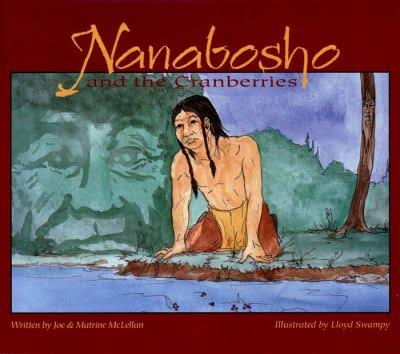 Sometimes we can be fooled by what we want to see. That happens to a famished Nanabosho when he sees a bush of plump cranberries seemingly floating on the surface of the lake.
Amiqquq is excited when his family catches a bowhead whale. As his family prepares to celebrate the traditional Inupiaq whaling feast, Amiqqaq learns about the spirit-of-the-whale.
Using a traditional technique called storyknifing, two Yupik Eskimo sisters share a story about the mice that made a nest out of tinsel from the Christmas tree.
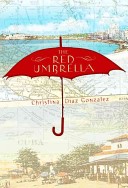
The Red Umbrellais the moving tale of a 14-year-old girl’s journey from Cuba to America as part of Operation Pedro Pan-an organized exodus of more than 14,000 unaccompanied children, whose parents sent them away to escape Fidel Castro’s revolution. In 1961, two years after the Communist revolution, Lucecita Aacute lvarez still leads a carefree life, dreaming of parties and her first crush. But when the soldiers come to her sleepy Cuban town, everything begins to change. Freedoms are stripped away. Neighbors disappear. Her friends feel like strangers. And her family is being watched. As the revolution’s impact becomes more oppressive, Lucecita’s parents make the heart-wrenching decision to send her and her little brother to the United States-on their own. Suddenly plunked down in Nebraska with well-meaning strangers, Lucecita struggles to adapt to a new country, a new language, a new way of life. But what of her old life? Will sheeve see her home or her parents again? And if she does, will she still be the same girl? The Red Umbrellas a moving story of country, culture, family, and the true meaning of home.
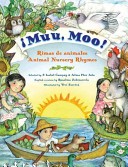
This bilingual collection of traditional animal nursery rhymes from Spain, Latin America, and the United States is sure to delight readers young and old. Includes 17 poems handpicked by Ada and Campoy, along with five of their own original poems.