
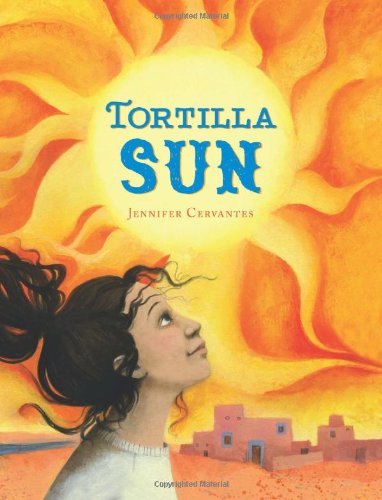
 When twelve-year-old Izzy discovers a beat-up baseball marked with the words ‘Because magic’ while unpacking in yet another new apartment, she is determined to figure out what it means. What secrets does this old ball have to tell? Her mom certainly isn’t sharing any especially when it comes to Izzy’s father, who died before Izzy was born. But when she spends the summer in her Nana’s remote New Mexico village, Izzy discovers long-buried secrets that come alive in an enchanted landscape of watermelon mountains, whispering winds, and tortilla suns. Infused with the flavor of the southwest and sprinkled with just a pinch of magic, this heartfelt middle grade debut is as rich and satisfying as Nana’s homemade enchiladas.
Southwest
I Wanna Be Your Shoebox
 Because Yumi RuÍz-Hirsch has grandparents from Japan, Cuba, and Brooklyn, her mother calls her a poster child for the twenty-first century. Yumi would laugh if only her life wasn’t getting as complicated as her heritage. All of a sudden she’s starting eighth grade with a girl who collects tinfoil and a boy who dresses like a squid. Her mom’s found a new boyfriend, and her punk-rock father still can’t sell a song. She’s losing her house; she’s losing her school orchestra. And worst of all she’s losing her grandfather Saul.Yumi wishes everything couldstay the same. But as she listens to Saul tell his story, she learns that nobody ever asks you if you’re ready for life to happen. It just happens. The choice is either to sit and watch or to join the dance.National Book Award finalist Cristina García’s first middle-grade novel celebrates the chaotic, crazy, and completely amazing patchwork that makes up our lives.
Carlos And The Squash Plant / Carlos Y La Planta De Calabaza
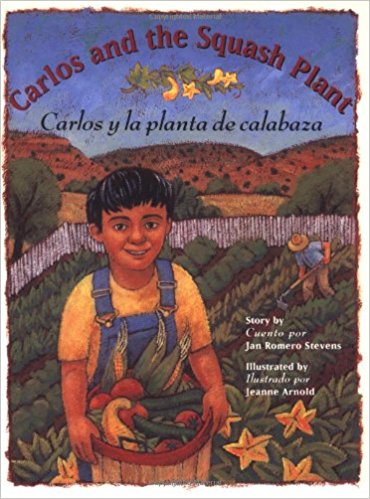 Having ignored his mother’s warnings about what will happen if he doesn’t bathe after working on his family’s New Mexican farm, Carlos awakens one morning to find a squash growing out of his ear.
La Fiesta Del Abecedario
The Alphabet Festival
The Navajo Year Walk Through Many Seasons
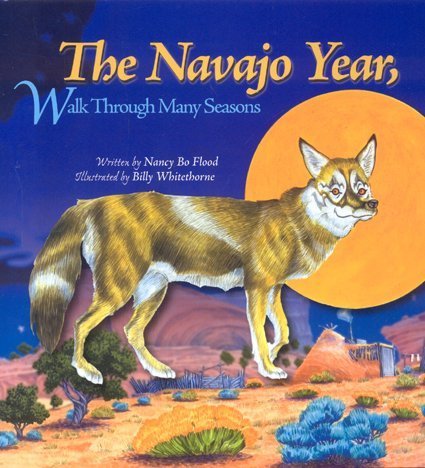 For the Navajo people, the new year begins in October, when summer meets winter. The Navajo Year, Walk Through Many Seasons follows the Navajo calendar, and provides poetic descriptions of the many sights, sounds, and activities associated with each month. In November, there are string games and stories; in April, planting of corn, beans, and squash; and in July, rodeos and monsoon rains. Follow Coyote through the year, and explore how the Navajos observe the rites and passages of each month.
The Good Rainbow Road
 This is the story of two courageous boys and of how they saved their village, Haapaahnitse, Oak Place, and it lies at the foot of a mountain. Once there was a lake and a stream nearby, but they have dried up. The land has become barren and dry. Two brothers, Tsaiyah-dzehshi, whose name means First One, and Hamahshu-dzehshi, Next One, are chosen for a westward trek to the home of the Shiwana, the Rain and Snow Spirits, to ask them to bring the gift of water to the village again. The brothers cross deserts and mountains on an arduous journey until they are finally stopped short by a treacherous canyon filled with molten lava. “The Good Rainbow Road” tells how the brothers overcome this last challenge and continue on to their destination.
“The Good Rainbow Road” is presented in Keres, the language of Acoma Pueblo and six other Pueblo communities in New Mexico, and in English, with an additional Spanish translation in the back of the book. It is published in cooperation with Oyate, a community-based Native organization dedicated to the continuation of traditional literatures and histories.
Juan Verdades: The Man Who Couldn’t Tell A Lie

A wealthy rancher is so certain of the honesty of his foreman that he wagers his ranch.
A Perfect Season For Dreaming / Un Tiempo Perfecto Para Sonar
An old man tells his granddaughter about the nine most beautiful dreams of his lifetime.
I Will Save You

Seventeen-year-old Kidd Ellison runs away to work for the summer at a beach campsite in California where his hard work and good looks lead to friendship and love but painful past memories surface in menacing ways.
The Rattlesnake Who Went to School
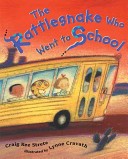
On his first day of school, Crowboy pretends he is a rattlesnake, but then he meets a girl in his class who wants to be a rattlesnake too.