
Meet Churko and burki, the rhyming sister, and spend a day with them in their billage, playing and singing songs. Adapted from the Gond arist Durga Bai’s rendering of her own childhood in her village Paranghr, this is a merry tale of fun and rhyme.
India
Materials from India
Excuses Excuses
“Youngsters will delight in Neel’s fantastic excuses… The illustrations, a collage of tinted photographs and art, provide an appropriately surreal backdrop” -Kirkus Reviews” Art and text intertwined with balanced whimsy, imbue Neel’s tall tales with colorful energy and unlimited creativity.” – BookDragon, Smithsonian Asian Pacific American Program Who doesn’t know a child who is always ready with an implausible excuse when caught out by an indignant adult? Excuses Excuses builds on this universal experience using an Indian setting. Young Neel is the boy next door who can’t help getting into trouble, and yet he is endearing in his explanations. He has one for every day of the week and for every kind of adult ? it seems that he may never run out of them! Wildly funny and imaginative, this narrative in nonsense verse is fast-paced and keeps young readers guessing. Unusual and dramatic art that captures the improbable colors of India adds zest to a story that all children would want to be a part of.
The Little Brown Jay: A Tale From India
Kindness and helping others often bring unexpected rewards. Meet Princess Maya and the little brown jay in this magical folktale from India, and find out how unselfish acts bring great joy.
Do!
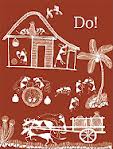
Do! is a set of action pictures rendered in the elegantly minimalist Warli style of tribal art. It introduces basic verbs to the young reader through a series of delicately drawn pictograms, which both illustrate the verb and tell a further string of stories. Every page or pair of pages invites the child to explore a busy world and make up her own tales. The art conjures up a world teeming with human figures, animals, plants, and birds.
The illustrations in Do! were made by people belonging to a tribal community in Maharashtra, in western India. Ramesh Hengadi, Rasika Hengadi, Shantaram Dhadpe, and Kusum Dhadpe are the artists featured in this book.
Do! was conceived of by Gita Wolf, who has written more than seventeen books for children and adults. A highly original and creative voice in contemporary Indian publishing, she has pursued her interest in exploring and experimenting with the form of the book and its status as a revered cultural object.
Sacred River: The Ganges of India
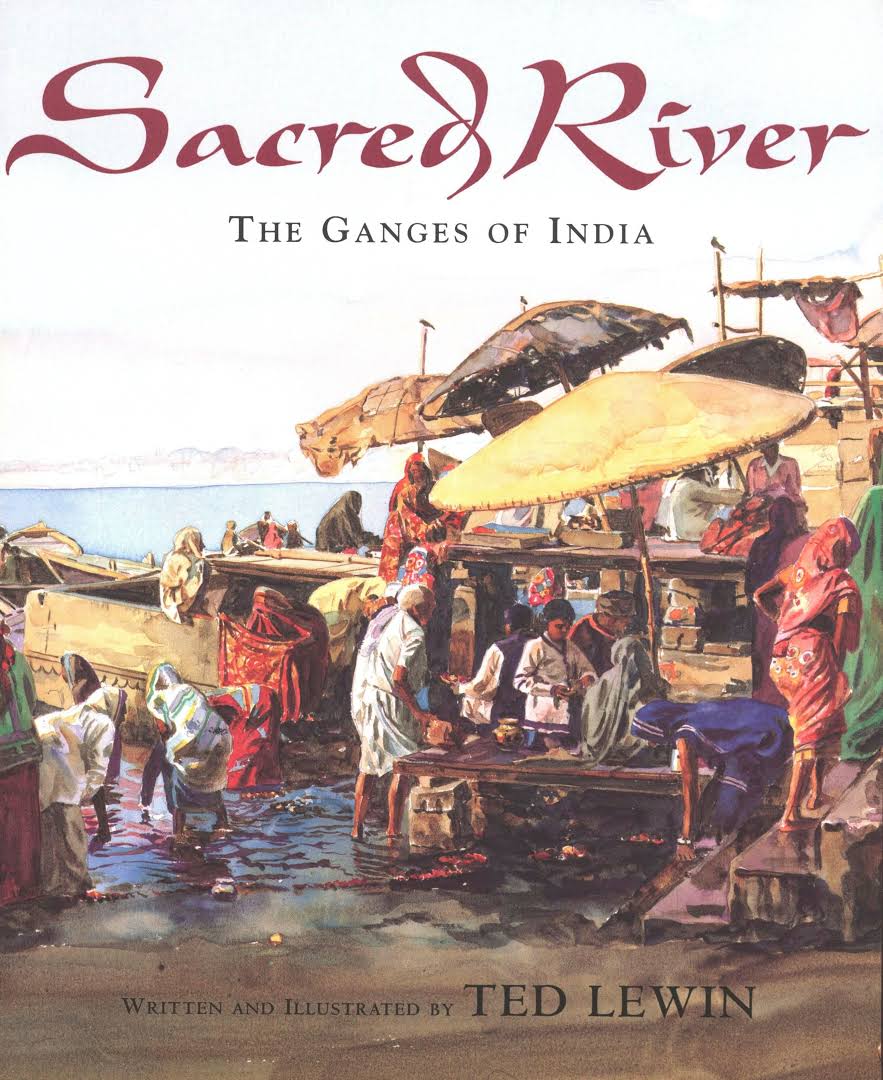 With the help of colorful, detailed watercolors, Ted Lewin tells of his amazing experiences among the Hindu pilgrims who journey annually to the Ganges river, the most sacred in India.
The Rumor
In the village of Baddbaddpur, the people like to tell tales, “so tall that if you put them one on top of the other, they would reach the stars.” Pandurang is so dour that he can make milk turn sour. One day he coughs up a feather. As the story of Pandurang’s feather is passed from one person to another it grows and grows and grows until it can hardly be recognized. And that’s when the story weaves its magic on the ill-tempered Pandurang. An international version of “broken telephone” this is a funny cautionary tale about the nature of rumors.
Nur Jahan of India
From the deepest heart of the Moghul palace, her face hidden by veils, Nur Jahan came to rule all of Mogul India. This book tells the story of how she introduced efficiencies, encouraged trade, and made possible a great flowering of the arts. She hunted tigers, rode elephants to war, commanded a nation from behind a curtain, and did many other things that girls were not expected to do. Sections on the clothes Nur Jahan wore, the foods she ate, and why she is remembered today are included.
No Ordinary Day
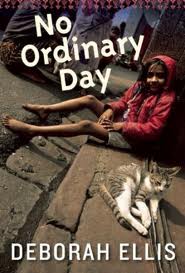
Even though Valli spends her days picking coal and fighting with her cousins, life in the coal town of Jharia, India, is the only life she knows. The only sight that fills her with terror is the monsters who live on the other side of the train tracks — the lepers. When Valli discovers that that her “aunt” is a stranger who was paid money to take Valli off her own family’s hands, she leaves Jharia and begins a series of adventures that takes her to Kolkata, the city of the gods. Valli finds that she really doesn’t need much to live and is very resourceful. But a chance encounter with a doctor reveals that she has leprosy. Unable to bear the thought that she is one of the monsters she has always feared, Valli rejects help and begins an uncertain life on the street.
See the review at WOW Review, Volume 5, Issue 3.
Guru Nanak
Details the life and times of Guru Nanak, founder of the Sikh faith.
Chained
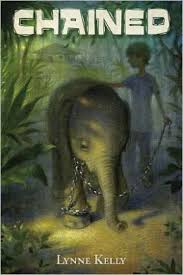
After 10-year-old Hastin’s family borrows money to pay for his sister’s hospital bill, he leaves his village in northern India to take a job as an elephant keeper and work off the debt. He thinks it will be an adventure, but he isn’t prepared for the cruel circus owner. The crowds that come to the circus see a lively animal who plays soccer and balances on milk bottles, but Hastin sees Nandita, a sweet elephant and his best friend, who is chained when she’s not performing and hurt with a hook until she learns tricks perfectly. Hastin protects Nandita as best as he can, knowing that the only way they will both survive is if he can find a way for them to escape.