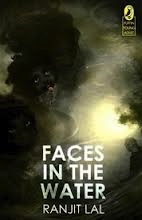
Faces In The Water

The water from a magical well in their farmhouse was the reason behind this ‘good fortune’, they said. One day, fifteen-year-old Gurmi sets out to look for the well and what he sees changes everyone’s world forever. The faces of three girls look up at him from the water, and draw him into a world of fun, games and cyber magic -and Gurmi has to face up to an unnerving truth as murky as the surreal well. What terrible crimes have been committed behind the walls of the rambling Diwanchand family home? Will Gurmi and the ghost-girls be able to avenge the evil that has taken place and prevent yet another unspeakable atrocity from occurring? Funny, yet sensitive and immensely powerful, Faces in the Water is the story of lives lost to appease our society’s insatiable hunger for male children, and the price families pay for its sake.

See the review at WOW Review, Volume 5, Issue 3

100 Animals on Parade!

With hundreds of colorful animals to count and hundreds of hilarious details to hunt, this unconventional counting book guarantees hundreds of hours of fun!

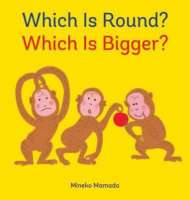
Which Is Round? Which Is Bigger?

This deceptively simple concept book prompts the reader to compare pairs of objects and then choose which one has a particular attribute. At first the answer seems obvious until the page is turned to reveal a delightful twist! The thoughtful format and witty illustrations give away the answer to the question, Which is a hit book?

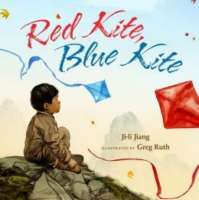
Red Kite, Blue Kite

When Tai Shan and his father, Baba, are separated during China’s Cultural Revolution, they are able to stay close by greeting one another every day with flying kites until Baba, like the kites, is free. Includes historical note.

Join the discussion of Red Kite, Blue Kite as well as other books centered around relocation on our My Take/Your Take page.

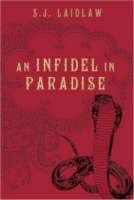
An Infidel in Paradise

Set in Pakistan, this is the story of a teen girl living with her mother and siblings in a diplomatic compound. As if getting used to another new country and set of customs and friends isn’t enough, she must cope with an increasingly tense political situation that becomes dangerous with alarming speed. Her life and those of her sister and brother depend on her resourcefulness and the unexpected help of an enigmatic Muslim classmate.

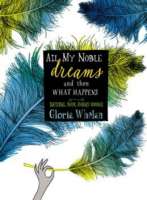
All My Noble Dreams and Then What Happens

As Rosalind continues to straddle the proper English world of her family and the culture of 1920s India where they live, her support of Gandhi and his followers in opposing British rule grows and she considers trying to carry the rebels’ message to Edward, Prince of Wales, during his visit.

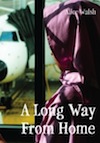
A Long Way From Home

Thirteen-year-old Rabia, along with her mother and younger brother, flees Afghanistan and the brutal Taliban for Pakistan. Some months later, they take part in a program that is relocating refugee widows and orphans to America. However, their flight falls on the fateful morning of 9/11. After the terrorist attack on the World Trade Center in New York City, their plane is diverted to Gander, Newfoundland. Also on the plane is a boy named Colin, who struggles with his prejudices against Rabia and her family after they are all stuck in Gander. The people in the small community open their hearts and their homes to the stranded passengers, and their kindness might be the bridge to bring Rabia and Colin’s families together.

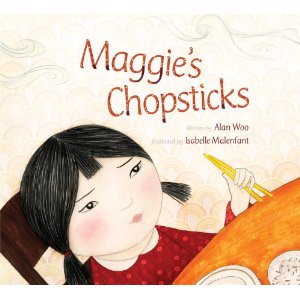
Maggie’s Chopsticks

Maggie comes from a family of unique individuals, all with their own opinions and style, each one of them willing to give advice on how the child should hold her new chopsticks. Maggie listens to all of them in turn, weighing her options. Grandmother suggests using chopsticks in a rather forthright way, while Sister suggests a more graceful approach. As Maggie begins to worry that she may never find her own style, her father suggests that she be herself. Because of his encouragement, she is able to find just what works for her. Maggie comes from a traditional Chinese family, and she clearly wants to make them proud. Woo writes in a way that transforms a story about holding utensils into a poetic journey. Not only is Maggie learning the mechanics of chopsticks, but she is also learning to be herself. Language such as “click-clack-clicketing” and, as she circles her chopsticks above her fish tank, “the fish flee/from the wooden fingers/reaching through their sky of blue” makes children want to turn the page and find out what else Maggie will experience. In Malenfant’s vibrant illustrations, deep reds and shimmering oranges leap from the pages. All children are fascinated with holding utensils, whether a fork, a spoon, or chopsticks, and are anxious to please adults while staking out their own individuality, making this a great choice for kids of all ethnic backgrounds.