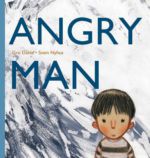
Angryman

Boj’s father can be very angry and violent. Boj calls this side of his father’s personality “Angryman.” When Angryman comes no one is safe. Until something powerful happens…Gro Dahle’s astute text and Svein Nyhus’s bold, evocative art capture the full range of emotions that descend upon a small family as they grapple with “Angryman.” With an important message to children who experience the same things as Boj: You are not alone. It’s not your fault. You must tell someone you trust. It doesn’t have to be this way!

Angryman translator, Tara Chace, is featured in WOW’s August 2019 Authors’ Corner.
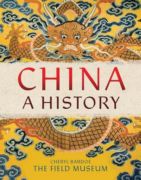
China: A History

Discover the history of one of the world’s most influential civilizations. Based on the Cyrus Tang Hall of China exhibit at The Field Museum, China: A History traces the 7,000-year story of this diverse land. Full-color maps, photos, and illustrations of the people, landscape, artifacts, and rare objects bring the history of this nation to life! Young readers learn about prehistoric China, follow the reign of emperors and dynasties, and come to understand how China became the world power that it is today. The book also explores the role of children and women in everyday life as well as how religion, politics, and economics shaped the deep traditions and dynamic changes of modern China. This book stands alone from the exhibition and is a go-to resource for young readers looking to learn more about this powerful nation. It includes a timeline, bibliography, and index.

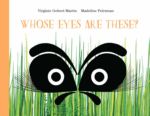
Whose Eyes Are These?

Whose eyes are these? Each spread in this magnificently illustrated book starts with a pair of mysterious eyes and a fun response to the question, and then children are off to discover just who is hiding—in its natural setting. Children can plunge into the colorful ocean and find the jellyfish, fly among beautiful flowers to catch the dizzy hummingbird, and delve into the woods after a prickly hedgehog.

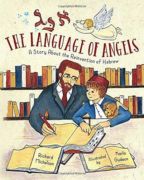
The Language of Angels

In 1885, few Jews in Israel used the holy language of their ancestors, and Hebrew was in danger of being lost—until Ben Zion and his father got involved. Through the help of his father and a community of children, Ben modernized the ancient language, creating a lexicon of new, modern words to bring Hebrew back into common usage. Historically influenced dialogue, engaging characters, and colorful art offer a linguistic journey about how language develops and how one person’s perseverance can make a real difference.

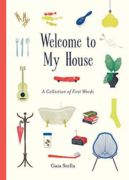
Welcome to My House

First words are everywhere you look, especially in a house! This visually striking picture book catalogs an impressive array of household items, naming the delightful miscellany that comprises a life. The charming collections are creative and unexpected, providing the sweetest of visual snapshots that reinforce word recognition and understanding. In addition to the everyday kitchen, living room, and garden items, there are surprising and smart illustrated spreads featuring “everything for resting,” “everything for warming up,” and “everything that gets lost.” Plus, a seek-and-find element (a hiding cat!) offers bonus amusement. Children will savor the delicate illustrations of things they are learning to recognize, things they are discovering every day, and things they will cherish and use as they grow.

We Will Not Be Silent

In his signature eloquent prose, backed up by thorough research, Russell Freedman tells the story of Austrian-born Hans Scholl and his sister Sophie. They belonged to Hitler Youth as young children, but began to doubt the Nazi regime. As older students, the Scholls and a few friends formed the White Rose, a campaign of active resistance to Hitler and the Nazis. Risking imprisonment or even execution, the White Rose members distributed leaflets urging Germans to defy the Nazi government. Their belief that freedom was worth dying for will inspire young readers to stand up for what they believe in. Archival photographs and prints, source notes, bibliography, index.

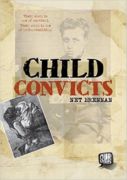
Child Convicts

At the age of seven, children in eighteenth-century Britain were tried in court like adults. For crimes such as picking pockets or stealing clothes, they could be sentenced to death by hanging or transported to the then-perilous and isolated colonies of Australia. Life in the colonies was often as difficult and dangerous as the poverty from which many of the convicts came, but the dreaded sentence of transportation could also present opportunities.

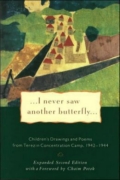
I Never Saw Another Butterfly

A total of 15,000 children under the age of fifteen passed through the Terezin Concentration Camp between the years 1942-1944; less than 100 survived. In these poems and pictures drawn by the young inmates of Terezin, we see the daily misery of these uprooted children, as well as their courage and optimism, their hopes and fears. The ghetto of Terezin (Theresienstadt), located in the hills outside Prague, was an unusual concentration camp in that it was created to cover up the Nazi genocide of the Jews. Billed as the “Fuhrer’s gift to the Jews, ” this “model ghetto” was the site of a Red Cross inspection visit in 1944. With its high proportion of artists and intellectuals, culture flourished in the ghetto – alongside starvation, disease, and constant dread of transports to the death camps of the east.