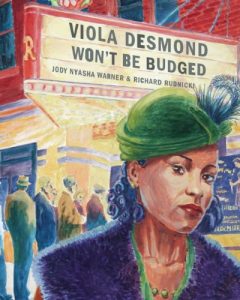
In 1946, Viola Desmond bought a movie ticket at the Roseland Theatre in Nova Scotia. After settling into a main floor seat, an usher came by and told her to move, because her ticket was only good for the balcony. She offered to pay the difference in price but was refused: “You people have to sit in the upstairs section.” Viola refused to move. She was hauled off to jail, but her actions gave strength and inspiration to Canada’s black community. Vibrant illustrations and oral-style prose tell Viola’s story with sympathy and historical accuracy.
Racism
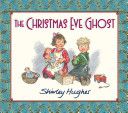
The Christmas Eve Ghost
Two children find goodwill and acceptance in unexpected places even in the hardest of times in a moving tale from a master picturebook creator. In 1930s Liverpool, where streetcars clang on iron tracks, young Bronwen and Dylan live with their widowed Mam. Every day, in the wee hours of morning, Mam leaves the two alone as she gathers other people’s laundry to boil in a big metal copper at home. At night, if she’s not too tired, Mam tells fanciful tales of dragons and ghosties, and on Sunday, she cautions the children about the O’Rileys next door, who go to a church that is not for their kind. But on Christmas Eve, when Mam must go out, Bronwen and Dylan hear a ghostly plonk! plonk! plonk! from the washroom that sends them running straight into the arms of Mrs. O’Riley. Not only do they find that the house next door harbors nothing to fear, but it may hold a blessing for Mam, too. With evocative drawings full of compelling detail, Shirley Hughes tells a timeless, genuine tale of community and human kindness.
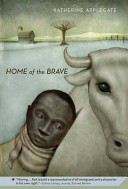
Home Of The Brave
Kek comes from Africa where he lived with his mother, father, and brother. But only he and his mother have survived. Now she’s missing, and Kek has been sent to a new home. In America, he sees snow for the first time, and feels its sting. He wonders if the people in this new place will be like the winter—cold and unkind. But slowly he makes friends: a girl in foster care, an old woman with a rundown farm, and a sweet, sad cow that reminds Kek of home. As he waits for word of his mother’s fate, Kek weathers the tough Minnesota winter by finding warmth in his new friendships, strength in his memories, and belief in his new country.
This book has been included in WOW’s Language and Learning: Children’s and Young Adult Fiction Booklist. For our current list, visit our Booklist page under Resources in the green navigation bar.
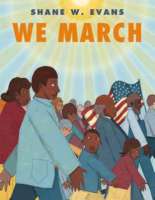
We March
Illustrations and brief text portray the events of the 1963 march in Washington, D.C., where the Reverend Martin Luther King, Jr. delivered a historic speech.
Martin De Porres
As the illegitimate son of a Spanish nobleman and a former slave, Martin de Porres was born into extreme poverty. Even so, his mother begged the church fathers to allow him into the priesthood. Instead, Martin was accepted as a servant boy. But soon, the young man was performing miracles. Rumors began to fly around the city of a strange mulatto boy with healing hands, who gave first to the people of the barrios. Martin continued to serve in the church, until he was finally received by the Dominican Order, no longer called the worthless son of a slave, but rather a saint and the rose in the desert.
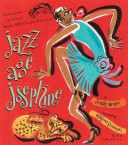
Jazz Age Josephine
Singer, dancer, actress, and independent dame, Josephine Baker felt life was a performance. She lived by her own rules and helped to shake up the status quo with wild costumes and a you-can’t-tell-me-no attitude that made her famous. She even had a pet leopard in Paris! From bestselling children’s biographer Jonah Winter and two-time Caldecott Honoree Marjorie Priceman comes a story of a woman the stage could barely contain. Rising from a poor, segregated upbringing, Josephine Baker was able to break through racial barriers with her own sense of flair and astonishing dance abilities. She was a pillar of steel with a heart of goldall wrapped up in feathers, sequins, and an infectious rhythm.
Out of Shadows
A debut novel set in the early 1980s at a boy’s boarding school in the newly formed country of Zimbabwe.
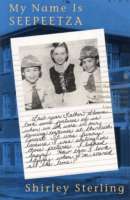
My Name Is Seepeetza
Her name was Seepeetza when she was at home with her family. But now that she’s living at the Indian residential school her name is Martha Stone, and everything else about her life has changed as well. Told in the honest voice of a sixth grader, this is the story of a young Native girl forced to live in a world governed by strict nuns, arbitrary rules, and a policy against talking in her own dialect, even with her family. Seepeetza finds bright spots, but most of all she looks forward to summers and holidays at home. This autobiographical novel is written in the form of Seepeetza’s diary.
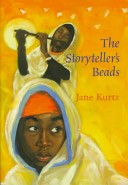
The Storyteller’s Beads
During the political strife and famine of the 1980s, two Ethiopian girls, one Christian and the other Jewish and blind, struggle to overcome many difficulties, including their prejudices about each other, as they make the dangerous journey out of Ethiopia.
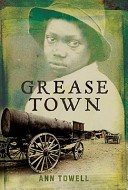
Grease Town
A heartbreaking history of prejudice, family ties, and the loss of innocence.When twelve-year-old Titus Sullivan decides to run away to join his Uncle Amos and older brother, Lem, he finds an alien and exciting world in Oil Springs, the first Canadian oil boomtown of the 19th century.The Enniskillen swamp is slick with oil, and it takes enterprising folk to plumb its depths. The adventurers who work there are a tough lot of individuals. In this hard world, Titus becomes friends with a young black boy, the child of slaves who came to Canada on the Underground Railroad. When tragedy strikes in the form of a race riot, Titus’s loyalties are tested as he struggles to deal with the terrible fallout.Though the characters are fictitious, the novel is based on a race riot that occurred in Oil Springs, Ontario, on March 20, 1863. Grease Town is historical fiction at its finest.