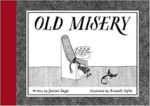
Poor Old Misery. She and her old cat, Rutterkin, “ain’t got two pennies to rub together”. And the one thing of value she does have —a tree, filled with good eating apples — is regularly ransacked by humans and animals of all kinds who make off with armloads of apples! So, one day, when a surprise visitor grants her a wish, Old Misery tells him, “There’s but one wish for me, mister, and it’s this here: whoever I catch stealing apples off my tree will get stuck to it until I decide to let them go!” At first, it seems like her wish was a terrific idea, as she catches all the apple thieves and sends them on their way for good. But then Old Misery decides to use her new power on another surprise visitor. And she learns what may be the most miserable lesson of all: be careful what you wish for!
Age
Catalog sorted by age group
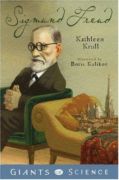
Sigmund Freud: Giants Of Science #3 (Giants of Science (Viking))
Before Freud, nobody discussed “unconscious” motives, Oedipal complexes, the id and the ego, or Freudian slips. Freud was a complicated, often irascible man, who in 19th-century Vienna developed his still-controversial ideas and the new discipline of psyc.
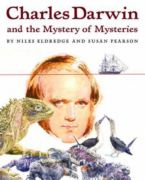
Charles Darwin And The Mystery Of Mysteries
AN INTREPID VOYAGE. A GROUNDBREAKING THEORY. The life and work of oneof the world’s most influential scientists.Young readers of this altogether fascinating biography follow Charles Darwin not only on his journey aboard the HMS Beagle but also through the thinking that led him to his world-changing theory and most famous work, The Origin of th e Species. Complete with historical photographs and documented passages straight from Darwin’s personal diary, this engaging book ensures that a new generation of young readers will get to know one of the scientists who shaped our understanding of the world.
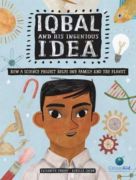
Iqbal And His Ingenious Idea
It’s monsoon season in Bangladesh, which means Iqbal’s mother must cook the family’s meals indoors, over an open fire. The smoke from the fire makes breathing difficult for his mother and baby sister, and it’s even making them sick. Hearing them coughing at night worries Iqbal. So when he learns that his school’s upcoming science fair has the theme of sustainability, Iqbal comes up with the perfect idea for his entry: he’ll design a stove that doesn’t produce smoke! With help from his teacher, Iqbal learns all about solar energy cooking, which uses heat from the sun to cook.
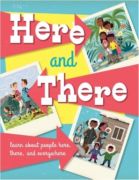
Here And There
Explore the amazing dieversity of our planet’s people and cultures in full technicolor. Find out how people celebrate the New Year in Thailand, discover Iran’s incredible Fire Festival, and much, much more.
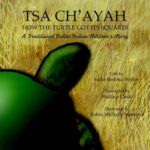
How The Turtle Got Its Squares
Bilingual Edition in English and Caddo Language Tsa Ch¿ayah/How The Turtle Got Its Squares is a traditional Caddo Indian story that reaches back through countless generations into the Caddo past in what is now Arkansas, Louisiana, Texas and Oklahoma. In those days much of the entertainment and education of Caddos took the form of stories and songs that were passed from generation to generation in the Caddo language. They explained the natural world, history, and moral lessons. In the late 1950¿s linguist Wallace Chafe met storyteller Sadie Bedoka Weller, recorded this story and transcribed it in an alphabet customized to the sounds of Caddo. In recent generations the Caddo language has fallen almost completely out of use; stories like Tsa Ch¿ayah have rested silently in archives and scholarly books. Now the Kiwat Hasinay Foundation has brought the story to life again, with original illustrations by Caddo artist Robin Michelle Montoya. The text is written in Chafe¿s alphabet, and the actual voice of Sadie Bedoka can be heard on a CD that is available to accompany the book. Tsa Ch¿ayah, with its bilingual format and CD, helps children read and write English, read and write Caddo, understand and even speak a sample of spoken Caddo. Above all, it brings the wisdom and culture of the past once again into the present and future of the Caddo people. –Alice Anderton, Intertribal Wordpath Society Retold for the first time in print with Caddo language and English text and delightful illustrations, this charming book introduces a story told by generations of Caddo Indian Nation storytellers to capture the imaginations of their children. The story of ¿How The Turtle Got Its Squares¿ will fascinate and entertain new storytellers and their young listeners alike.

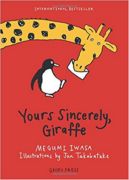
Yours Sincerely Giraffe
Giraffe is bored, as usual. He’d love a friend to share things with. So he writes a letter and sends it as far as possible across the other side of the horizon. There he finds a pen palPenguin.
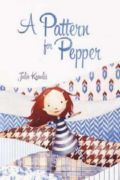
A Pattern For Pepper
From pinstripe to houndstooth, ikat to toile, join Pepper on her journey into the history of textiles as she works alongside a tailor to make her perfect dress.
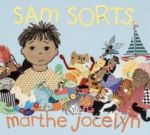
Sam Sorts
Marthe Jocelyn is back with another clever concept book to follow Hannah’s Collections, Ones and Twos and Where Do You Look? This time, she tackles counting and categories.
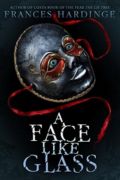
A Face Like Glass
Originally published in Great Britain in 2012 by Macmillan UK. In the underground city of Caverna, the world’s most skilled craftsmen toil in the darkness to create delicacies beyond compare–wines that remove memories, cheeses that make you hallucinate, and perfumes that convince you to trust the wearer, even as they slit your throat. On the surface, the people of Caverna seem ordinary, except for one thing: their faces are as blank as untouched snow. Expressions must be learned, and only the famous Facesmiths can teach a person to express (or fake) joy, despair, or fear–at a steep price. Into this dark and distrustful world comes Neverfell, a girl with no memory of her past and a face so terrifying to those around her that she must wear a mask at all times. Neverfell’s expressions are as varied and dynamic as those of the most skilled Facesmiths, except hers are entirely genuine. And that makes her very dangerous indeed . . “