
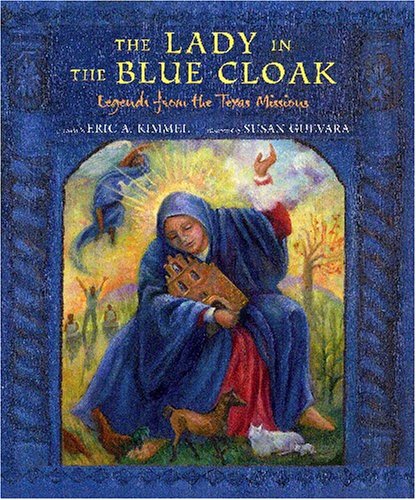
 For each Texas mission, there is a rich and complicated history. In the title story, from Mision de San Francisco de los Tejas, a mysterious woman in blue visits the Teas people to prepare them for the missionaries\’ arrival. In \”Rosa\’s Window\” and \”The Bell\” the love and grief of two couples torn apart in the making of the Mision de San Jose y San Miguel de Aguayo manifest themselves in the very edifices of the mission. The Mision de Nuestra SEnora de la Purisma Concepcion de Acuna, named for and dedicated to the Blessed Virgin Mary, was the scene of a remarkable salvation as the Teas workers tried to escape the heated pursuit of the Comanches in \”The Miracle at the Gate.\” Here Kimmel gracefully retells these and other powerful legends behind four of th missions, each enhanced by a beautifully evocative painting by Susan Guevara.
Americas
Materials from the Americas
Nana’s Big Surprise / Nana, Que Sorpresa! (Spanish Edition)
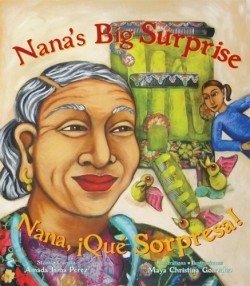 Amada and her family build a chicken coop, hoping that her grandmother, visiting from Mexico, will enjoy raising the chickens and be distracted from her grief at Grandfather’s death.
Los Gatos Black On Halloween
Follow los monstruos and los esqueletos to the Halloween party Under October’s luna, full and bright, the monsters are throwing a ball in the Haunted Hall. Las brujas come on their broomsticks. Los muertos rise from their coffins to join in the fun. Los esqueletos rattle their bones as they dance through the door. And the scariest creatures of all aren’t even there yet!This lively bilingual Halloween poem introduces young readers to a spooky array of Spanish words that will open their ojos to the chilling delights of the season.
Carlos And The Cornfield / Carlos Y La Milpa De Maiz (Carlos Series)
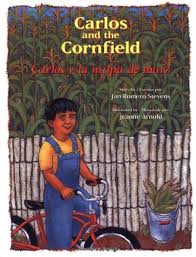
In this delightful sequel to “Carlos y la Planta de Calabaza”, Carlos is told by his father that “you reap what you sow”. After some humorous experiences, Carlos comes to understand the rewards of hard work and learns a valuable lesson in listening. Full color.
See the review at WOW Review, Volume 8, Issue 4
The Stranger And The Red Rooster/ El Forastero Y El Gallo Rojo
 One day in a small California barrio, a scary-looking stranger with an ugly scar on his face arrives. Silence falls on the streets. Normally raucous children stop playing, and their fearful mothers quickly beckon them inside. Everyone peeks out of windows and doors to watch the stranger walk down Main Street. Later in the week, the stranger again appears in town. And a few days later, on a pleasant Sunday morning, the man shows his frightening face yet again. But this time, he’s not alone. Cradled in the stranger’s arms is a big, red rooster with a yellow ribbon tied around its neck. When the rooster sets off after a bug with the stranger hanging on to the ribbon “like a cowboy who had lassoed a wild bull,” the townspeople are finally able to look past the long, ugly scar on the stranger’s face. Echoing the oral tradition common to so many Latinos, acclaimed author Victor Villaseñor shares with young readers one of his father’s favorite stories. With vibrant illustrations by José Jara, this will soon become the favorite of many children aged 3 to 7.
Early Explorations: The 1500s (Hispanic America)
 “Provides comprehensive information on the history of Spanish exploration in the United States”–Provided by publisher.
Sor Juana Ines De La Cruz: A Trailblazing Thinker
Recounts the inspiring story of the young seventeenth-century Mexican girl who, forbidden a formal education and opposed by the Spanish Inquisition, became one of Mexico’s greatest writers and thinkers.
A So-Called Vacation
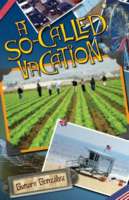
Brothers Gabriel and Gustavo, high school students in the Rio Grande Valley of Texas, are horrified when their father suggests that they spend the summer in California doing field work to earn extra money. They’re not immigrants; the boys and their younger sister Paula were born in Texas, and the idea of picking fruits and vegetables hard labor usually associated with undocumented workers is totally humiliating. But their father thinks working in the fields will be good for his children. After all, the experience didn’t hurt him when he was a kid. ”Look at me. I didn’t die. All that work made me stronger.” Gustavo, heading into his senior year, doesn’t want to leave his girlfriend. And what will all his friends think? Gabriel doesn’t care what anyone thinks; he’s just not interested in spending the summer doing back-breaking labor. It’s only when the promise of visiting Disneyland, after working the fields, is offered that they ultimately agree to the ”vacation.” Before long, the family finds itself in a migrant camp, living in a shack with no electricity or bathroom. Toiling in the fields by day, trying to get the hang of picking strawberries, the boys and their father attempt to make sense of it all, including the motives and hopes of their fellow workers: the manic Borrado brothers, who are the fastest pickers around, and Victor, who introduces them to the canal where the migrant teens swim, even though two boys drowned there last season. Unfortunately, while learning their way around town, the family members experience the racism frequently directed at recent immigrants. How often, Gabriel wonders, has he done the same thing and dismissed someone just for being in the U.S. illegally? In this illuminating novel for teens that sheds light on the subjects of immigrant labor and prejudice within the Hispanic community, Genaro Gonzalez blends the ageless theme of fathers and sons at odds with a contemporary issue weighing on many minds. While set in a place unfamiliar to many, the characters’ hopes and dreams for the future will resonate with young adult readers.
Tortilla Chronicles: Growing Up In Santa Fe
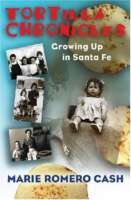
A family memoir full of New Mexico flavor, Tortilla Chronicles serves up a hearty helping of the “City Different” from the perspective of the humble, hardworking Romeros, a family honored for its contributions to regional folk arts. Marie Romero Cash, herself a renowned artist, poignantly sketches each family member using his or her own voice. Their stories present a rare glimpse into the life of a traditional Hispano family and provide an antidote to typical nostalgic tourist accounts of 1950s Santa Fe. One of the main characters is Santa Fe itself, and the narrative tours the city’s streets, shops, plaza, and surrounding hills and arroyos in astounding detail. The ancestry and rituals of family life, the culture and religion of northern New Mexico, and the growth of a neighborhood and its children are all part of the recipe.
Mi Sueno De America/ My American Dream
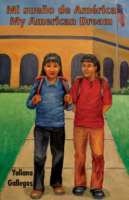
Young Yuliana Gallegos recalls her move from Monterrey, Mexico, to Houston, Texas. Initially excited about moving to Houston, where the huge freeways make her feel like she’s on a roller coaster, her excitement quickly wanes when she starts school. Everything is different at Yuli’s new school, and her discomfort is magnified by her classmates’ stares.
And to make matters worse, she learns that in spite of studying English in Mexico, she can’t understand anything that’s being said. All she wants to do is go back to her school in Monterrey. Yuli poignantly records the fear and anguish experienced by all immigrant children as they strive to adjust to a new language and culture. With the help of a compassionate teacher, a Japanese girl who becomes her friend, and her own determination to excel at her studies, Yuli gradually learns to speak English and feel comfortable in her new environment.