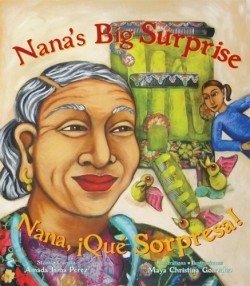
 Amada and her family build a chicken coop, hoping that her grandmother, visiting from Mexico, will enjoy raising the chickens and be distracted from her grief at Grandfather’s death.

Materials from United States of America
Amada and her family build a chicken coop, hoping that her grandmother, visiting from Mexico, will enjoy raising the chickens and be distracted from her grief at Grandfather’s death.
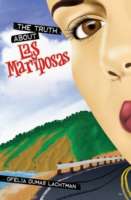
Sixteen-year-old Carolina “Caro” Torres is excited about spending six weeks of her summer vacation working for her Tía Matilde, mainly because she needs money to buy the car she has been eyeing. But her excitement turns to bewilderment when she finds her aunt hobbling around on a broken foot and, much to her surprise, the owner of a bed and breakfast called Las Mariposas. Almost immediately Caro meets two young people–Andy and Sara–who fill her in on the goings-on around town. For reasons no one understands, the mayor is trying to put her Tía Matilde out of business. His efforts have forced many of the townsfolk to stop doing business with her. A broken foot and a relentless antagonist are too much for Matilde, and she is ready to give up her home and her livelihood. But the three young people convince Matilde that they can help her run the B&B while she recovers. Busy with cleaning rooms, buying groceries, and cooking meals for their guests, Caro and her new friends still find time to wonder why the mayor is so determined to run her aunt out of business. When Caro finds a piece of a mysterious, old letter that makes reference to a fortune left to an unknown individual, the young people are sure there’s a connection to the mayor’s attempts to gain ownership of Las Mariposas. Who could have written the letter? What “bequest” is it talking about? Popular young adult author Ofelia Dumas Lachtman has once again crafted an entertaining and intriguing mystery novel for teen readers.

Interviews with nine children of Hispanic migrant farm workers reveal some of their struggles, such as the long hours in the fields and the language barriers at school, and their aspirations for a better life.
 Describes the way of life of Mexican American families and their children who work as migrant agricultural laborers in Texas.
 In New Mexico on a rainy, icy Night of the Three Kings, Sila and Pepe worry that the kings will not be able to use the stars to navigate, so their grandmother takes them on a magical journey to see the secret stars all around them.
 “Provides comprehensive information on the history of Spanish exploration in the United States, focusing on the Texas Revolt and the Mexican War”–Provided by publisher.
When Miata leaves on the school bus the skirt that she is to wear in a dance performance, she needs all her wits to get it back without her parents’ finding out that she has lost something yet again.
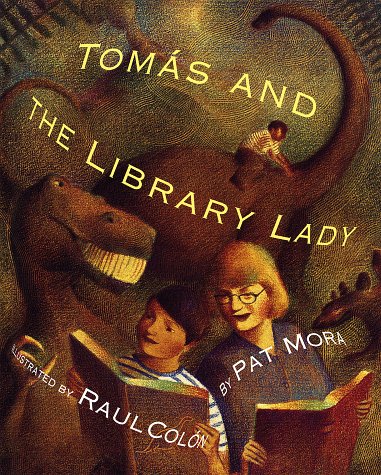 Tomás is a son of migrant workers. Every summer he and his family follow the crops north from Texas to Iowa, spending long, arduous days in the fields. At night they gather around to hear Grandfather’s wonderful stories. But before long, Tomás knows all the stories by heart. “There are more stories in the library,” Papa Grande tells him. The very next day, Tomás meets the library lady and a whole new world opens up for him. Based on the true story of the Mexican-American author and educator Tomás Rivera, a child of migrant workers who went on to become the first minority Chancellor in the University of California system, this inspirational story suggests what libraries–and education–can make possible. Raul Colón’s warm, expressive paintings perfectly interweave the harsh realities of Tomás’s life, the joyful imaginings he finds in books, and his special relationships with a wise grandfather and a caring librarian.
 Drinking and fighting are nothing new in Tyrone’s house, but this time, his dad leaves and doesn’t come back. Tyrone’s anger at his father’s desertion finds an outlet through violent eruptions at school. Life at home is no better as his mother begins working a night job to pay the bills and expects him to take care of his siblings. Instead, he starts partying with older kids, skipping school, and sneaking home in the early morning hours. But when his younger brother is caught stealing candy, Tyrone realizes that he will have to take on the responsibility whether he wants to or not. Settling in to his new role, Tyrone is furious when he learns that his father wants to come home. He just doesn’t understand how his mother can forgive his father so easily. With the help of his friends and counselor, Tyrone begins to deal with his feelings of anger and betrayal as the son of an alcoholic, absentee father. This book is the seventh novel in Gloria Velasquez’s popular Roosevelt High School series, which features a multiracial group of teenaged students who must individually confront social and cultural issues (such as violence, sexuality, and prejudice) that young adults face today.
Annabel first sees him playing soccer near her house. His name is Esteban—she sees it on the back of his team shirt. He notices her, smiles, then looks back over his shoulder at her again.
It is the beginning of summer in the resort town of Seaview. It is also the start of a romance between a young Colombian who came to town to work and the daughter of a local contractor whose crews are entirely Latino—new immigrants who are changing the face of Seaview.
This is the summer of war in Iraq, and of Hurricane Katrina. But in Seaview there are other concerns. In Annabel’s house her new boyfriend is at the top of the list. And Esteban’s sister has harsh words for his choice of a girlfriend.
M. E. Kerr weaves a compelling story of star-crossed love and a small-town problem of nationwide significance.