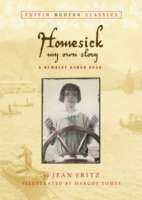
Homesick

This fictionalized autobiography tells the heartwarming story of a little girl growing up in an unfamiliar place. While other girls her age were enjoying their childhood in America, Jean Fritz was in China in the midst of political unrest. Jean Fritz tells her captivating story of the difficulties of living in a unfamiliar country at a difficult time.

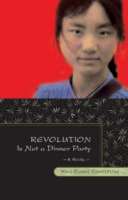
Revolution Is Not a Dinner Party

Nine-year-old Ling is comfortable; her parents are both dedicated surgeons in the best hospital in Wuhan. But when Comrade Li, one of Mao’s political officers, moves into a room in their apartment, Ling begins to witness the gradual disintegration of her world. In an atmosphere of increasing mistrust, Ling fears for the safety of her neighbors and, soon, for herself and family. Over the course of four years, Ling manages to grow and blossom, even as she suffers more horrors than many people face in a lifetime. Drawing from her childhood experience, Ying Chang Compestine brings hope and humor to this compelling story for all ages about a girl fighting to survive during the Cultural Revolution in China.

Child of Dandelions

The river of jubilant people alarmed Sabine as they bobbed along Allidina Visram Street in Kampala….The dark faces drew closer. Women in bright gomesi and headscarves danced, and bare-chested men punched their fists into the air, chanting, “Muhindi, nenda nyumbani! Indian go home.”Sabine felt she was drowning in their cries.In August 1972, President Idi Amin declares that a message from God has come to him in a dream: all foreign Indians must be “weeded out” of Uganda in the next ninety days. Fifteen-year-old Sabine and her father, a successful businessman, are confident that their family will not be affected, since they are Ugandan citizens, but Sabine’s fearful mother is certain that they will have to leave.As the ninety days tick by, the President’s message – the “countdown monster,” as Sabine calls it – is broadcast every day on the radio, and life becomes more difficult for her family and other Indians in Uganda. Sabine tries to hold on to her optimism, counting on her best friend, Zena, and her grandfather, Bapa, to keep her spirits up, but after her beloved uncle Zulfiqar disappears and Zena turns against her, Sabine begins to share her mother’s fears. When a new law is declared on the radio – all Indians must leave – Sabine and her family have a hard decision to make. Should they stay and defend their rights, or should they go? And how will they begin a new life in a different land?

See the review at WOW Review, Volume 4, Issue 2

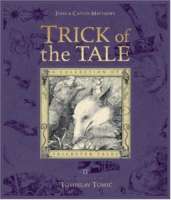
Trick of the Tale: A Collection of Trickster Tales

An illustrated collection of tales featuring notable trickster characters such as Raven and Hare, from the folk traditions of many countries.

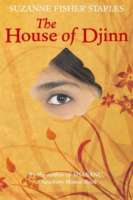
The House of Djinn

It has been ten years since Shabanu staged her death to secure the safety of her daughter, Mumtaz, from her husband’s murderous brother. Mumtaz has been raised by her father’s family with the education and security her mother desired for her, but with little understanding and love. Only her American cousin Jameel, her closest confidant and friend, and the beloved family patriarch, Baba, understand the pain of her loneliness. When Baba unexpectedly dies, Jameel’s succession as the Amirzai tribal leader and the arrangement of his marriage to Mumtaz are revealed, causing both to question whether fulfilling their duty to the family is worth giving up their dreams for the future.

This is a sequel to the novels Shabanu: Daughter of the Wind and Haveli.

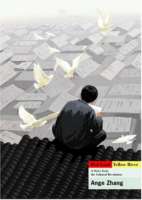
Red Land Yellow River: A Story from the Cultural Revolution

In 1966 Mao Zedong’s Cultural Revolution swept through China and transformed the life of Beijing teenager Ange Zhang. Ange longed to join the Red Guard with his classmates, but was denied membership after his father, a famous writer, was arrested and charged with being a counter-revolutionary. As Ange struggled to maintain his friends’ respect, he began to question the Revolution and his role in it.

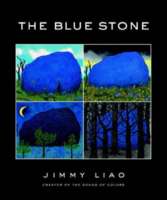
The Blue Stone: A Journey through Life

A large, beautiful blue stone is discovered in a forest. It is cut in half, and one half stays in the forest while the other starts on a long and mystical journey through many places, many owners, and many transformations. It begins as a statue of an elephant, admired by museum goers, and then becomes a carved bird residing in an elderly woman’s garden. It becomes a moon, a cat, a necklace, and more. Throughout it all, the stone longs to return home, and finally it crumbles to dust and flies with the wind back to rest with its other half in the forest.