
Antoni Gaudí grew up in Catalonia, a place of wild beauty. He moved to Barcelona to become an architect, learning the rules of form and structure that buildings were supposed to follow. Yet he never forgot the shapes and colors of his childhood home. Antoni Gaudí turned nature into art, and in the process he revolutionized the world of architecture.
Childhood
When I Wore My Sailor Suit
When he puts on his sailor suit, sailor hat, and sailor whistle, the boy in this book is ready for a journey. He imagines himself on a ship, sailing across the sea, in search of treasure. A sailor’s life is dangerous. But a sailor must be brave no matter what happens. In this story about imagination and adventure, told with Uri Shulevitz’s signature playfulness and style, a little boy learns how to be courageous, both on the high seas and at home.
The East-West House: Noguchi’s Childhood in Japan
A biography of the early years of biracial sculptor/designer/landscape architect Isamu Noguchi, focusing on his childhood in Japan and the building of an east-west house that fostered his artistic inclinations and later gave shape to his lifelong creative approach.
The Three Golden Keys

A man in a hot-air ballon is thrown off course in a violent storm, landing him in the city of his youth. He finds the way to his old home, but the house is dark, with three rusty padlocks on the door. A black cat with eyes of fire appears and leads him through Prague’s silent streets and monuments in seach of the three golden keys that will open the door of his boyhood home and restore the city to life.
Mama & Papa Have a Store
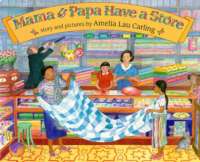
A young girl tells about a day in her family’s store and home in Guatemala City. Every day customers of many heritages—speaking Spanish, Chinese, and Mayan—come to buy cloth, buttons, and thread in colors like parrot green and mango yellow, and dozens of other items. While the girl’s parents and their friends talk about their hometown in China from where they emigrated many years ago, she and her siblings play games on the rooftop terrace, float paper boats, and make shadow puppets under the glow of flashlights. When the store closes, the girl dances to celebrate her day. Amelia Lau Carling’s thoroughly American children loved her childhood stories about Guatemala so much that she wrote them down for others.
The Good Liar
The year is 1940 and France has fallen to the German army. In the village of Mont-Saint-Martin, brothers Pierre, René, and Fat Marcel enjoy an idyllic childhood-stealing berry tarts, playing soldiers, and holding contests to determine who of the three is the biggest and best liar. As the small community, especially its Jewish members, begins to feel the effects of the war, René and Marcel form a warm but secret friendship with one of the German soldiers occupying their village. The boys know no good can come of this friendship, but they don’t realize the extent to which they have put the lives of their family and friends in jeopardy . . . until they discover that they are not the only experts at lying. This poignant and thoughtful story is told in the form of letters to a group of schoolchildren by the now-adult Marcel. First published in Ireland.
Counting Stars
This collection of children’s stories was inspired by the author’s childhood and his large Catholic family. He has combined his memories with his dreams to reflect the hopes and fears and the happiness and sorrows of his youth and find meaning for today.
Homesick
This fictionalized autobiography tells the heartwarming story of a little girl growing up in an unfamiliar place. While other girls her age were enjoying their childhood in America, Jean Fritz was in China in the midst of political unrest. Jean Fritz tells her captivating story of the difficulties of living in a unfamiliar country at a difficult time.
A Caribbean Dozen: Poems from Caribbean Poets
Thirteen Caribbean poets recount childhood experiences in poetry and prose.
Bee-Bim Bop!
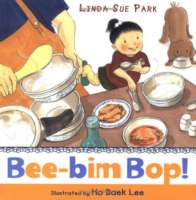
Bee-bim bop is a traditional Korean dish of rice mixed with meat and vegetables. In bouncy rhyming text, a hungry child tells about helping her mother make bee-bim bop: shopping, preparing ingredients, setting the table, and finally sitting down with her family to enjoy a favorite meal. The energy and enthusiasm of the young narrator are conveyed in the whimsical illustrations, which bring details from the artist’s childhood in Korea to his depiction of a modern Korean American family.