
Provides the story of an Eskimo boy who, after being brought from his home in Greenland to New York City by explorer Robert Peary, was forced to deal with the death of his father, and the loss of everything familiar to him.
Inuit
Hide And Sneak
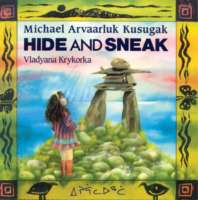
Inuit author Michael Kusugak uses a mythological figure and traditional Inuit practices as the backdrop for this dramatic story. Allashua ignores the inuksugaq as she plays hide-and-seek. Soon she encouters an Ijiraq–a tiny half-bird, half-human creature who loves to play. Allashua remembers her mother telling her that if an Ijiraaq hides you, no one will ever find you again. Eventually Ijiraq disappears and Allashua gets lost on the tundra. With no idea of which way to go, she heads toward a small block dot on a far-off hill. When Allashua realizes the dot is the inuksugaq and that it can guide her safely home, she understands the riddle of its existence.
Building An Igloo
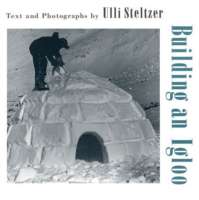
In crisp black-and-white photographs, Ulli Steltzer documents the beauty and precision of an igloo’s construction – from stacking blocks of snow to cutting a door – in this informative picture book.
Tuk And The Whale
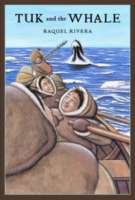
During the early 1600s, there was an active whaling industry in Canada. Whale oil was used to light the streets and buildings of European cities and to manufacture leather, wool, and soap. The baleen was used to make everything from carriage springs to corsets. Told from the point of view of a young Inuit boy named Tuk, this story imagines what might have happened if the people of Tuk’s Baffin Island winter camp had encountered European whalers, blown far from their usual whaling route. Both the hunters and the whalers prize the bowhead whale for different reasons. Together, they set out on a hunt, though they are all on new and uncertain ground. Scrupulously researched and vetted, this early chapter book inspires discussion about communication between two groups of people with entirely different world views, early whaling practices, and a productive partnership that also foreshadows serious problems to come. Simply and beautifully told, Tuk and the Whale includes a glossary, historical note, and recommendations for further reading.
The Polar Bear Son: An Inuit Tale
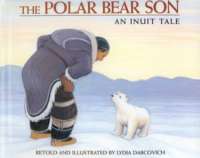
A lonely old woman adopts a polar bear and cares for him until he is grown. When the bear must leave the village, he continues to visit and provide for his “mother” in this gentle story.
Nutik, The Wolf Pup
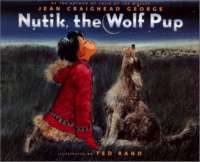
In an Eskimo village at the top of the world lived a little boy whose name was Amaroq. Named for the great wolf leader who saved the life of his big sister, Julie, Amaroq loved wolves as much as his big sister did.
One day Julie brings home a sickly wolf pup named Nutik for Amaroq to feed and tend. “Don’t fall in love with Nutik,” Julie warns, “or your heart will break when the wolves come to take their pup home.” Amaroq feeds and cares for Nutik, and soon the fuzzy little pup is romping and playing and following Amaroq everywhere. Amaroq and Nutik become best friends, but soon it’s time for Nutik to rejoin his wolf family. Will Amaroq be strong like the great wolf leader he was named after and be able to let Nutik go?
In this adventure-first told in Julie’s Wolf Pack, sequel to the Newbery Medal-winning Julie of the Wolves Jean Craighead George brings the Arctic world of Julie and her family to a picturebook audience.
Mama, Do You Love Me?
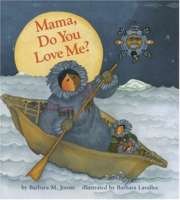
A child living in the Arctic learns that a mother’s love is unconditional and everlasting.
The Shaman’s Nephew: A Life In The Far North
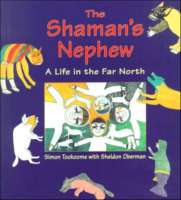
When Jewish author/storyteller Sheldon Oberman met Inuit artist/hunter Simon Tookoome, he knew the encounter was special. Still, he had no idea their meeting would result in an amazing collaboration that would span a decade. Through the use of many tape recordings and translations, Sheldon has painstakingly woven the threads of a remarkable man’s life into a book for all to treasure. With Tookoome’s drawings to enhance the text, Oberman has managed to express the cadence and voice of one of the last of the Inuit to live the traditional nomadic life in the Arctic. The Shaman’s Nephew magically transports readers to a cold climate that warms and grows more familiar with every turn of the page.
Frozen Land
“Describes the traditional ways of life of an Inuit family living in the Canadian Northwest Territories and some of the changes they have had to face”–Provided by publisher.
Berry Woman’s Children
 According to Eskimo myth, Berry Woman was asked by Raven to look after the animals and birds. Superb woodcuts illustrate the Eskimo legends that Grandmother tells to her rapt audience, four children clinging to her “on the bedplace.”