
In August 2010, thirty-three miners were buried alive, two thousand feet below the surface of the earth. After seventeen tense days, just as hope was nearly gone, rescuers made contact with the men. Joy broke out around the world whenall thirty-three men were alive! But it would be long weeks before they emerged from the mine. What did the miners feel, trapped in the steamy darkness so far underground? What did they eat? How did they get along? And most important, how did they survive in those seventeen days when death lingered so near, and after, during the long wait for rescue? This amazing true story about problem-solving, community, and real-life heroes is made kid-friendly by veteran nonfiction writer Elaine Scott.
Intermediate (ages 9-14)
Material appropriate for intermediate age groups
Nur Jahan of India
From the deepest heart of the Moghul palace, her face hidden by veils, Nur Jahan came to rule all of Mogul India. This book tells the story of how she introduced efficiencies, encouraged trade, and made possible a great flowering of the arts. She hunted tigers, rode elephants to war, commanded a nation from behind a curtain, and did many other things that girls were not expected to do. Sections on the clothes Nur Jahan wore, the foods she ate, and why she is remembered today are included.
Guru Nanak
Details the life and times of Guru Nanak, founder of the Sikh faith.
Chained
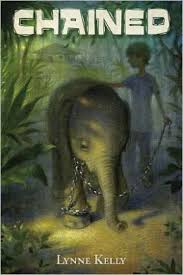
After 10-year-old Hastin’s family borrows money to pay for his sister’s hospital bill, he leaves his village in northern India to take a job as an elephant keeper and work off the debt. He thinks it will be an adventure, but he isn’t prepared for the cruel circus owner. The crowds that come to the circus see a lively animal who plays soccer and balances on milk bottles, but Hastin sees Nandita, a sweet elephant and his best friend, who is chained when she’s not performing and hurt with a hook until she learns tricks perfectly. Hastin protects Nandita as best as he can, knowing that the only way they will both survive is if he can find a way for them to escape.
No Ordinary Day
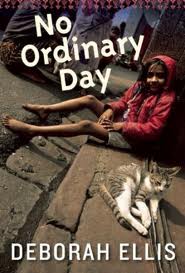
Even though Valli spends her days picking coal and fighting with her cousins, life in the coal town of Jharia, India, is the only life she knows. The only sight that fills her with terror is the monsters who live on the other side of the train tracks — the lepers. When Valli discovers that that her “aunt” is a stranger who was paid money to take Valli off her own family’s hands, she leaves Jharia and begins a series of adventures that takes her to Kolkata, the city of the gods. Valli finds that she really doesn’t need much to live and is very resourceful. But a chance encounter with a doctor reveals that she has leprosy. Unable to bear the thought that she is one of the monsters she has always feared, Valli rejects help and begins an uncertain life on the street.
See the review at WOW Review, Volume 5, Issue 3.
Children of the Holocaust
At the start of World War II, there were about 1.6 million Jewish children living in Europe. Fewer than one in 10 of those children survived German leader Adolf Hitlers reign of terror. More than 100,000 Jewish children did survive, however through a combination of strength, cleverness, the help of others, and, more often than not, simple good luck. Children of the Holocaust tells the stories of these young people.
Defiance
When Nazis invade, what can kids do to fight them? World War II has taken its toll on the French countryside. German soldiers patrol the towns, searching for any challenge to their rule. The Tessier siblings, Paul, Marie, and Sophie, keep their noses clean and their faces blank as the French military police tighten their grip on their small country town. But all three are secretly doing their part for the Resistance: the men and women working hard to undermine the Germans and win back France’s freedom . . . even if it ends up costing them their lives.
Chengli and the Silk Road Caravan
Chengli is an orphaned errand boy who lives in Chang’an China in 630 A.D. His mother has died from illness and his father is presumed dead after disappearing into the desert when Chengli was a baby. Now thirteen, Chengli feels ready for independence. He is drawn to the desert, beckoned by the howling of strange winds and the hope of learning something about his father—who he was and how he died. Chengli joins the caravan to travel down the merchant route known as the Silk Road, but it is a dangerous life, as his father knew. The desert is harsh, and there are many bandits, particularly drawn to Chengli’s caravan because a princess, her servants, and royal guards are traveling with them. This story invites readers to experience the sights, sounds, and smells of this fabled desert route.
Sorghaghtani of Mongolia
On the windswept steppes of Mongolia in the 13th century, a princess was given the chance to rule, and her story is outlined in this book. Sorghaghtani took lands that were ruined by war and made them wealthy again, brought mutual respect and cooperation to a downtrodden and distrustful people, and, in a battle of wits that was like a giant chess game, won the imperial throne for her sons, which gave them the largest empire in the world. Sections on the clothes she wore, the foods she ate, and why she is remembered today are included.
Chike and the River
The more Chike saw the ferry-boats the more he wanted to make the trip to Asaba. But where would he get the money? He did not know. Still, he hoped.Eleven-year-old Chike longs to cross the Niger River to the city of Asaba, but he doesn’t have the six pence he needs to pay for the ferry ride. With the help of his friend S.M.O.G., he embarks on a series of adventures to help him get there. Along the way, he is exposed to a range of new experiences that are both thrilling and terrifying, from eating his first skewer of suya under the shade of a mango tree, to visiting the village magician who promises to double the money in his pocket. Once he finally makes it across the river, Chike realizes that life on the other side is far different from his expectations, and he must find the courage within him to make it home.