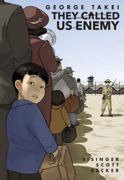
They Called Us Enemy

George Takei has captured hearts and minds worldwide with his captivating stage presence and outspoken commitment to equal rights. But long before he braved new frontiers in Star Trek, he woke up as a four-year-old boy to find his own birth country at war with his father’s — and their entire family forced from their home into an uncertain future. In 1942, at the order of President Franklin D. Roosevelt, every person of Japanese descent on the west coast was rounded up and shipped to one of ten “relocation centers,” hundreds or thousands of miles from home, where they would be held for years under armed guard. They Called Us Enemy is Takei’s firsthand account of those years behind barbed wire, the joys and terrors of growing up under legalized racism, his mother’s hard choices, his father’s faith in democracy, and the way those experiences planted the seeds for his astonishing future. What does it mean to be American? Who gets to decide? When the world is against you, what can one person do? To answer these questions, George Takei joins co-writers Justin Eisinger & Steven Scott and artist Harmony Becker for the journey of a lifetime.

They Called Us Enemy has been discussed in My Take/Your Take for August 2020.

They Called Us Enemy has been featured as a WOW Recommends Book of the Month.

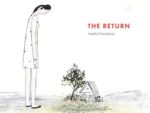
The Return

A young woman gets on the bus and rides out of the big city. She arrives in the countryside, where she is as big as a giant, looming over a tiny house, a garden and her tiny grandmother. The cabbages and the apple trees are far below. Her grandmother smiles up at her in her yellow hat. The young woman bends down to give her little grandmother a big kiss, and then she smells her grandmother’s cooking. She has returned home. When they sit down at the table, the young woman has shrunk to a child-like size, and the two share a meal together in the garden. In this gentle, wordless story Natalia Chernysheva beautifully captures the feelings of coming home to comfort and memories and of returning to our childlike selves.

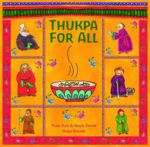
Thukpa for All

Tsering can’t wait to taste his grandmother’s delicious noodle soup. He invites a string of friends and neighbours home. But as preparations get underway, there is a power cut and the house is plunged into darkness. Will Abi be able to put together the much-anticipated thukpa? Told from a blind child’s perspective, this tale by Praba Ram and Sheela Preuitt is accompanied by Shilpa Ranade’s stunning illustrations.

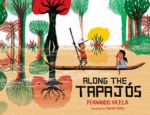
Along The Tapajós

This picturebook, first published in Brazil, offers kids a unique look into the lives of children who live along Brazil’s beautiful Tapajós River. Two siblings follow their family to higher ground to avoid yearly floods, only to realize they’ve left their pet turtle behind.

Featured in WOW Review Volume XVII, Issue 2.

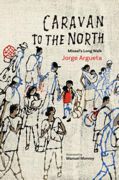
Caravan To The North: Misael’s Long Walk

This novel in verse is a powerful first-person account of Misael Martinez, a Salvadoran boy whose family joins the caravan heading north to the United States. We learn all the different reasons why people feel the need to leave the hope that lies behind their decision, but also the terrible sadness of leaving home. We learn about how far and hard the trip is, but also about the kindness of those along the way. Finally, once the caravan arrives in Tijuana, Misael and those around him are relieved. They think they have arrived at the goal of the trip — to enter the United States. But then tear gas, hateful demonstrations, force and fear descend on these vulnerable people. The border is closed. The book ends with Misael dreaming of El Salvador. This beautiful and timely story is written in simple but poetic verse by Jorge Argueta, the award-winning author of Somos como las nubes / We Are Like the Clouds. Award-winning Mexican illustrator Manuel Monroy illuminates Misael’s journey. An author’s note is included, along with a map showing the caravan’s route.

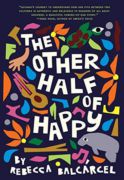
The Other Half of Happy

Twelve-year-old Quijana is a biracial girl, desperately trying to understand the changes that are going on in her life; her mother rarely gets home before bedtime, her father suddenly seems to be trying to get in touch with his Guatemalan roots (even though he never bothered to teach Quijana Spanish), she is about to start seventh grade in the Texas town where they live and she is worried about fitting in–and Quijana suspects that her parents are keeping secrets, because she is sure there is something wrong with her little brother, Memito, who is becoming increasingly hard to reach.

Charcoal Boys

While making a mud house for her hornet egg, a wasp follows a human child thoughout his day as he works in a Brazilian charcoal mine.

The Distance Between Me And The Cherry Tree

When nine-year-old Mafalda learns she will go blind in six months from Stargardt Disease, she needs the help of family and friends to retain what is essential to her.

Soldier For Equality

José de la Luz Sáenz (1888–1953)—or Luz—believed in fighting for what was right. Although he was born in the United States, he and his family experienced prejudice because of their Mexican heritage. When World War I broke out, Luz volunteered to join the fight. Because of his ability to quickly learn languages, he became part of the Intelligence Office in Europe. However, despite his hard work and intellect, Luz often didn’t receive credit for his contributions. Upon his return to the US, he joined other Mexican-Americans whom he had met in the army to fight for equality. His contribution, along with others, ultimately led to the creation of the League of United Latin American Citizens (LULAC), which is the oldest Latino civil rights organization. Soldier for Equality is based in part on Luz’s diary during the war. It includes a biography of Luz’s later years, an author’s note, a timeline, a bibliography, and an index.

Room On Our Rock

Two seals are perched on a rock. When others need shelter, do they share it? Room on Our Rock celebrates the truth that there are two sides to every story. This clever picture book has one story that can be read two different ways.