
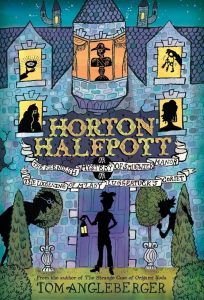
 Tom Angleberger’s latest, loopiest middle-grade novel begins when M’Lady Luggertuck loosens her corset (it’s never been loosened before!), thereby setting off a chain of events in which all the strict rules of Smugwick Manor are abandoned. When, as a result of “the Loosening,” the precious family heirloom, the Luggertuck Lump (quite literally a lump), goes missing, the Luggertucks look for someone to blame. Is it Horton Halfpott, the good-natured but lowly kitchen boy who can’t tell a lie? Or one of the many colorful cast members in this silly romp of a mystery.
Historical Fiction
Historical Fiction genre
Breaking Stalin’s Nose
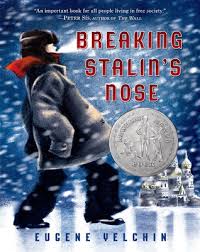
In the Stalinist era of the Soviet Union, 10-year-old Sasha idolizes his father, a devoted Communist, but when police take his father away and leave Sasha homeless, he is forced to examine his own perceptions, values and beliefs.
Ghost Hands
Auki, a young member of the Tehuelche tribe in Patagonia, wants to prove himself as a hunter but when he sets out on his own to face the puma, he stumbles upon a sacred cave and its guardian.
The Road To Santiago
In Cuba, in the early 1950s, a young boy and his family try their best not to let the rebel soldiers keep them from traveling to Santiago to celebrate Christmas with their relatives. Based on a true incident in the life of the author.
David
An eighteen-year-old stonecutter who is caught in the middle of political conflict in Florence, Italy, in the early 1500s, must flee for his life in disguise because his has become the best-known face and figure in Florence.
My Family for the War
Before the start of World War II, ten-year-old Ziska Mangold, who has Jewish ancestors but has been raised as a Protestant, is taken out of Nazi Germany on one of the Kindertransport trains, to live in London with a Jewish family, where she learns about Judaism and endures the hardships of war while attempting to keep in touch with her parents, who are trying to survive in Holland.
Featured in Volume VI, Issue 1 of WOW Review.
A Boy Called Dickens
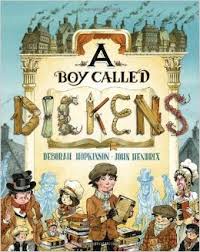
For years Dickens kept the story of his own childhood a secret. Yet it is a story worth telling. For it helps us remember how much we all might lose when a child’s dreams don’t come true. As a child, Dickens was forced to live on his own and work long hours in a rat-infested blacking factory. Readers will be drawn into the winding streets of London, where they will learn how Dickens got the inspiration for many of his characters. This tale of his little-known boyhood is the perfect way to introduce kids to the great author.
The Agency: The Traitor in the Tunnel
Queen Victoria has a little problem: there’s a petty thief at work in Buckingham Palace. Charged with discretion, the Agency puts quick witted Mary Quinn on the case, where she must pose as a domestic while fending off the attentions of a feckless Prince of Wales. But when the prince witnesses the murder of one of his friends in an opium den, the potential for scandal looms large. And Mary faces an even more unsettling possibility: the accused killer, a Chinese sailor imprisoned in the Tower of London, shares a name with her long-lost father. Meanwhile, engineer James Easton, Mary’s one time paramour, is at work shoring up the sewers beneath the palace, where an unexpected tunnel seems to be very much in use. Can Mary and James trust each other (and put their simmering feelings aside) long enough to solve the mystery and protect the Royal Family? Hoist on your waders for Mary’s most personal case yet, where the stakes couldn’t be higher – and she has everything to lose.
Le Pantin
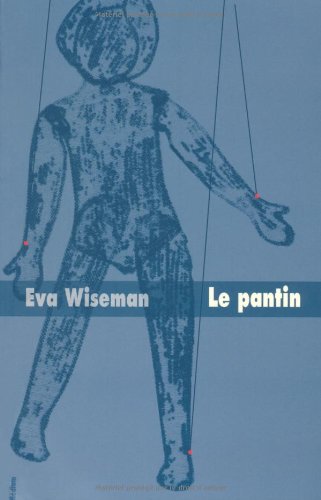 Julie a une amie, Esther. Elles vivent dans un village de Hongrie,Tizla-Eszlar, elles sont pauvres, et la vie est dure. Le père de Julie la terrorise et la bat. Mais il y a aussi de la douceur, les paroles tendres et sages et aimantes de sa mère, du soleil, des spectacles forains. Et les yeux bruns de Moric Scharf, un jeune garçon juif timide que Julie aime bien. Un jour de printemps Esther disparaît. Et la rumeur gronde, une rumeur venue du fond des âges, qui veut que les juifs soient responsables de tous les maux, le pogrom menace, les cris montent. On jette en prison les hommes juifs. Les villageois se rassemblent, et un simulacre de procès se prépare. Tout a l’air décidé d’avance. Rien ne se passera comme prévu. Eva Wiseman s’est souvenue de ce fait divers réel que sa mère évoquait quand elle était petite, elle a rassemblé des tonnes de documentation, elle a écrit un roman inoubliable, qui serre le coeur et tient en haleine, parce qu’il démonte les mécanismes de la peur, de la lâcheté, de la violence collective. On ne peut plus oublier Julie Vamosi, toute petite devant les juges, devant la haine raciste, mais fidèle à son amie, et forte de son amour pour les êtres.
Mrs. Harkness and the Panda
In 1934, Ruth Harkness had never seen a panda bear. Not many people in the world had.
But soon the young Mrs. Harkness would inherit an expedition from her explorer husband: the hunt for a panda. She knew that bringing back a panda would be hard. Impossible, even. But she intended to try.
So she went to China, where she found a guide, built traps, gathered supplies, and had explorers’ clothes made—unheard of for a woman in those days. Then she set out up the Yangtze River and into the wilderness. What she discovered would awe America: an adorable baby panda she named Su Lin, which means “a little bit of something very cute.”