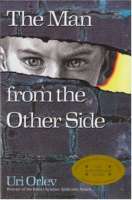
The true story of a teenager’s experiences in the Warsaw Ghetto during World War II, as he discovers his own heritage and finds himself caught up in the war through underground dealings.

Historical Fiction genre
The true story of a teenager’s experiences in the Warsaw Ghetto during World War II, as he discovers his own heritage and finds himself caught up in the war through underground dealings.
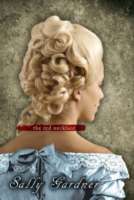
Clever and head-turningly attractive, fourteen-yearold Yann is an orphan who has been raised in Paris by Têtu, a dwarf with secrets he has yet to reveal to the gypsy boy. It’s the winter of 1789, and the duo have been working for a vain magician named Topolain. On the night when Topolain’s vanity brings his own death, Yann’s life truly begins. That’s the night he meets shy Sido, an heiress with an ice-cold father, a young girl who has only known loneliness until now. Though they have the shortest of conversations, an attachment is born that will influence both their paths. And what paths those will be! Revolution is afoot in France, and Sido is being used as a pawn. Only Yann will dare to rescue her, and he’ll be up against a fearful villain who goes by the name Count Kalliovski, but who has often been called the devil. It’ll take all of Yann’s newly discovered talent to unravel the mysteries of his past and Sido’s and to fight the devilish count.
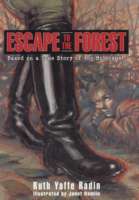
When the Nazis invade Poland, nothing is safe anymore. Ten-year-old Sarah and her family must leave their home and live in a Jewish ghetto surrounded by barbed wire. There, life is a nightmare of cold and hunger where Nazi soldiers kill Jews at will. But Sarah still hears stories that give her hope–stories about a man who lives in the nearby forest, fighting the Nazis and sheltering the Jews. Sarah’s brother thinks they should try to escape to the forest. Her parents think they will be safer where they are. Sarah doesn’t know who is right. But as life in the ghetto grows worse and worse, the forest may be their only hope. Based on a true story of life during the Holocaust, this is a heartrending novel of one family’s struggle to survive.
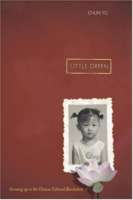
This first-person memoir tells the story of Chun Yu, who was born in a small city in China, during the Chinese Cultural Revolution. The streets were filled with roaming Red Guards, the walls were covered with slogans, and reeducation meetings were held in all workplaces. Every family faced danger and humiliation, even the youngest children. Shortly after Chun’s birth, her beloved father was sent to a peasant village in the countryside to be reeducated in the ways of Chairman Mao. Chun and her brother stayed behind with their mother, who taught in a country middle school where Mao’s Little Red Book was a part of every child’s education. Chun Yu’s young life was witness to a country in turmoil, struggle, and revolution — the only life she knew.

Once Jacob Gutgeld lived with his family in a beautiful house in Warsaw, Poland. He went to school and played hide-and-seek in the woods with his friends. But everything changed the day the Nazi soldiers invaded in 1939. Suddenly it wasn’t safe to be Jewish anymore.One afternoon, eight-year-old Jacob slipped through a hole in the ghetto wall to meet Alex Roslan, a kind Christian man who agreed to be his new “uncle.” The Roslan family, at the risk of their own lives, kept Jacob’s identity as a Jew hidden.Every day of hiding meant a new danger and a threat of discovery. Jacob worried about his real family and longed to go to school and play outside like the Roslan children. Yet the fear, the hardships, and the hunger brought Jacob closer and closer to all the Roslans–until at last the time of hate and war came to an end and a new chapter began in all their lives.
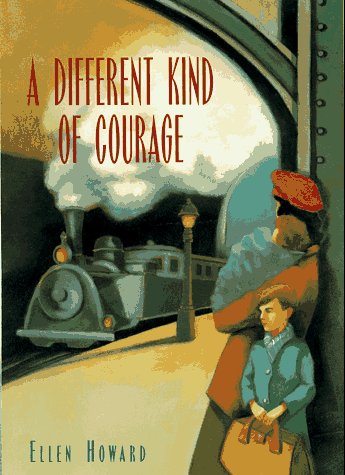 In 1940, the Germans have come to Paris and Bertrand, his mother and sister are fleeing. Meanwhile, the Germans have not come to the south of France, where Zina and her family live–but there’s no work for ethnic Russians like Zina’s papa. Both Bertrand and Zina must go to America in order to survive. Each shows fear in a different way, but finally, through friendship, finds hope again.
In 1962 Ottawa, 11-year-old Rex Norton-Norton faces several confusing mysteries, including his father’s troubling secrets from World War II, the problems of a beautiful but unhappy woman named Natasha, what to do about his mean and vindictive teacher, and whether or not he should even be concerned about these things.
For Kariuki, life in a small village in Kenya is one great adventure. The best part of his day is the walk home from school, when he is free from both his bullying headmaster and his mother’s long list of chores. The landscape around his village is beautifully wild, and Kariuki knows it well. One day Kariuki meets Nigel, a boy from England who has come to visit his grandfather, the fearsome Bwana Ruin, who owns the farm where the villagers work. The villagers call Nigel the mzungu boy (westerner), and view him with suspicion and fear, but not Kariuki. One day the boys decide to hunt down the meanest warthog in the forest. The hunt takes them deeper into the jungle than Kariuki has ever gone, and all at once his beloved forest becomes a frightening place. Dangerous creatures live in the jungle, including the mau-mau, the men with guns who are plotting against Bwana Ruin and the white soldiers. And when Nigel suddenly disappears, will Kariuki be able to save his friend?In this novel, the author captures a time of innocence, wild beauty, and the growing violence that eventually changed the entire structure of colonial Africa.
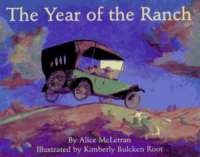
In 1919, Alice McLerran’s grandfather and his family spent a year on a homestead outside of Yuma, Arizona, trying to turn a desert mesa into farmland–and a shack into a home. Funny, moving and filled with fascinating period detail, this is an affectionate account of that year. Full color.
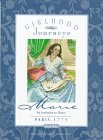
In 1775, young Marie lives in Paris and dreams of becoming a ballerina. But her family is of modest means and her future is set–convent school, marriage, and children–unless she can find a wealthy patron to sponsor her. One special evening, a surprise audition in a most exciting and original place changes Marie’s destiny.