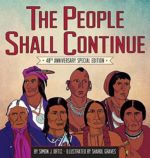
Traces the progress of the Indians of North America from the time of the Creation to the present.
Further discussion of this book found in WOW Currents: Indigenous Children’s Literature: Stories Matter, Part IV.

Nonfiction genre
Traces the progress of the Indians of North America from the time of the Creation to the present.
Further discussion of this book found in WOW Currents: Indigenous Children’s Literature: Stories Matter, Part IV.
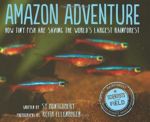
Part science, part carnival–this winding adventure down the Amazon River with award-winning author Sy Montgomery and photographer Keith Ellenbogen explores how tiny fish, called piabas, can help preserve not only the rainforest and it’s often misunderstood inhabitants, but the fate of our entire environment.
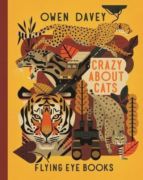
Did you know that the fishing cat has partially webbed paws for catching fish? Or that pumas can leap over 15 feet into trees? There are roughly 38 species of cats today, each one superbly adapted to their environment – whether that be in the rainforest or the desert!
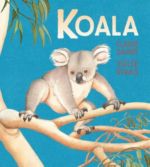
In a high tree fork, a gray ball unfurls. Koala seeks his mother’s milk, but for the first time, she won’t let him into her pouch. It’s time for Koala to make his own way in the world. Rival koalas, fierce storms, and frightening snakes force Koala to keep moving—until he finds a safe place to call his own. In this dramatic nonfiction account, two renowned Australian picture-book creators bring us a surprising and authentic look at the ever-popular koala.
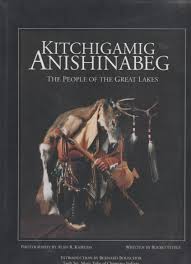 53 portraits of Native Americans in dance regalia, taken at the 1994 Sault St. Marie Pow-Wow
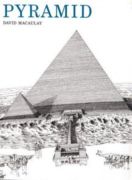
Text and black-and-white illustrations follow the intricate step-by-step process of the building of an ancient Egyptian pyramid.
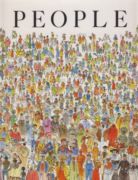
Emphasizes the differences among the four billion people on earth.
“Stories are wondrous things,” award-winning Canadian author and scholar Thomas King declares in his 2003 CBC Massey Lectures. “And they are dangerous.” Stories assert tremendous control over our lives, informing who we are and how we treat one another as friends, family and citizens. With keen perception and wit, king illustrates that stories are the key to, and the only hope for, human understanding, He compels us to listen well.
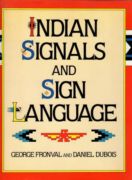
Photographs and text describe non-verbal signals used by the Indians of the Great Plains, including more than 800 signs, smoke signals, picture writing and the language of feathers and body paint.

A compelling collection of interviews with children aged nine to eighteen. They come from all over the continent, from Iqaluit to Texas, Haida Gwaai to North Carolina, and their stories run the gamut — some heartbreaking; many others full of pride and hope.