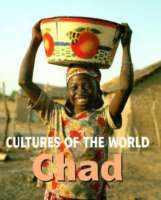
Provides comprehensive information on the geography, history, governmental structure, economy, cultural diversity, peoples, religion, and culture of Chad.

Catalog sorted by genre
Provides comprehensive information on the geography, history, governmental structure, economy, cultural diversity, peoples, religion, and culture of Chad.
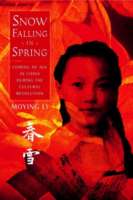
Moying Li is twelve-years-old when Cultural Revolution sweeps China. In 1966 Moying, a student at a prestigious language school in Beijing, seems destined for a promising future. Everything changes when student Red Guards begin to orchestrate brutal assaults, violent public humiliations, and forced confessions. After watching her teachers and headmasters beaten in public, Moying flees school for the safety of home, only to witness her beloved grandmother denounced, her home ransacked, her father’s precious books flung onto the back of a truck, and Baba himself taken away. From labor camp, Baba entrusts a friend to deliver a reading list of banned books to Moying so that she can continue to learn. Now, with so much of her life at risk, she finds sanctuary in the world of imagination and learning.This inspiring memoir follows Moying Li from age twelve to twenty-two, illuminating a complex, dark time in China’s history as it tells the compelling story of one girl’s difficult but determined coming-of-age during the Cultural Revolution.
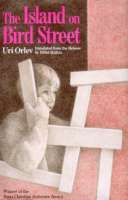
During World War II a Jewish boy is left on his own for months in a ruined house in the Warsaw Ghetto, where he must learn all the tricks of survival under constantly life-threatening conditions.
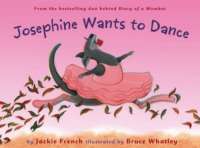
Josephine loves to dance, but everyone reminds her that kangaroos don’t dance—they hop! Kangaroos don’t wear tutus, and they never wear ballet shoes! So Josephine sneaks into town, where the ballet rehearses, and watches for hours as the dancers spin and swirl and pirouette and curtsy. But on the day of the ballet performance, the prima ballerina twists her ankle and a new dancer is needed for the lead role, a dancer who can jump higher than all the rest. Will Josephine be able to make her dream of becoming a ballerina come true?

In a very small town in rural Argentina there is a magical house. The house is vacant and has been for as long as anyone can remember, but once a year, at midnight, the house turns blue, and 24 hours later it turns back to white again. Twelve-year-old Cintia lives with her father, an angry man who is sometimes violent. But Cintia finds comfort at her grandmother’s home, where there is always delicious food and fascinating tales about the town and about Cintia’s own family. Cintia is drawn to the little blue house even though both her father and grandmother forbid her to go there. And the town’s mayor, who hopes to turn the house into a money-making tourist attraction, tries to prevent anyone from visiting the place without paying. As the time approaches for the annual transformation of the house, more mysteries crop up. Cintia and her grandmother must make peace with Cintia’s father. The mayor’s plans must be confronted, and an old bookseller needs to find a way to save what is most important. And what about the rumors of buried treasure?
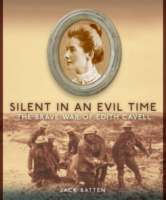
Dutiful nurse, hospital matron, courageous resistance fighter, Edith Cavell was all of these. A British citizen, the forty-eight-year-old Cavell was matron of an institute for nurses in the suburbs of Brussels at the outbreak of World War I. Dedicated to the methods of Florence Nightingale, her intelligence and ferocious sense of duty had transformed the institute into a leading training center.When the Germans captured Belgium in the fall of 1914, an organization was formed to assist British and French soldiers trapped behind German lines. Edith was asked to help and she didn’t hesitate. From that moment forward, Edith sheltered escaping soldiers in her hospital, using trickery to keep the suspicious Germans from discovering them. She helped arrange a secret route to neutral Holland and back to England at great personal risk, enabling soldiers of all ranks to slip through German lines. Using the institute as part of an elaborate Allied escape route, Edith Cavell was responsible for one thousand soldiers eventually making their way home.But Cavell’s role was discovered and a German military court put her on trial in Brussels, where she was sentenced to be executed by firing squad. On October 12, 1915, she put on her nurse’s uniform and met her fate, immediately becoming a worldwide martyr and rallying point for the British in their war against Germany.
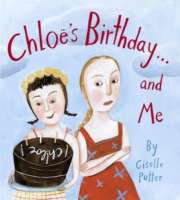
When attention must be paid to her little sister Chloe’s birthday, Giselle, who lives with her family in France, makes inappropriate gift suggestions and almost spoils the big day.
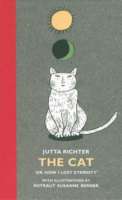
Every day, eight-year-old Christine’s walk to school takes her past a talking alley cat. Christine stops and feels its warm head beneath her hand, and the cat’s insights invariably give her something to ponder. One day her teacher asks her why she’s always late for school. Frightened, she reveals her secret. Her punishment: she must write 200 lines stating repeatedly, “There are no talking cats, and from now on I will arrive at school on time.” However, the cat is real, no matter how many lines Christine writes and she might just as well leave out the “no” — the headmaster won’t even notice, says the clever cat. That’s what the cat always says — that life is all about being clever and looking out for yourself, first and foremost. Christine isn’t so sure, and she is a little scared of the cat, too. There must be more to life than self-interest.
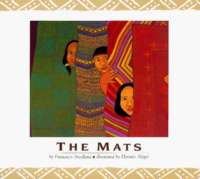
Marcelina’s father comes home from a trip to Manila with beautiful hand-made sleeping mats for each member of his large family, including the three daughters who died when they were very young.
The Mats first appeared as a short story in Philippine Magazine in 1938.

This book provides an overview of Japanese culture and food, including descriptions of staples, information about food production, and recipes.