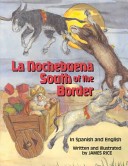
In this bilingual version of “The Night before Christmas,” Santa has become Papa Noel and his reindeer have been replaced with eight burros pulling a cart.
North America
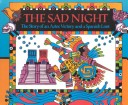
The Sad Night: The Story Of An Aztec Victory And A Spanish Loss
An account of the establishment of the Aztec empire in Mexico and of the terrible battle between the Aztecs and the Spaniards known as the Sad Night, of La Noche Triste.
“This sensitive treatment of La Noche Triste, or The Sad Night, the last battle the Aztecs won against the Spaniards, is a highly effective melding of graceful, lucid text and stylized art. Designed to resemble Aztec codices, the illustrations appear in double-page strips above the bordered text. Beginning with the Aztec migration to Tenochtitlán (now Mexico City), the history of this people is traced through their final conquest by Cortés’s forces…. This title has the distinction of combining myth with historical fact in a particularly successful manner. An engaging introduction to Mexican history.” —School Library Journal
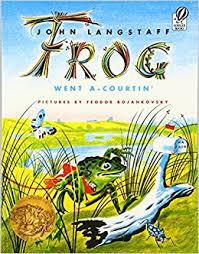
Frog Went A – Courtin’
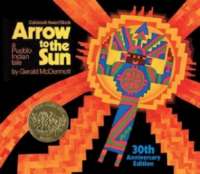
Arrow To the Sun 30th Anniversary Edition
Viking is proud to announce a special 30th anniversary hardcover edition of Arrow to the Sun, Gerald McDermott’s powerful rendering of an ancient Pueblo Indian legend. A true classic that has taken its place in the pantheon of children’s literature, this book vividly evokes the Native American reverence for the source of all life–the Solar Fire. Acclaimed for its bold and vibrant illustrations, Arrow to the Sun was awarded the Caldecott Medal in 1975.
Tales Our Abuelitas Told: A Hispanic Folktale Collection
Once upon a time, in a land far away…These stories have journeyed far — over mountains, deserts, and oceans — carried by wind, passed on to us by our ancestors. Now they have found their way to you.A sly fox, a bird of a thousand colors, a magical set of bagpipes, and an audacious young girl…A mixture of popular tales and literary lore, this anthology celebrates Hispanic culture and its many roots — Indigenous, African, Arab, Hebrew, and Spanish.F. Isabel Campoy and Alma Flor Ada have retold twelve beloved stories that embody the lively spirit and the rich heritage of Latino people.The work of four leasing Latino artists and illustrators highlights this unforgettable collection.
The Dream on Blanca’s Wall/El Sueno Pegado En La Pared De Blanca: Poems in English and Spanish/Poemas En Ingles Y Espanol
Offers a collection of poems in English and Spanish that tell of a young Mexican-American girl’s dream to overcome her family difficulties and economic hardships in order for her to achieve her goal of becoming a teacher.
Novio Boy: A Play
Ninth grader Rudy has a date with eleventh grader Patricia. Now he has to come up with the money, the poise, and the conversation to carry it off. This one-act play, by turns heartwarming and heart-wrenching, follows Rudy from his desperate search for guidance through the hilarious date itself–all the way to its happy conclusion. Includes a glossary of Spanish phrases.
Radio Man/Don Radio
Chupacabra and the Roswell UFO
In this second ChupaCabra mystery, Professor Rosa Medina has just arrived in Santa Fe where she meets Nadine, a mysterious sixteen-year-old who insists that the two of them travel to Roswell, New Mexico. Nadine is convinced that C-Force, a secret government agency, has decoded the DNA of ChupaCabra and an extraterrestrial. If the two genomes are combined, a new and horrific life form will be created.In this fast-paced mystery, Anaya expands the ChupaCabra folklore into a metaphor that deals with the new powers inherent in science. Is ChupaCabra a beast in Latino folktales, used to frighten children, or a lost species being manipulated by C-Force? Rosa\’s life hangs in the balance as she and her young accomplice try to find a way to stop C-Force before its mad scientists create a monster.
Conversations with Contemporary Chicana and Chicano Writers
Hector A. Torres conducted these interviews with today’s popular Chicano/a writers, asking each about language and life between languages, about the creative drive that has guided them in their craft and commits them to their art. In sharing their responses, Torres reveals a brief biography of each author and a concise examination of their writings. Taking their stories and essays individually and collectively, Torres explains how each author reiterates issues that have concerned Mexican Americans since at least 1848. Chicano/a authors know that an abundance of politics can spoil a story, as can too little. The writers included here span historical terrain, first, under the shadow of Manifest Destiny and, then, under the America’s imperial sovereignty stance. Interviewees include Rolando Hinojosa (“I Reflect the Way Valleyites Act and React”), Arturo Islas (“I Don’t Like Labels and Categories”), Erlinda Gonzales-Berry (“On the New Mexican Borderlands”), Gloria Anzaldúa (“The Author Never Existed”), Ana Castillo (two separate interviews), Sandra Cisneros (two separate interviews), Pat Mora (“I Was Always at Home in Language”), Richard Rodriguez (“I Don’t Think I Exist”), Demetria Martinez (“To Speak as Global Citizens”), and Kathleen Alcalá (“To Tell the Counternarratives”).